
KEY POINT
- The magnitude 3.5 earthquake in Utah County was shallow, increasing the likelihood it was felt locally.
- Utah has recorded about one hundred earthquakes in the past two weeks, signaling elevated regional seismic activity.
- Scientists say the quake fits known fault patterns and does not change long term earthquake risk assessments.
A magnitude 3.5 earthquake struck Utah County less than four miles from Saratoga Springs at 12:53 p.m.
Thursday, shaking homes and briefly alarming residents in a region that has experienced an unusual cluster of seismic activity in recent weeks, according to the US Geological Survey.
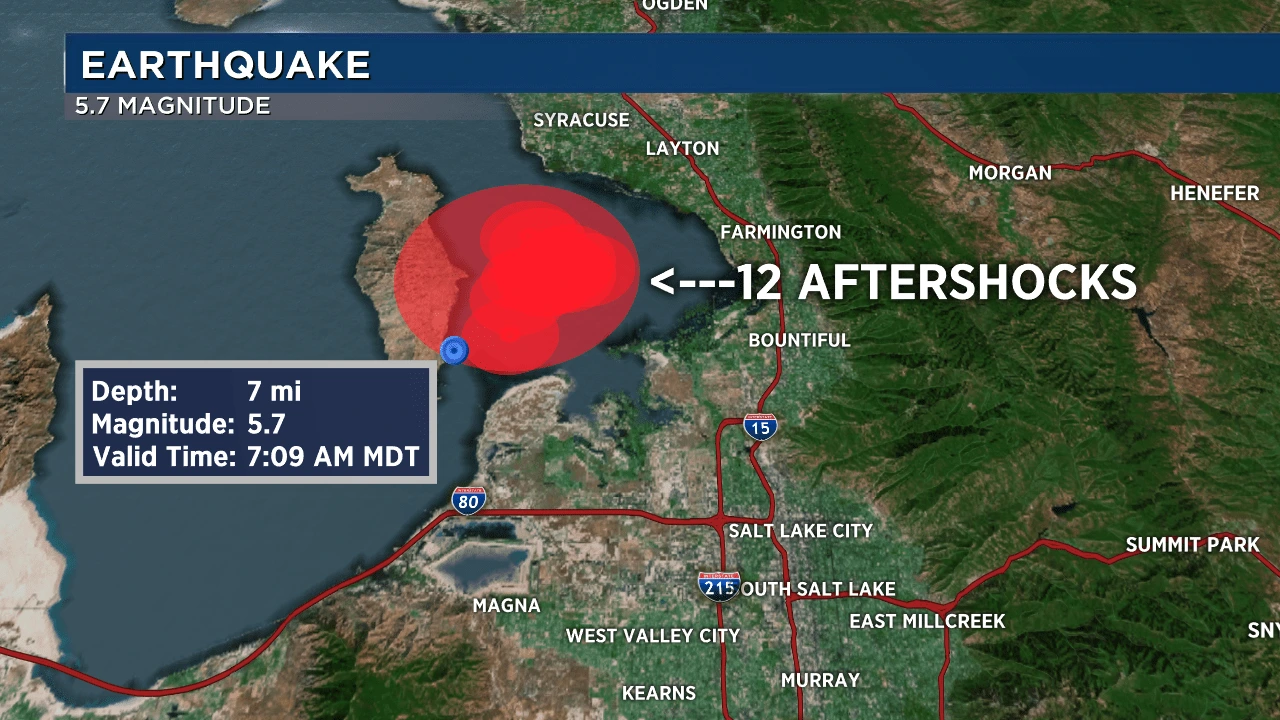
The magnitude 3.5 earthquake Utah County experienced Thursday adds to a growing sequence of tremors across northern Utah, drawing renewed attention to seismic hazards along the Wasatch Front.
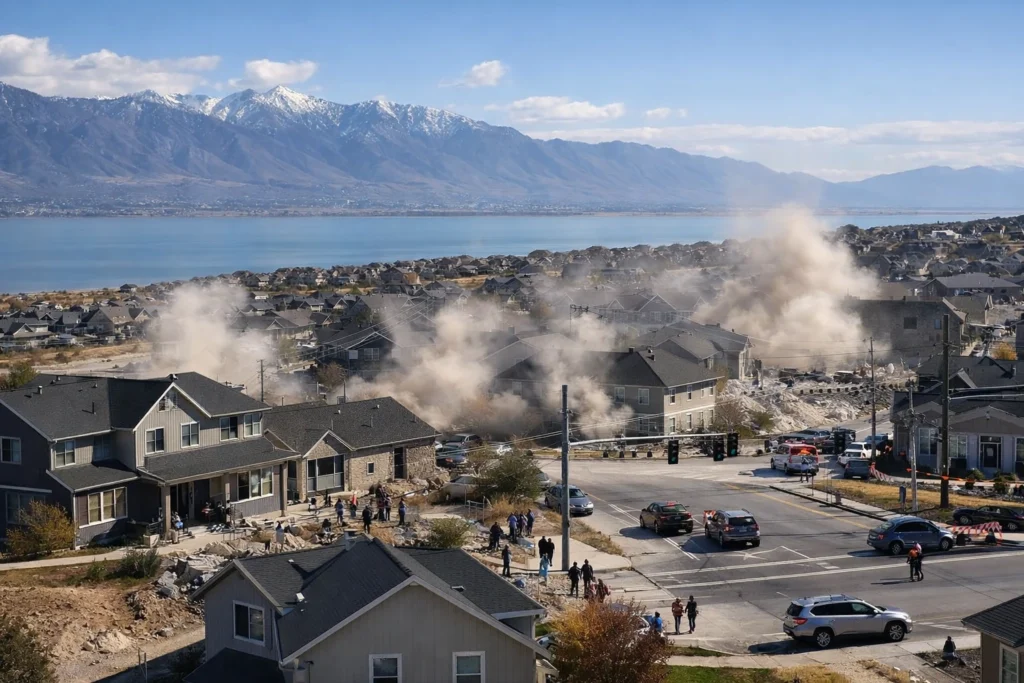
While no injuries or structural damage were immediately reported, the event was widely felt due to its relatively shallow depth and proximity to rapidly growing communities near Utah Lake.
According to the US Geological Survey, the earthquake occurred at a depth of about 4.8 miles, a range that often allows ground shaking to travel efficiently to the surface.
Utah County lies within a seismically active corridor influenced by the Wasatch Fault system, a network of faults capable of producing damaging earthquakes.
Over the past two weeks, roughly one hundred earthquakes have been recorded statewide, based on data from the University of Utah Seismograph Stations.
The largest of those events, a magnitude 4.7 earthquake on Jan. 22 near the Utah Wyoming border, was felt by more than one thousand five hundred people within thirty minutes of the shaking.
Most earthquakes in Utah are small and pass unnoticed. However, population growth along the Wasatch Front has increased public sensitivity to even modest tremors.
Saratoga Springs, Eagle Mountain and neighboring cities have expanded rapidly over the past decade, placing more residents near active faults than at any previous time in the state’s history.
William Lund, state geologist with the Utah Geological Survey, said the magnitude 3.5 earthquake Utah County residents felt Thursday is consistent with background seismicity common to the region.
“Utah experiences thousands of small earthquakes every year,” Lund said. “What stands out is not the size of this event but the clustering we have seen recently, which is not unusual but tends to get public attention.”
Michael Brudzinski, a professor of geology at Miami University who studies intraplate earthquakes, said shallow earthquakes often feel stronger than their magnitude suggests.
“When an earthquake occurs at less than five miles depth, the shaking has less distance to travel before reaching people and buildings,” Brudzinski said. “That can make a magnitude three or four event feel more significant locally.”
Officials emphasized that the recent increase in earthquakes does not necessarily indicate a larger quake is imminent.
The US Geological Survey notes that while clusters can occur, scientists cannot predict the timing or location of future earthquakes with precision.
University of Utah Seismograph Stations Director Keith Koper said residents reporting what they felt plays a critical role in earthquake science.
“Public reports help us understand how shaking varies from place to place,” Koper said. “That information improves hazard maps and building recommendations over time.”
Saratoga Springs resident Maria Jensen said the shaking lasted only a few seconds but was noticeable.
“I heard a low rumble and felt the house move just enough to make me pause,” Jensen said. “It was over quickly, but it definitely got our attention.”
Utah County emergency management officials said they received no reports of injuries or major damage following the quake. Routine checks of infrastructure and public buildings were conducted as a precaution, according to the county sheriff’s office.
Seismologists expect additional small earthquakes may occur as part of the ongoing sequence, though most are likely to be minor. State and federal agencies continue to monitor activity closely using dense seismic networks across northern Utah.
Officials encourage residents to review earthquake preparedness plans, including securing heavy furniture and knowing how to respond during shaking. Such steps are recommended year round and are not tied to any specific earthquake forecast.
The magnitude 3.5 earthquake Utah County experienced near Saratoga Springs underscores the region’s active geology and the importance of public awareness in a growing population center.
While the tremor caused little disruption, it serves as a reminder that even moderate seismic events can have real-world impacts when they occur close to communities, reinforcing the need for ongoing monitoring and preparedness across Utah.


