
KEY POINT
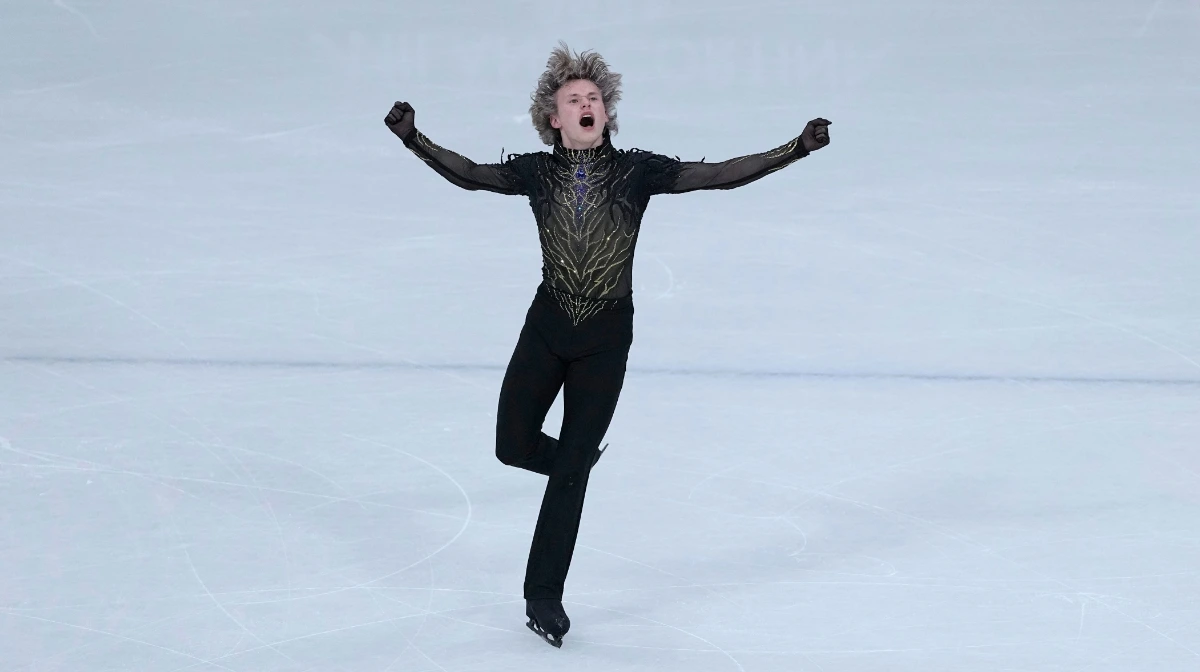
- Ilia Malinin placed eighth in the Olympic free skate after two falls despite leading after the short program.
- Mikhail Shaidorov secured Kazakhstan’s first Winter Games gold medal in men’s figure skating.
- The result reshapes the competitive landscape heading into the next Olympic cycle.
MILAN — Ilia Malinin fell twice during the men’s free skate at the Milano Cortina Winter Games on Friday night, dropping from first place after the short program to eighth overall and surrendering a near certain Olympic title.
The 21 year old American, who entered the final segment with a comfortable lead, scored 264.49 points overall after an error filled routine inside the Milano Ice Arena.
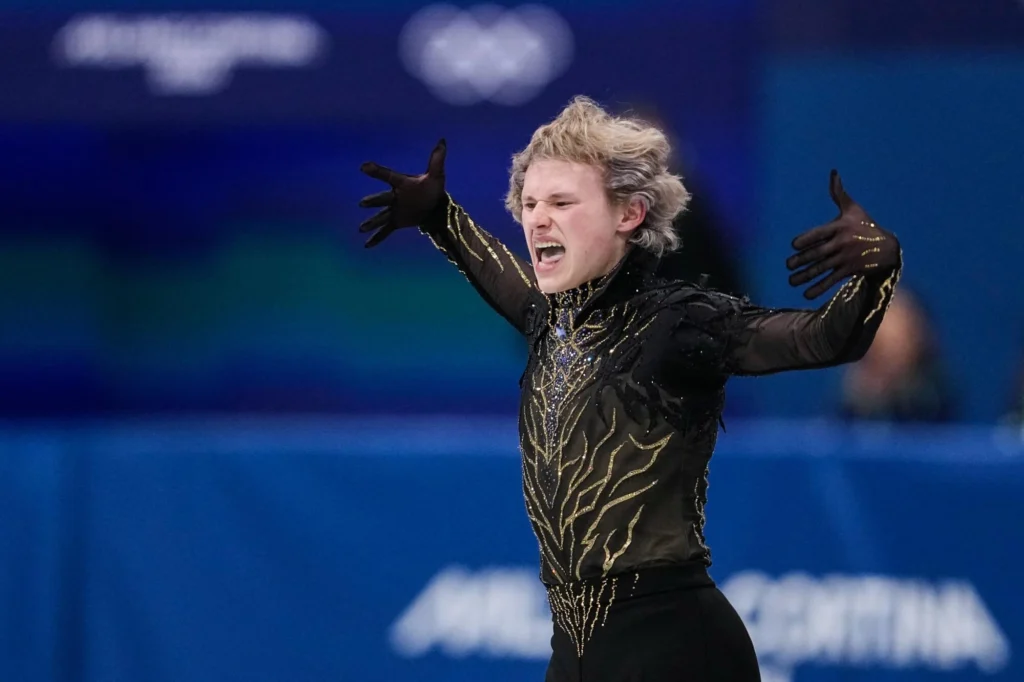
Kazakhstan’s Mikhail Shaidorov delivered a career best performance to capture gold with 291.58 points, while Japan’s Yuma Kagiyama earned silver and teammate Shun Sato claimed bronze.
The result ended Malinin’s two plus year unbeaten streak in international competition and marked one of the most dramatic reversals in recent Olympic figure skating history.
Malinin’s performance had been widely anticipated as a defining moment of the Milano Cortina Games. The reigning two-time world champion had already won gold in the team event earlier in the week and required only a steady performance to secure the individual Olympic title.
Instead, under bright lights and in front of a capacity crowd that included federation officials and former champions, Malinin struggled on two high value jumping passes.
Each fall resulted in significant deductions and reduced program component scores, erasing his margin and shifting the medal order in the closing groups.
The outcome underscored the volatility of men’s figure skating, where base value difficulty and execution margins often determine podium placements.
Malinin entered the Games as the sport’s technical benchmark. Known for pioneering quadruple jump combinations, including the quad Axel, he had won fourteen consecutive competitions over the past two seasons.
His dominance at the world championships established him as the face of American men’s skating heading into the Olympics.
Kazakhstan had never before won Olympic gold in men’s singles.
Shaidorov’s victory represents a milestone for the nation’s winter sports program and follows years of investment in elite athlete development across Central Asia.
Japan, long a powerhouse in figure skating, secured two spots on the podium. Kagiyama’s silver marked his second consecutive Olympic runner-up finish, demonstrating consistency at the sport’s highest level.
The scoring margin highlighted how quickly standings can shift in the free skate, where programs carry greater technical weight than the short program.
Figure skating analysts noted that Malinin’s program construction relied heavily on high difficulty elements placed in the second half, where bonus points apply.
“Programs built around maximum base value can generate large leads, but they also carry amplified risk,” said.
Dr. Helena Morris, a sports performance researcher at the University of Lausanne specializing in judged sports scoring systems. “When execution errors occur on elements with high base value, the point swing can be dramatic.”
US Figure Skating High Performance Director Thomas Lee said the federation would review the competition as part of its long-term planning cycle.
“Ilia has demonstrated exceptional resilience throughout his career,” Lee said.
“We evaluate technical strategy, conditioning and competitive pacing after every major championship.”
Kazakhstan Skating Union President Aidos Beketov called Shaidorov’s performance “a breakthrough moment” for the country’s winter program.
“This gold medal reflects years of structured athlete development and international collaboration,” Beketov said.
The Olympic free skate segment often magnifies psychological pressure because athletes skate in reverse order of placement. As the leader after the short program, Malinin skated last, increasing anticipation and scrutiny.
Kagiyama, speaking through a team interpreter, said consistency remained his focus.
“I trained to stay calm in the second half of the program,” Kagiyama said. “Every Olympic competition teaches something.”
Shaidorov said his objective was to execute cleanly rather than chase scores.
“I concentrated on each element one at a time,” he said. “The points followed.”
Malinin declined extended comment in the mixed zone but acknowledged disappointment, according to US team officials.
The result reopens competitive dynamics in men’s figure skating as federations prepare for the next world championships and the early stages of the next Olympic cycle.
Technical difficulty remains central to program strategy, but Friday’s outcome may prompt reconsideration of risk distribution within routines.
For the United States, Malinin remains a central figure in the sport’s development pipeline. His prior dominance suggests continued medal contention, though the Olympic result will factor into program design and competitive planning.
Kazakhstan’s victory may influence funding allocations and youth participation rates in figure skating programs across the region, according to federation officials.
Ilia Malinin’s eighth-place finish in the Olympic free skate marked an abrupt end to his unbeaten streak and altered the expected medal order at the Milano Cortina Games.
Mikhail Shaidorov’s gold medal delivered a historic achievement for Kazakhstan, while Japan reinforced its depth in men’s figure skating.
The competition highlighted both the precision demanded at the Olympic level and the narrow margins separating dominance from disappointment in the sport’s most technical discipline.


