
Feb. 23, 2026 — Cryptocurrency markets face renewed pressure as US trade policy uncertainty rises.
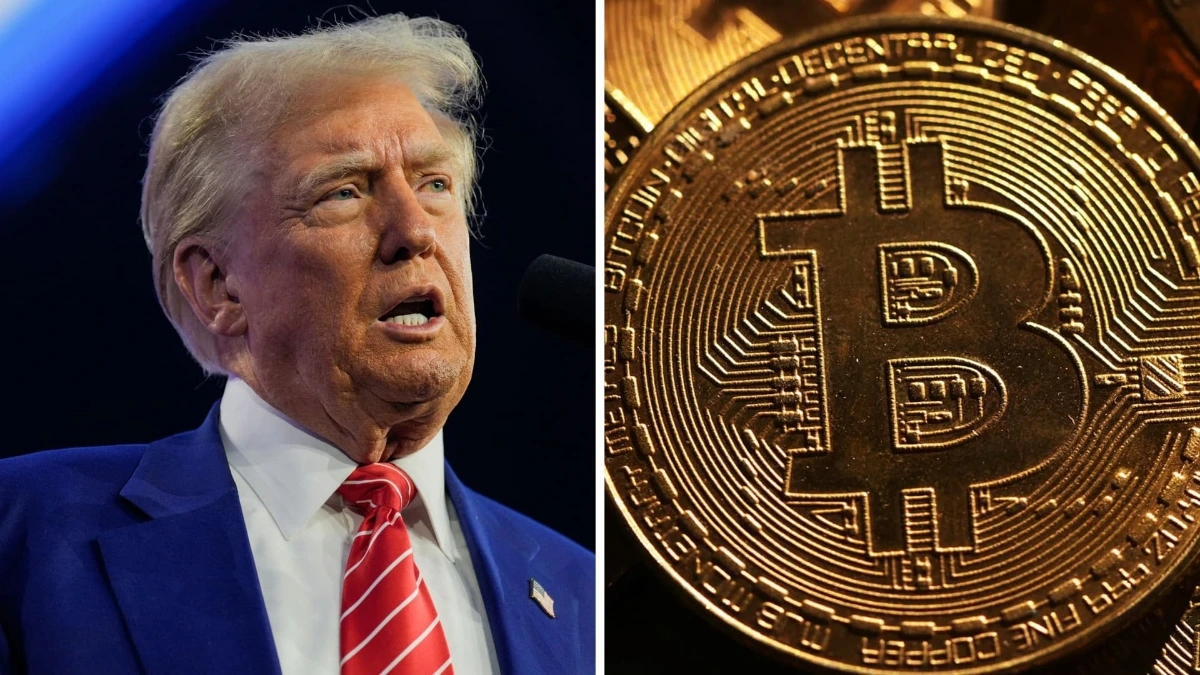
Bitcoin fell more than five percent to below $65,000 on Monday following US President Donald Trump’s announcement of plans to raise global tariffs to 15 percent, fueling market concerns over international trade tensions.
The cryptocurrency’s decline occurred even as Asian equities showed early gains, highlighting a divergence between digital assets and traditional markets.
KEY POINT
- Bitcoin fell below $65,000 after the Trump administration announced plans for higher global tariffs.
- The decline reflects continued volatility in cryptocurrency markets amid broader macroeconomic uncertainty.
- Gold and other safe haven assets have risen in contrast to Bitcoin, signaling shifts in investor risk appetite.
Bitcoin fell more than five percent to below $65,000 on Monday following US President Donald Trump’s announcement of plans to raise global tariffs to 15 percent, fueling market concerns over international trade tensions.
The cryptocurrency’s decline occurred even as Asian equities showed early gains, highlighting a divergence between digital assets and traditional markets.
The drop in Bitcoin underscores the growing sensitivity of digital assets to macroeconomic and geopolitical developments. Monday’s move came amid heightened uncertainty over US trade policy, raising questions about the impact on risk-sensitive markets, including cryptocurrencies.
Bitcoin has experienced a significant correction since reaching a peak above $125,000 in October 2025. The cryptocurrency has declined roughly 47 percent from that high, with year to date losses of around 26 percent. Analysts note that this drawdown is part of a broader pattern of cyclical retracement in the crypto market.
Global tariff policy has emerged as a key factor affecting investor sentiment. President Trump’s plan to implement a 15 percent global tariff follows a recent Supreme Court ruling that curtailed previous emergency tariff measures. The renewed tariff proposal has added to market uncertainty, particularly for assets perceived as risky.
“Markets are adjusting to policy uncertainty rather than a single economic shock,” said Alicia Levine, senior economist at the International Trade Institute.
“Digital assets like Bitcoin are especially sensitive to global trade developments because they are traded continuously and react quickly to news.”
Matt Hougan, chief investment officer at Bitwise, emphasized that Bitcoin’s price movements are consistent with historical four year cycles in the cryptocurrency market.
“Investors are rotating capital into other assets, such as gold and technology stocks,” Hougan said. “The current retracement mirrors patterns we’ve seen in previous downturns, not a unique event caused by tariffs alone.”
| Metric | Current (Feb 23, 2026) | Reference |
|---|---|---|
| Bitcoin Price | Below $65,000 (~$64,400) | Feb 23, 2026 Market Rate |
| Year-to-Date Change | Down ~26% | 2026 YTD Performance |
| Drawdown (Oct 2025 Peak) | ~47% | Post-Peak Market Analysis |
| Gold Price | Up ~2% | Spot Gold Market Data |
“Institutional investors are showing more caution this week,” said Jordan Wells, digital asset strategist at Crestview Capital. “The combination of tariff uncertainty and cryptocurrency volatility is prompting some to shift into safer, more liquid assets.”
Market trader Rina Patel in Singapore noted, “Bitcoin’s movement today is a reminder that even though it’s digital, it doesn’t exist in isolation. Global economic policy has a direct impact on trading behavior.”
Analysts anticipate continued volatility in cryptocurrency markets as investors monitor US trade policy, regulatory developments, and macroeconomic indicators.
Clarity on tariff enforcement and broader economic conditions will likely influence investor risk appetite across digital and traditional assets.
Bitcoin’s decline below $65,000 illustrates how global trade policy and macroeconomic factors are increasingly influencing cryptocurrency markets.
The price drop highlights the persistent sensitivity of digital assets to external shocks and underscores the importance of monitoring broader market conditions for investors and institutions alike.


