
kEY POINT
- Three US troops killed and five wounded in operations connected to Iran as regional tensions intensify.
- Iran retaliates with missile strikes after the death of its supreme leader, expanding cross border hostilities.
- More than 200 dead in Iran and at least 10 in Israel as leadership transitions and diplomatic threats reshape the region.
TEL AVIV, Israel — Three US service members were killed and five seriously wounded in military operations linked to escalating hostilities with Iran, the US military said Monday, as Iran retaliated with missile strikes following the reported killing of its supreme leader, Ayatollah Ali Khamenei.
The surge in violence has widened a regional conflict that now stretches from Tehran to Tel Aviv and Karachi, raising concerns of a broader confrontation involving the United States, Israel and Gulf Arab states.
The deaths of US troops killed as Iran retaliates mark the most direct American military casualties in the current confrontation, underscoring the speed with which a targeted strike has spiraled into a multi front crisis.
Israeli forces launched a new wave of strikes in Tehran a day after Khamenei’s reported killing, while Iranian missiles triggered air raid sirens across Tel Aviv.
The conflict now involves direct military exchanges, diplomatic ultimatums and internal political shifts within Iran, complicating regional stability and international energy markets.
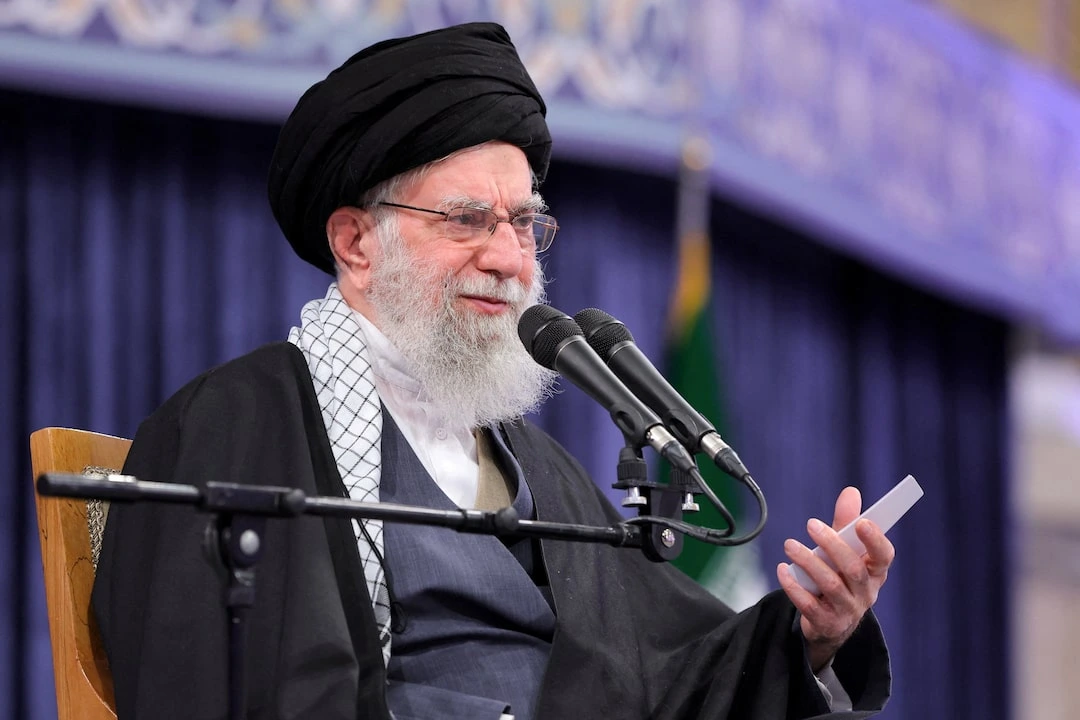
Ayatollah Ali Khamenei, Iran’s supreme leader since 1989, served as the country’s highest political and religious authority, overseeing its military doctrine and nuclear policy.
His reported killing represents a profound shock to Iran’s political system.
Under Iran’s constitution, temporary authority transfers to a Leadership Council if the supreme leader dies or becomes incapacitated.
Iranian state media reported that Ayatollah Ali Reza Arafi was appointed as jurist member of the Leadership Council alongside President Masoud Pezeshkian and judiciary chief Gholamhossein Mohseni Ejei.
Israel has long cited Iran’s regional proxy network and missile program as existential threats. Iran, in turn, has accused Israel and the United States of aggression. The current exchange follows years of shadow conflict including cyberattacks, covert operations and airstrikes in Syria.
The US military did not disclose the precise location where the three service members were killed but confirmed the casualties occurred during operations connected to the escalating confrontation.
“The killing of Iran’s supreme leader fundamentally alters the chain of command and could fragment authority in the short term,” said Vali Nasr, professor of international affairs at Johns Hopkins University. He said the immediate priority for Iran’s leadership would be maintaining internal cohesion while demonstrating deterrence externally.
Daniel Byman, senior fellow at the Center for Strategic and International Studies, said US involvement heightens escalation risks. “When US troops are killed, domestic and congressional pressures shift. That can narrow diplomatic space very quickly,” he said.
Iranian Foreign Minister Abbas Araghchi warned Gulf counterparts that their territories could become “legitimate targets” if used to support US or Israeli operations, according to statements released by Iran’s Foreign Ministry. Such warnings could test security arrangements between Washington and Gulf states hosting American forces.
Energy analysts note that several of the countries mentioned by Iran sit along key shipping corridors. Any disruption could affect global oil and liquefied natural gas flows, though no major export facilities have reported damage so far.
Rear Adm. Patrick Ryder, Pentagon press secretary, said the United States is assessing force protection measures across the region. “Our priority remains the safety of U.S. personnel and the stability of our partners,” he said.
In Tel Aviv, Israeli military spokesperson Lt. Col. Nadav Shoshani said air defense systems were intercepting incoming missiles but acknowledged that “some impacts have occurred.”
In Karachi, where at least nine people were killed during protests outside the US Consulate, Sindh provincial police chief Ghulam Nabi Memon said demonstrators attempted to breach the perimeter. “Law enforcement responded to prevent entry into a secure diplomatic facility,” he said.
A spokesperson for the Iranian Red Crescent Society confirmed that rescue teams were operating in multiple provinces following Israeli strikes, describing widespread structural damage in residential areas.
Diplomatic channels remain open but strained. The United Nations Security Council is expected to convene an emergency session, according to diplomats familiar with the matter. Regional governments have urged restraint while reinforcing security around foreign installations.
Military analysts say the formation of Iran’s Leadership Council introduces a transitional phase that could influence both retaliation strategy and negotiation posture.
At the same time, the deaths of US troops killed as Iran retaliates increase pressure on Washington to define the scope of its involvement.
The immediate trajectory depends on whether missile exchanges expand to Gulf bases or remain concentrated between Iran and Israel.
The deaths of US troops killed as Iran retaliates signal a shift from indirect confrontation to overt military engagement involving multiple states.
With leadership changes in Tehran, civilian casualties mounting and diplomatic threats widening, the crisis now carries implications for regional governance, energy security and international diplomacy.


