
KEY POINT
- Marjorie Taylor Greene condemned the deaths of three US service members during Operation Epic Fury in Iran.
- US Central Command confirmed casualties following a joint US Israel strike targeting Iranian leadership.
- The criticism underscores widening political divisions over USmilitary engagement in the Middle East.
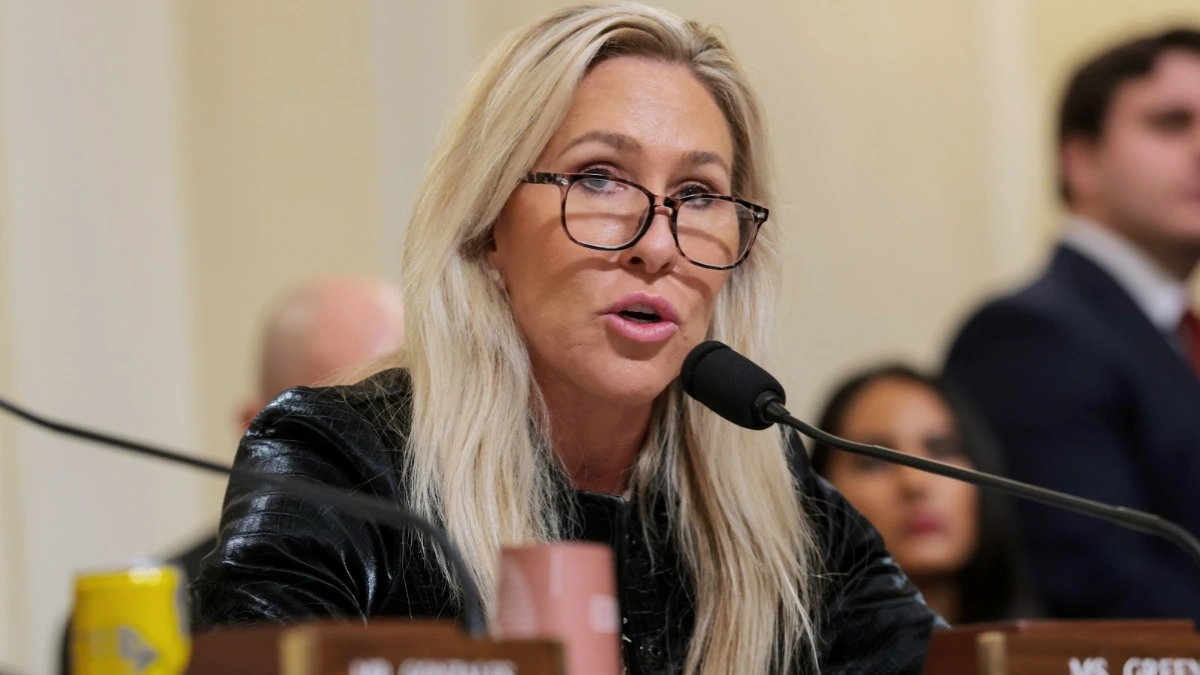
WASHINGTON — Former US Rep. Marjorie Taylor Greene criticized the deaths of three American service members in Iran on Sunday, calling the military operation that led to their deaths “absolutely unnecessary” and “unacceptable.”
US Central Command said that as of 9:30 a.m. EST Sunday, three US service members were killed in action during “Operation Epic Fury,” a joint US Israel operation launched Saturday targeting senior Iranian leadership.
Five additional service members were seriously wounded and several others sustained minor shrapnel injuries and concussions, according to the command.
The operation resulted in the death of Iran’s Supreme Leader, Ayatollah Ali Khamenei, along with multiple political and military officials, US officials said.
In a post on the social media platform X, Greene said, “My God, these poor military members and their poor families. I’m sorry for them and praying for them. This was absolutely unnecessary and is unacceptable.”
The deaths mark one of the most significant US military losses in direct action against Iranian leadership in recent years. Greene’s remarks add to mounting political debate in Washington over the scope and objectives of the operation and its broader implications for US foreign policy.
President Donald Trump announced the strikes early Saturday, saying, “The lives of courageous American heroes may be lost, and we may have casualties. That often happens in war, but we’re doing this not for now. We’re doing this for the future, and it is a noble mission.”
Operation Epic Fury followed weeks of indirect diplomatic engagement between US and Iranian officials in Geneva, mediated by Oman. Trump had expressed dissatisfaction with the pace and substance of those talks prior to authorizing military action.
Greene, a Republican from Georgia who resigned from Congress last month after feuding publicly with Trump, said in multiple posts that the administration had campaigned on avoiding foreign wars and regime change.
“We said ‘No More Foreign Wars, No More Regime Change,’” Greene wrote, referencing campaign rhetoric from the 2024 presidential election. She also noted that Trump, Vice President JD Vance and Director of National Intelligence Tulsi Gabbard had emphasized an “America First” platform during the campaign.
Last year, Greene broke with Trump on several issues, including his handling of files related to Jeffrey Epstein and prior strikes on Iranian nuclear facilities. Trump withdrew his endorsement of Greene in November. She announced her departure from Congress one week later.
The latest operation has prompted criticism from some Democratic lawmakers, who have cited past US military engagements in Afghanistan and Iraq as cautionary examples.
William Wechsler, senior director of the Rafik Hariri Center and Middle East Programs at the Atlantic Council, said the operation marks a significant escalation in US Iran tensions.
“Targeting the top echelon of Iranian leadership is a strategic inflection point,” Wechsler said. “It alters deterrence calculations across the region and increases the likelihood of retaliatory actions by Iranian-aligned groups.”
Kori Schake, senior fellow and director of foreign and defense policy studies at the American Enterprise Institute, said the political backlash reflects longstanding divisions within both parties about US engagement in the Middle East.
“There has been a bipartisan fatigue with extended military involvement in the region,” Schake said. “However, when operations involve direct leadership decapitation, the stakes are considerably higher, both militarily and politically.”
Schake said domestic political dynamics could influence congressional oversight of future military actions.
Retired Lt. Gen. Mark Hertling, former commanding general of US Army Europe, said the loss of service members underscores the operational risks inherent in high level targeting missions.
“Operations of this magnitude require precision intelligence and carry inherent danger,” Hertling said. “Any loss of American life reverberates throughout the military community.”
Behnam Ben Taleblu, senior fellow at the Foundation for Defense of Democracies, said Iran’s response will likely determine the trajectory of the conflict.
“The Iranian system is built to endure leadership losses,” Ben Taleblu said. “How Tehran chooses to respond will shape whether this remains limited or escalates into broader confrontation.
Family members of the fallen service members have not yet been publicly identified pending notification procedures, according to Defense Department policy.
US Central Command said damage assessments and casualty evaluations are ongoing. The White House has not indicated whether additional military operations are planned.
Lawmakers from both parties are expected to seek classified briefings in the coming days. Congressional leaders have called for clarity on the legal authority underpinning the operation and its strategic objectives.
Diplomatic channels through Oman remain technically open, though officials have not confirmed whether talks will resume.
The deaths of three US service members during Operation Epic Fury have intensified scrutiny of American military engagement in Iran and reignited debate over the direction of US foreign policy.
As Washington assesses the aftermath and Tehran considers its response, the operation’s broader regional and political consequences remain in focus.


