
KEY POINT
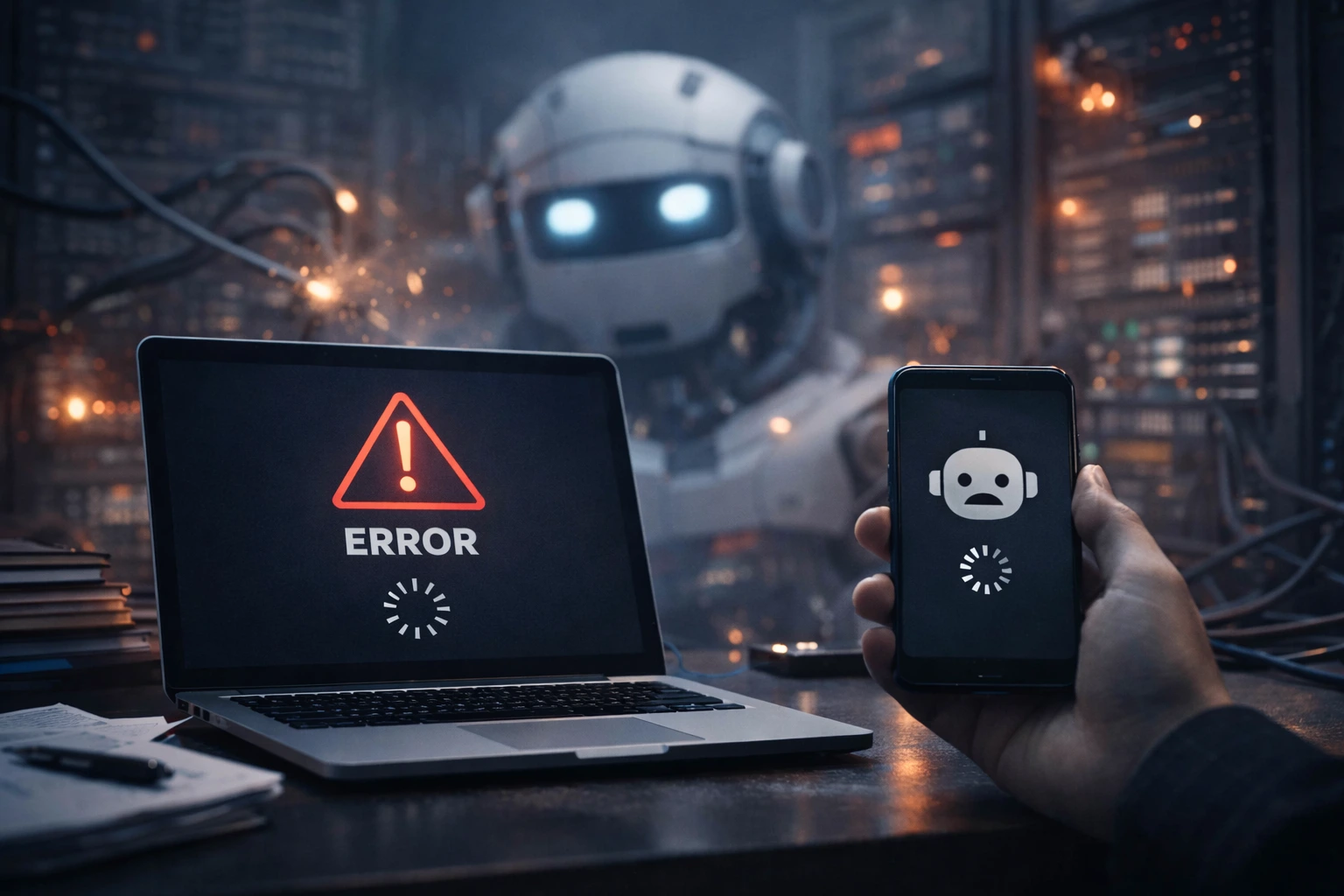
- Grok users worldwide reported login failures, incomplete responses and mobile synchronization errors.
- Monitoring platforms recorded complaint volumes above historical averages, indicating a systemic outage.
- The disruption highlights infrastructure pressures facing large scale generative AI systems.
Users of Grok, the generative artificial intelligence platform developed by xAI, reported widespread service disruptions Tuesday that affected web access, mobile synchronization and core language generation tools, raising concerns about infrastructure stability at a time of growing reliance on AI driven services integrated with
The Grok outage disrupted users who rely on the chatbot for real time analysis and social media indexing through its integration with X.
Reports of technical instability surfaced within hours, with subscribers describing infinite loading screens, abrupt interruptions in text generation and delays in retrieving recent posts.
The interruption affected both casual users and professionals who depend on the system for research, translation and rapid analysis of global events.
While the company had not issued a detailed technical explanation at the time of publication, monitoring services showed a sharp spike in incident reports compared with normal traffic patterns.
Grok is xAI’s flagship conversational AI system and is integrated directly into X, the social media platform formerly known as Twitter. The tool has positioned itself as an alternative to other large language models by emphasizing real time awareness and a distinctive conversational tone.
Over the past year, generative AI platforms have faced increasing strain as subscriber bases expand and enterprise applications scale. Infrastructure supporting these systems typically relies on distributed cloud environments powered by high performance graphics processing units.
According to service monitoring data compiled over the previous twenty four hours, nearly half of user complaints involved difficulties accessing the web interface. Users attempting to initiate new chat sessions reported error notifications or persistent loading loops.
Mobile users reported separate issues, including unexpected application shutdowns and authentication failures affecting premium accounts.
Infrastructure strain is a common vulnerability for large AI systems during traffic spikes or after backend updates, said Rumman Chowdhury, chief executive officer of Humane Intelligence and former director of machine learning ethics at Twitter.
“When inference systems depend on GPU clusters operating at near full capacity, even minor latency between databases and processing nodes can cascade into user visible failures,” Chowdhury said. “Real time integrations add additional layers of complexity.”
Dan Ives, managing director and senior equity analyst at Wedbush Securities, said outages affecting flagship AI products can have broader reputational implications.
“Reliability is critical for subscription driven AI platforms,” Ives said. “As competition intensifies across the generative AI sector, enterprise clients in particular will evaluate uptime guarantees and redundancy planning.”
The Grok disruption also underscores the challenges of maintaining synchronization between social media feeds and AI indexing systems.
Real time ingestion of posts from X requires constant updating of data pipelines, which can be sensitive to changes in traffic volume or system configuration.
Several professionals who rely on Grok described disruptions to workflow.
Carlos Mendes, a Lisbon-based technology consultant, said he encountered repeated failures while preparing a market briefing.
“The system stopped generating text halfway through a detailed analysis,” Mendes said. “Restarting the session did not resolve the issue.”
Aisha Rahman, a doctoral researcher in political communication at the University of Toronto, said she uses Grok to monitor real-time developments on X.
“When indexing slows down, the AI loses its advantage in tracking breaking narratives,” Rahman said. “That affects academic and media research that depends on immediacy.”
Mobile users expressed concern over authentication errors that temporarily locked them out of paid accounts.
According to users posting on X, some were unable to verify subscription credentials for several hours.
Technology analysts said full normalization will depend on whether the disruption originated from cloud infrastructure overload, unscheduled maintenance or updates to the underlying language model.
Cloud based AI providers typically address such incidents through scaling adjustments, traffic redistribution and patch deployment.
However, sustained growth in user demand across the generative AI sector may require expanded hardware capacity and additional redundancy planning.
xAI has not publicly detailed its server architecture or recovery timeline.
The Grok outage highlights the operational complexity of maintaining real time generative AI systems at global scale. As AI platforms become embedded in social media ecosystems and professional workflows, reliability is emerging as a central factor in user trust and market competitiveness.
The incident serves as a reminder that even advanced AI infrastructure remains vulnerable to technical strain during periods of rapid expansion and heavy demand.


