
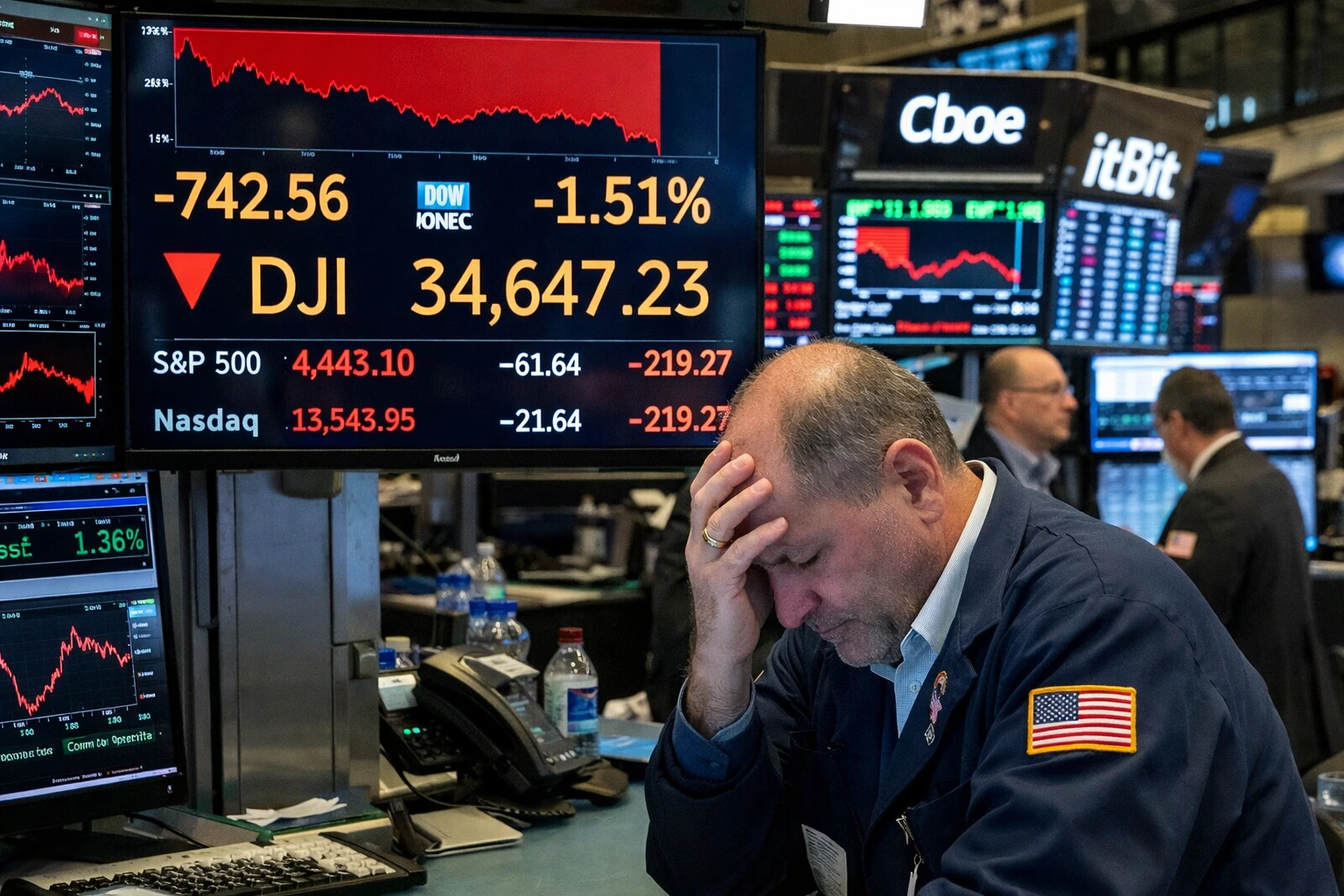
US stocks fell sharply Tuesday as renewed tariff threats from President Donald Trump and a global bond sell off triggered by rising yields in Japan rattled financial markets, sending investors away from riskier assets.
The Dow Jones Industrial Average dropped more than seven hundred points in early trading, while the S&P 500 and Nasdaq Composite posted broad losses across sectors.
KEY POINT
- Stock market today saw steep declines across major U.S. indexes amid trade and bond market concerns.
- Rising global bond yields pressured equity valuations and strengthened the US dollar.
- Technology and industrial shares led losses as investors reduced exposure to growth and trade sensitive sectors.
The stock market today reflected mounting investor anxiety as geopolitical tensions and shifting global interest rate dynamics converged.
Early Tuesday trading underscored how quickly sentiment can turn when trade policy uncertainty resurfaces alongside stress in sovereign debt markets, two forces that have historically amplified volatility in equities.
President Trump’s latest comments signaling potential tariffs on European goods tied to negotiations over Greenland revived memories of earlier trade conflicts that disrupted global supply chains during his first term.
While no formal policy action was announced, markets reacted swiftly, reflecting a heightened sensitivity to trade rhetoric after years of tariff-driven market swings.
At the same time, a sell off in Japanese government bonds pushed yields higher, echoing through global fixed-income markets.
Japan’s bond market holds outsized influence due to its scale and the long-standing role of ultra low yields in anchoring global borrowing costs.
As yields rose, US Treasury prices fell, lifting benchmark yields and challenging equity valuations that had benefited from lower discount rates.
Wall Street entered the session already on edge after a losing week that snapped a recent rally.
Elevated valuations, particularly in technology stocks, left markets vulnerable to shocks that could alter assumptions about growth, inflation and monetary policy.
Analysts said the dual pressure from trade uncertainty and bond market volatility created a difficult backdrop for equities.
According to Michael Reynolds, vice president of investment strategy at Glenmede, higher global yields “force investors to reprice risk assets quickly, especially when valuations are stretched.”
He said trade tensions add another layer of uncertainty for multinational companies dependent on stable cross-border commerce.
Economists noted that while tariff threats alone do not change economic fundamentals, they can delay corporate investment decisions.
“Businesses respond to uncertainty by waiting,” said Diane Swonk, chief economist at KPMG.
“That hesitation can show up in earnings guidance and capital spending plans even before any tariffs take effect.”
Market strategists also pointed to currency movements. A stronger dollar, supported by higher US yields, can weigh on overseas earnings for American companies and tighten financial conditions globally, particularly for emerging markets that borrow in dollars.
| Index | Early Tuesday Change | Prior Week Performance |
|---|---|---|
| Dow Jones Industrial Average | 1.5% Down (Tumble) | Weekly Loss |
| S&P 500 | 1.4% Down | Weekly Loss |
| Nasdaq Composite | 1.6% Down | Weekly Loss |
| Ten-year U.S. Treasury yield | Higher (4.29%) | Rising Trend |
The data highlights how equity declines coincided with rising bond yields, a combination that often signals tighter financial conditions.
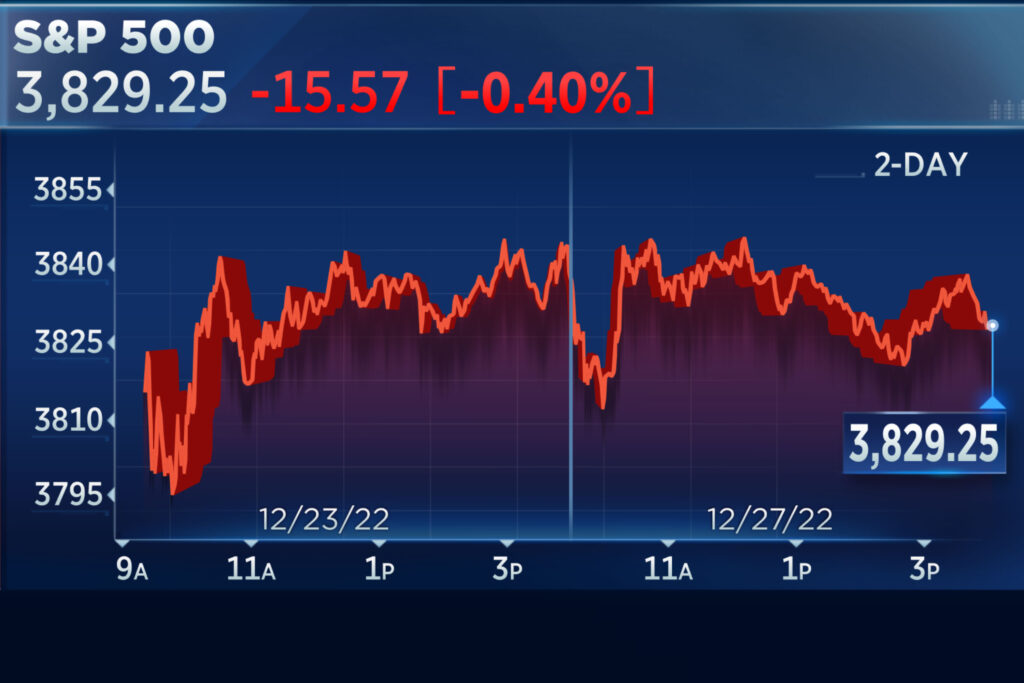
Traders on the New York Stock Exchange described a cautious tone.
“There is very little appetite to buy dips when policy risk is back in focus,” said Peter Cardillo, chief market economist at Spartan Capital Securities. “Bond yields are sending a clear message that the era of easy money is behind us.”
In Europe, market participants echoed similar concerns. A Frankfurt-based portfolio manager at a large asset manager, speaking on condition of anonymity due to company policy, said US trade rhetoric “creates uncertainty for exporters and complicates planning for the second half of the year.”
Looking ahead, investors are expected to monitor official statements from the White House and any concrete trade actions.
Attention will also remain on global bond auctions and central bank communications, particularly from the Bank of Japan and the Federal Reserve, for signals on how policymakers view rising yields.
Corporate earnings updates later in the week could offer insight into whether companies are adjusting forecasts in response to trade and financing concerns.
Absent new policy clarity, analysts expect markets to remain sensitive to headlines and macroeconomic data.
The stock market today illustrated how intertwined global markets have become, with political signals and bond market shifts quickly reverberating through equities.
While no immediate policy changes were enacted, the reaction highlighted persistent vulnerabilities in a market environment shaped by higher rates, elevated valuations and unresolved trade questions


