
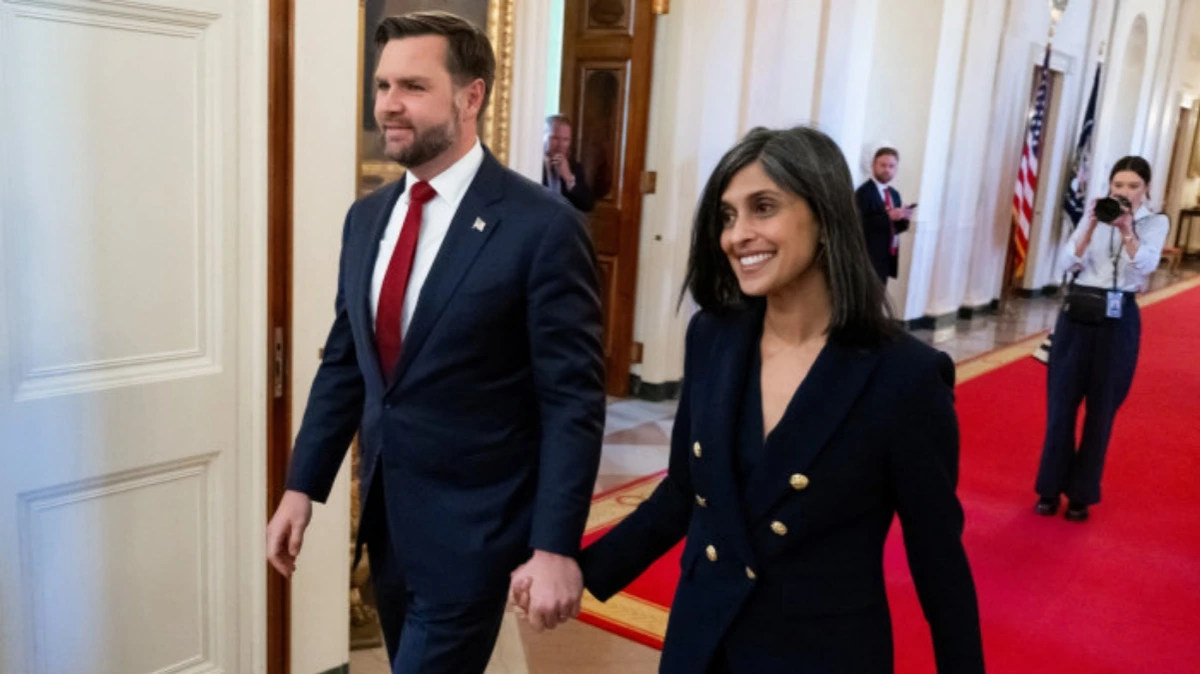
WASHINGTON Vice President JD Vance and Second Lady Usha Vance announced that they are expecting their fourth child later this year, adding a new dimension to life inside the vice president’s residence as the administration continues its first year in office.
KEY POINT
- JD and Usha Vance fourth child announcement marks a rare moment for a sitting second family.
- The pregnancy highlights the intersection of national leadership and young family life.
- Institutional support for families of top US officials is drawing renewed attention.
The announcement that JD and Usha Vance are expecting their fourth child places the vice president’s family life in the national spotlight at a time when public officials increasingly navigate high level responsibilities alongside parenting young children.
The couple, already parents of three, shared the news publicly, confirming that both mother and baby are healthy.
The development is notable not only on a personal level but also for its institutional implications, as it is uncommon for the spouse of a sitting vice president to be pregnant during an active term.
JD Vance assumed office as vice president in January 2025 following his tenure as a U.S. senator from Ohio.
He and Usha Vance met while attending Yale Law School and married in 2014. Their family life has unfolded largely outside public view, with limited appearances involving their children at official events.
Historically, family milestones among senior U.S. officials have often carried symbolic weight. While presidential families have welcomed children during administrations in earlier centuries, modern political life rarely intersects so visibly with early childhood parenting at the vice-presidential level.
The Vances currently reside at the US Naval Observatory, the official residence of the vice president, where security, medical access and protocol shape daily family routines in ways unlike most American households.
Political historians note that family visibility among senior officials has shifted over time, reflecting broader social changes rather than formal political strategy.

“Senior leaders raising young children while in office underscores how governance structures have adapted to modern family realities,” said Dr. Eleanor Whitman, a professor of American political institutions at Georgetown University. “It does not alter policy, but it does shape public understanding of who occupies power.”
Experts in public administration also point to logistical considerations. Medical care, scheduling flexibility and security coordination become more complex when an administration accommodates pregnancy and childbirth within an official residence.
“These systems exist quietly in the background,” said Thomas Ridgewell, a former federal protocol adviser. “Moments like this briefly make them visible.”
Reaction to the announcement was measured and largely congratulatory across political and civic circles.
“Family milestones remind the public that leadership roles are carried out by people managing the same life events as millions of others,” said Marisol Vega, a nonpartisan political analyst based in Washington.
A senior administration official, speaking on background, said existing medical and family support arrangements are well established and require no procedural changes.
From an operational standpoint, no adjustments to vice presidential duties are expected. The vice president’s schedule, travel commitments and constitutional responsibilities remain unchanged, with established protocols in place for continuity.
Longer term, the moment may contribute to broader discussions about parental leave norms, family accommodations and generational change within US political leadership, particularly as younger officials assume senior roles.
The announcement that JD and Usha Vance are expecting their fourth child blends a private family milestone with public significance.
While it carries no direct policy implications, it highlights how modern American leadership increasingly unfolds alongside visible family life, reinforcing the human dimension of governance at the highest levels.


