
KEY POINT
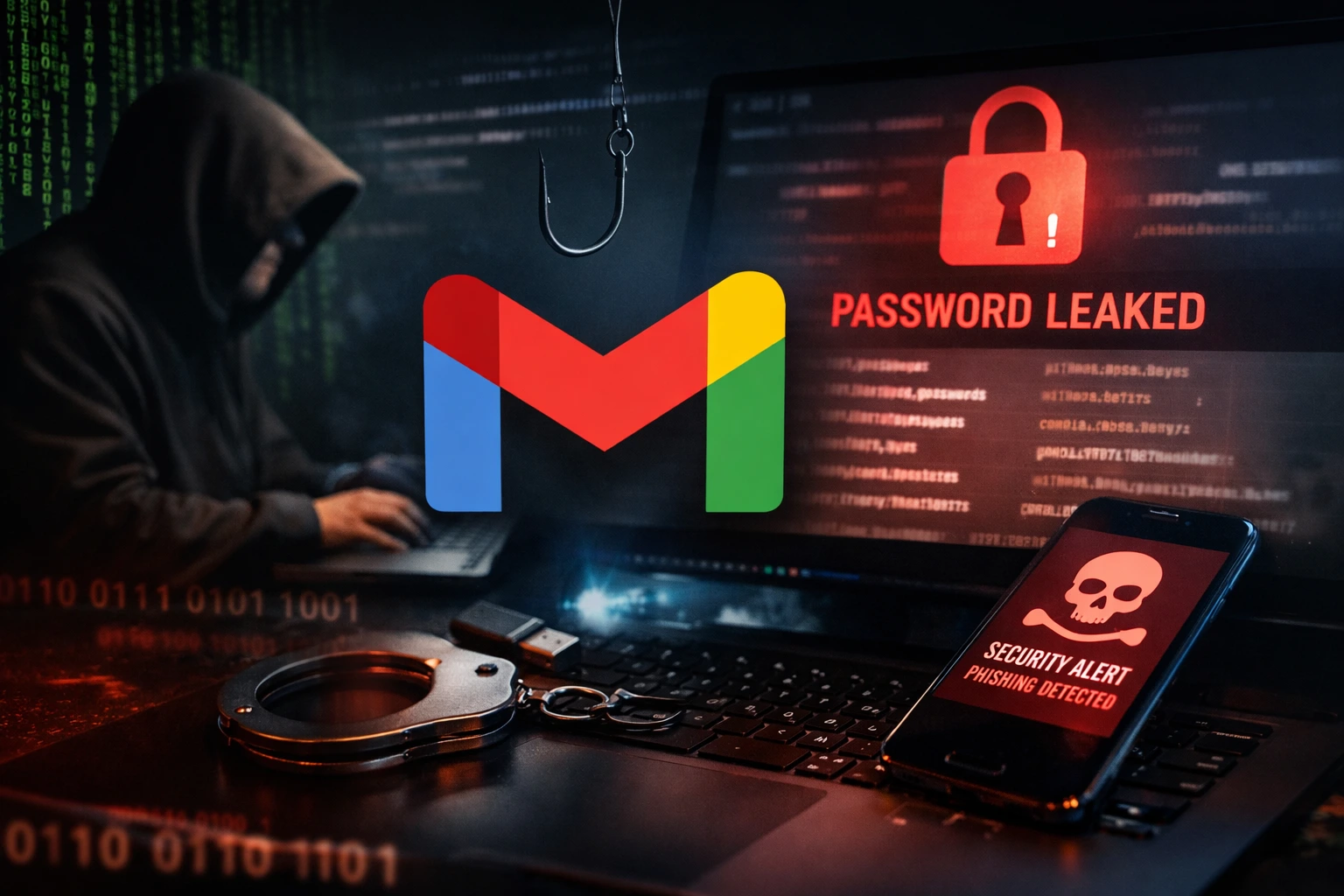
- The Gmail password warning follows the discovery of millions of credentials collected by infostealer malware from personal devices.
- Google said it is monitoring the exposure and automatically locking affected accounts when risks are detected.
- Users are urged to change passwords, update software and review app permissions to reduce future risk.
global Gmail password warning has been issued after cybersecurity researchers identified a trove of roughly forty eight million exposed login credentials linked to malicious “infostealer” malware, raising fresh concerns about personal device security and the growing sophistication of credential harvesting operations, according to researchers and Google officials.
The Gmail password warning comes at a time when email accounts serve as the digital backbone for banking, cloud storage, work collaboration and identity verification worldwide.
While Google said there is no evidence of a direct breach of its systems, the exposure of millions of credentials underscores how third party malware on personal devices can undermine even the most secure platforms.
The warning has particular relevance for individuals and businesses that rely on Gmail as a primary authentication method for other online services, amplifying the potential impact of compromised credentials.
The exposed data was linked to “infostealer” logs, a category of malware designed to silently collect usernames, passwords and session cookies from infected devices.
These logs are often sold or traded on cybercrime forums and can be aggregated over time into massive datasets.
Bob Diachenko, a cybersecurity researcher who has previously tracked large scale data exposures, said infostealer malware has surged in recent years due to its low cost and ease of deployment.
“What makes infostealers particularly dangerous is that they target the endpoint, not the service provider,” Diachenko said. “Even companies with strong security controls can be affected when users’ own devices are compromised.”
Google confirmed that the exposed credentials were not the result of a breach of Gmail’s infrastructure.
A Google spokesperson said the company continuously scans for compromised credentials circulating online and triggers automated protections when matches are found.
“We continuously monitor for this type of external activity and have automated protections in place that lock accounts and force password resets when we identify exposed credentials,” the spokesperson said.
The Gmail password warning highlights a broader shift in cyber risk from centralized breaches to distributed infections on consumer devices.
According to Microsoft’s Digital Defense Report, infostealer malware incidents increased significantly over the past two years, driven in part by phishing campaigns and malicious software bundled with pirated apps.
Adam Meyers, senior vice president of counter adversary operations at CrowdStrike, said email credentials remain a prime target because they often unlock access to dozens of other services.
“Once attackers gain access to an email account, they can reset passwords elsewhere, intercept security codes and impersonate victims,” Meyers said.
From a policy perspective, the exposure raises questions about user awareness and platform responsibility. While companies can enforce stronger authentication, experts note that device-level hygiene remains a weak link.
| Indicator | 2023 | 2025 |
|---|---|---|
| Estimated Infostealer Infections (Worldwide) | Taqreeban 12 Million | 25 Million se zyada |
| Average Credentials Harvested (Per Infection) | 20 | 35 |
| Share Involving Email Accounts | Taqreeban 40% | Taqreeban 50% |
Source: Compiled from public cybersecurity industry reports.
The data shows a sharp increase in both the scale and efficiency of credential theft operations, helping explain why a Gmail password warning of this magnitude is increasingly common.
David Fowler, a security researcher who reviewed the exposed dataset, said many users underestimate how easily malware can enter their systems.
“People often think they were hacked directly, but in most cases the malware came from a fake download, browser extension or unofficial app,” Fowler said.
The Cybersecurity and Infrastructure Security Agency in the United States echoed the warning, advising users to practice basic digital hygiene.
Eric Goldstein, executive assistant director for cybersecurity at CISA, said strong passwords alone are no longer sufficient.
“Multi-factor authentication and regular software updates significantly reduce the risk posed by stolen credentials,” Goldstein said.
Affected users have reported receiving alerts from Google prompting password changes and account reviews. Google recommends enabling two step verification and using a password manager to generate unique passwords.
Security researchers expect infostealer malware to remain a persistent threat as long as cybercriminals can monetize stolen credentials.
Google said it is expanding its automated detection systems and user education efforts but emphasized that device security ultimately depends on user behavior.
The Gmail password warning is likely to prompt renewed attention to endpoint security, particularly in regions where unofficial app stores and pirated software are common.
Governments and technology firms are also exploring stronger standards for app permissions and software distribution.
The exposure of forty-eight million login credentials serves as a reminder that even without a direct platform breach, personal data can be compromised through third party malware.
The Gmail password warning reflects an evolving cyber landscape in which protecting accounts requires a combination of platform safeguards, secure devices and informed users.
Over the long term, reducing the impact of such exposures will depend on coordinated efforts between technology companies, regulators and the global user community.
Q1: What is the Gmail password warning?
A: It alerts users that their Gmail login may be exposed due to malware or a data leak.
Q2: Was Gmail hacked?
A: No. Google says the issue comes from infected personal devices, not Gmail servers.
Q3: What should I do now?
A: Change your password, enable two-step verification and update security software.
Q4: What is infostealer malware?
A: It is malware that steals passwords and login details from devices.


