
KEY POINT
- Aryna Sabalenka recovered from a first-set loss to push the Australian Open final into a deciding set.
- The matchup renewed a recent rivalry that has shaped the women’s hard-court season.
- The outcome carries significant implications for the top of the WTA rankings and the season’s early narrative.
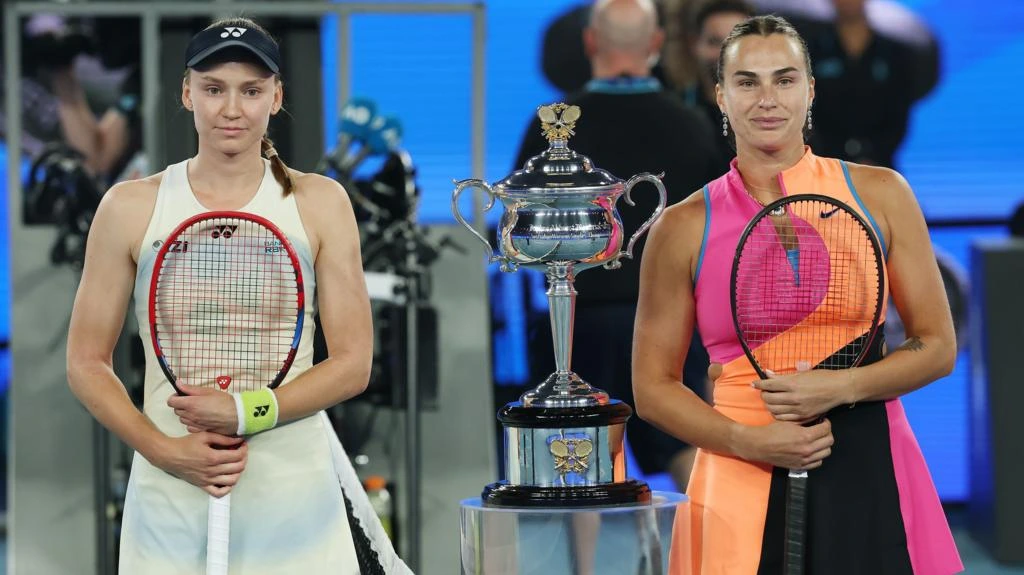
MELBOURNE, Australia — World No. 1 Aryna Sabalenka forced a deciding set against Elena Rybakina in the Australian Open women’s final on Saturday, steadying after a slow start to take the second set 6-4 and move ahead early in the third at Rod Laver Arena.
The match, a rematch of the 2023 final, placed the Melbourne Park crowd at the center of a tense, high-stakes duel between two of the tour’s most powerful players.
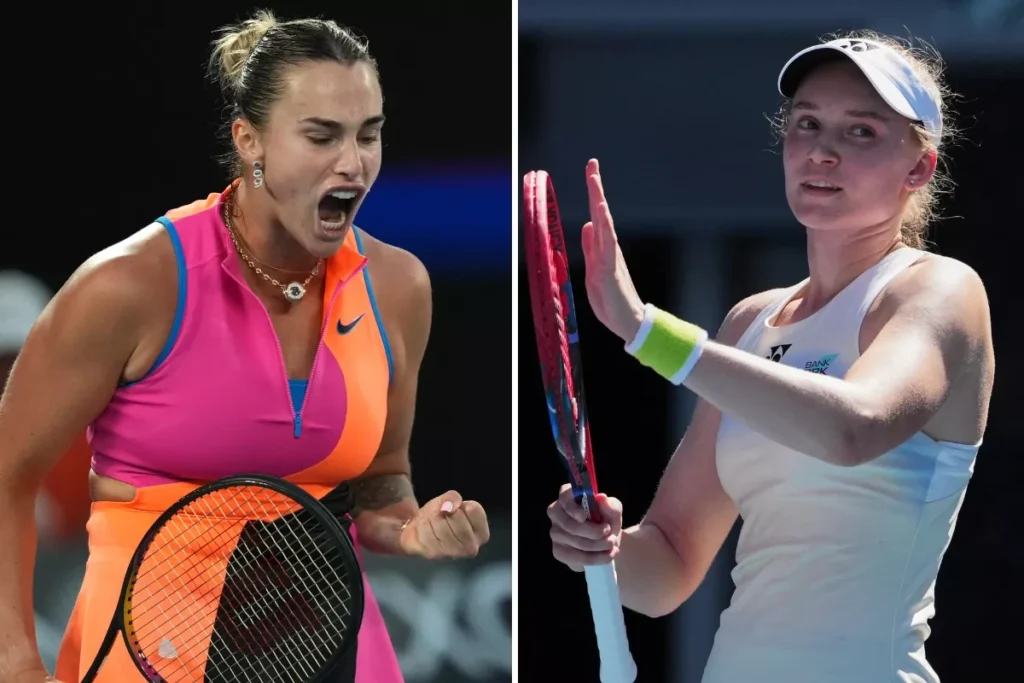
The Australian Open women’s final reached a turning point as Sabalenka, the defending champion, reset her baseline aggression and serve placement to level the match against Rybakina.
After dropping the opening set 6-4, Sabalenka tightened her return games and limited unforced errors to claim the second set, setting the stage for a decisive third in Melbourne’s afternoon heat.
Sabalenka entered the final seeking a third Australian Open crown and her fifth Grand Slam singles title overall, having established herself as the tour’s most consistent hard court performer over the past two seasons.
Rybakina, the 2022 Wimbledon champion, arrived with a contrasting objective: her first major title since that breakthrough and a statement win over the world’s top ranked player.
Their rivalry has been defined by small margins and heavy hitting. Sabalenka led the head to head entering the final, including a victory over Rybakina in the 2023 Australian Open championship match, but Rybakina won their most recent meeting, underscoring the competitive balance between them. Both players are known for first-strike tennis, making service games pivotal and momentum swings abrupt.
The early stages reflected that dynamic. Sabalenka was broken in the opening game after reaching 30-0, the only break she conceded through two sets.
She responded by increasing first-serve percentage and shortening points in the second set, a tactical adjustment often necessary against Rybakina’s flat groundstrokes.
Pam Shriver, a former Grand Slam doubles champion and ESPN tennis analyst, said during broadcast analysis that Sabalenka’s ability to “reset emotionally after a missed opportunity” often separates her in long matches. “When she gets her serve patterns right, she can dictate without overhitting,” Shriver said.
Craig O’Shannessy, a tennis strategy analyst who has worked with multiple top players, noted that Rybakina’s success typically hinges on early control of rallies.
“If Rybakina lands first serves and keeps returns deep, she takes time away,” he said. “Once Sabalenka starts stepping inside the baseline, the balance shifts.”
WTA Tour supervisor Martina Navratilova, speaking on BBC Radio commentary, emphasized the physical demands of the match.
“This is about stamina and shot tolerance now,” Navratilova said. “Both players hit big, but the one who manages the third set nerves will lift the trophy.”Tennis Australia Chief Executive Craig Tiley highlighted the broader significance of the rivalry.
“These finals showcase the power era of the women’s game,” Tiley said in a media briefing at Melbourne Park. “They set the standard for what fans can expect this season.”
Beyond the immediate title, the result will shape the early months of the WTA calendar. A Sabalenka win would reinforce her grip on the No. 1 ranking and extend her dominance in Melbourne.
A Rybakina victory would tighten the race at the top and signal renewed contention across surfaces as the tour moves toward the spring hard-court swing.
As the deciding set began with Sabalenka holding serve to move ahead, the Australian Open final reflected the fine margins that define elite tennis.
The contest underscored not only the rivalry between Sabalenka and Rybakina but also the evolving power balance in the women’s game, with implications likely to resonate well beyond Melbourne Park.


