
KEY POINT
- Iran, China and Russia will conduct the eighth “Maritime Security Belt” naval drills in mid February in the northern Indian Ocean.
- The exercises will include Iran’s regular navy and the Islamic Revolutionary Guard Corps alongside Chinese and Russian naval forces.
- The drills come as US Iran tensions remain high over regional security and maritime freedom.
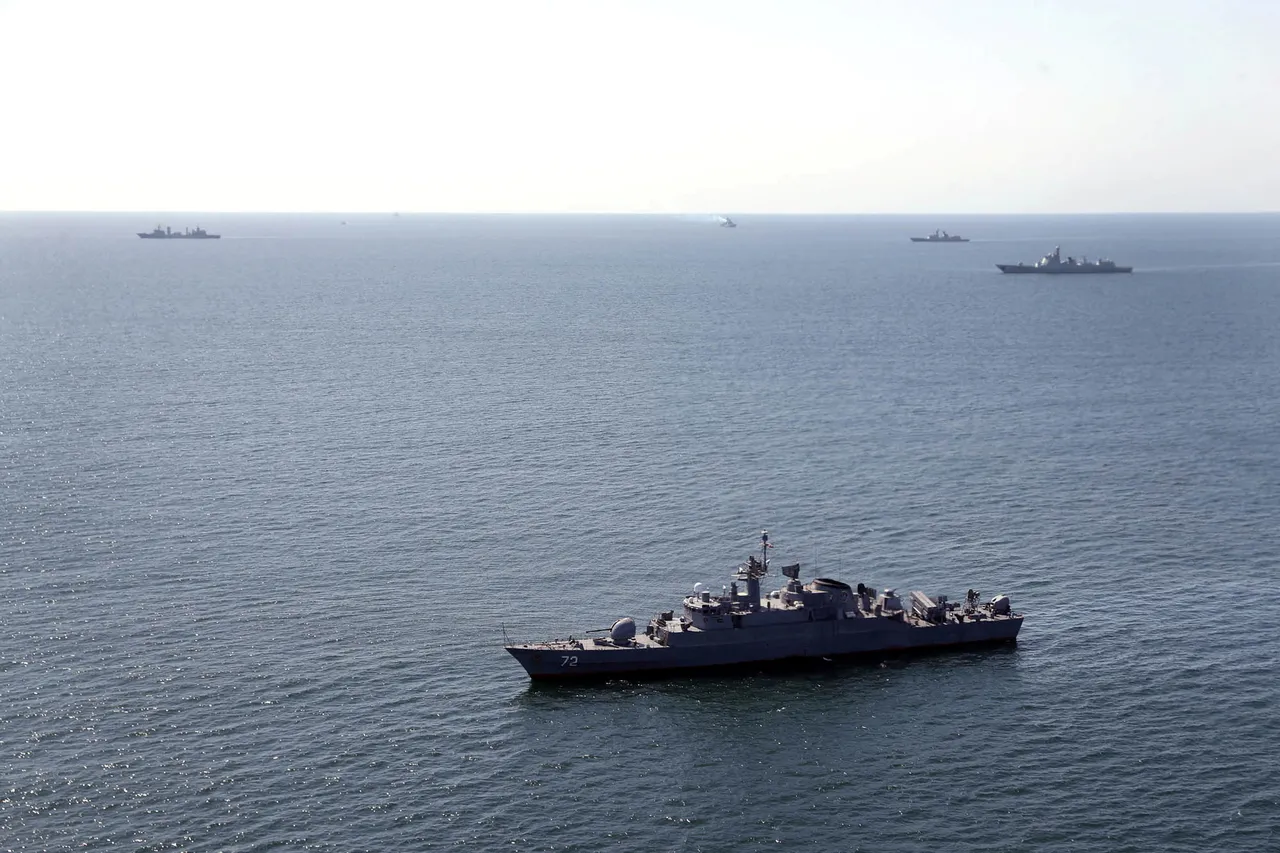
Iran plans to hold joint naval exercises with China and Russia in mid February in the northern Indian Ocean, Iranian state linked media reported Saturday, underscoring deepening military coordination among the three countries at a time of elevated tensions with the United States.
The planned drills, reported by Iran’s semi-official Tasnim news agency, will bring together naval units from Tehran, Beijing and Moscow in waters that are strategically vital for global energy shipments and international trade.
While the exercises are framed by Iranian officials as defensive and routine, their timing and participants have drawn international attention amid strained relations between Iran and the United States and growing competition between Washington and both China and Russia.
The joint exercises, known as the “Maritime Security Belt,” began in 2019 and have since been held intermittently, often in or near the Gulf of Oman and the northern Indian Ocean.
Iranian authorities say the drills are intended to improve maritime security, counter piracy and enhance coordination among participating navies.
The northern Indian Ocean connects the Middle East to South Asia and East Africa and serves as a major corridor for oil and liquefied natural gas exports.
The area has seen repeated incidents involving commercial shipping in recent years, including seizures and confrontations linked to broader regional disputes.
Iran’s participation includes both its regular navy and the naval branch of the Islamic Revolutionary Guard Corps, a powerful force that answers directly to Iran’s supreme leader and plays a central role in Tehran’s regional military posture. The IRGC has been involved in several past encounters with US and allied vessels in nearby waters.
China and Russia have increased their naval presence beyond their immediate regions over the past decade, using joint drills and port visits to signal strategic partnerships and global reach.
Michael Kugelman, director of the South Asia Institute at the Wilson Center, said the exercises reflect converging interests among Iran, China and Russia rather than a formal military alliance.
“These drills are less about tactical interoperability and more about strategic messaging,” Kugelman said in an interview.
“They signal shared opposition to US influence in key maritime regions without crossing into overtly provocative territory.”
Andrea Kendall Taylor, a senior fellow and director of the Transatlantic Security Program at the Center for a New American Security, said the repetition of the exercises has normalized trilateral cooperation.
“Each iteration reinforces the idea that these countries can operate together at sea, even if their broader military doctrines and capabilities differ,” she said. “That alone has implications for how the United States and its partners assess long-term maritime security.”
Iranian officials have consistently said the drills are not directed against any country. Chinese and Russian defense ministries have previously described similar exercises as contributing to regional stability.
Rear Adm. Shahram Irani, commander of Iran’s navy, said in a statement carried by Iranian media that the exercises aim to “strengthen collective security and demonstrate the ability of regional and extra-regional powers to cooperate for maritime stability.”
The Chinese Defense Ministry said in a prior briefing on similar drills that such exercises are “part of normal military exchanges and are not aimed at any third party.”
A Russian Defense Ministry spokesperson said joint naval activities with Iran and China help “ensure the safety of maritime navigation and counter common threats,” according to Russian state media.
The mid February drills are expected to proceed as planned, with participating navies conducting coordinated maneuvers over several days.
US officials have not publicly commented on the latest announcement, but Washington has previously said it monitors such exercises closely while emphasizing its commitment to freedom of navigation.
Any immediate operational impact is likely to be limited, analysts said, but the exercises add to a broader pattern of strategic signaling among countries seeking to challenge US influence in key regions.
As Iran prepares to host joint naval drills with China and Russia once again, the exercises highlight shifting dynamics in maritime security and great power competition.
While largely symbolic, the continued cooperation underscores the growing willingness of Tehran, Beijing and Moscow to showcase alignment in strategically sensitive waters with global economic importance.


