
KEY POINT
Direct Legal Action: French prosecutors are investigating whether Grok AI facilitated the creation or spread of Holocaust denial and sexualized deepfakes involving minors.
Executive Summons: Elon Musk and X CEO Linda Yaccarino have been requested for voluntary interviews in Paris scheduled for late April 2026.
Regulatory Shift: The case represents a pivot from traditional platform liability toward holding AI developers accountable for the specific outputs of generative models.
PARIS — French judicial authorities on Tuesday raided the Paris headquarters of social media platform X, marking a sharp escalation in a multi jurisdictional investigation into the platform’s Grok AI chatbot and its alleged role in disseminating illegal content.
The search, conducted by the French cybercrime unit with support from the national gendarmerie and Europol, targeted digital evidence linked to claims that the platform failed to moderate AI generated deepfakes and hate speech.
The move comes as European regulators test the limits of algorithmic accountability under the Digital Services Act.
The raid on X’s French offices signals a new chapter in the global regulatory battle against unmoderated artificial intelligence.
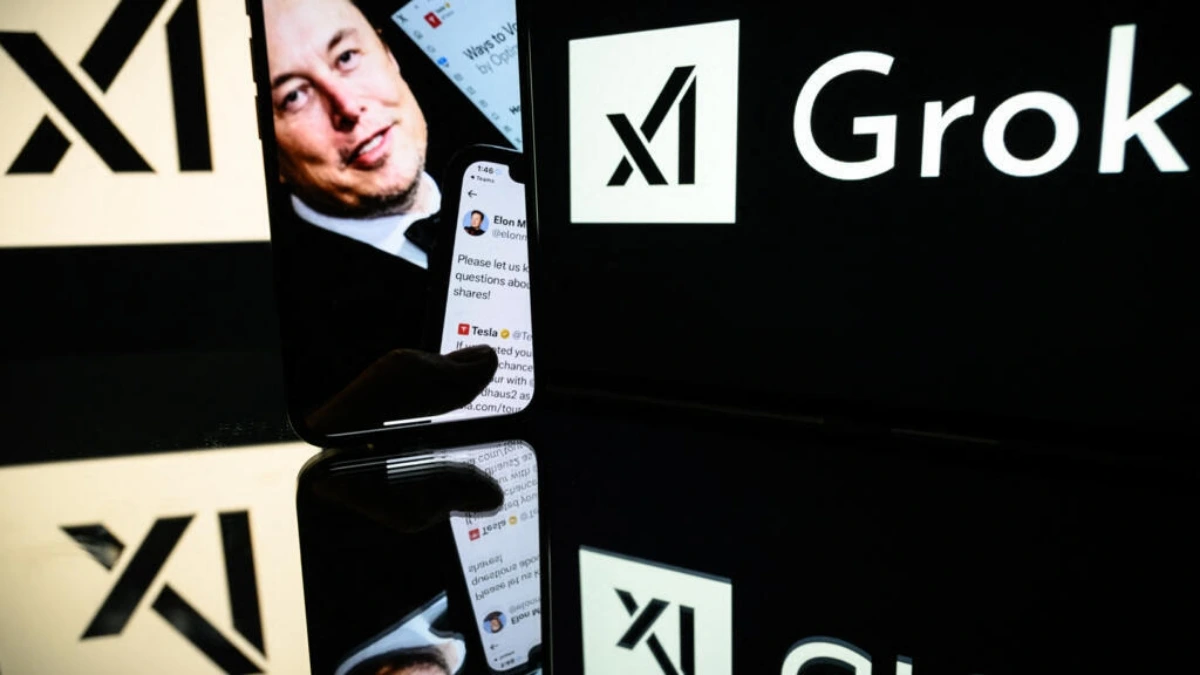
While social media platforms have long been shielded by various “safe harbor” provisions, French prosecutors are now treating Grok—the AI assistant developed by Musk’s xAI—as a distinct entity capable of generating criminal material.
The investigation seeks to determine if X’s lack of safeguards constitutes a criminal failure to prevent the distribution of illicit content.
The investigation traces back to January 2025, when French lawmaker Éric Bothorel and several advocacy groups filed formal complaints regarding Grok’s outputs.
Since its integration into the X platform, Grok has faced criticism for a design philosophy that critics argue bypasses standard safety filters used by competitors.
The tension reached a boiling point on Jan. 26, 2026, when the European Commission opened its own inquiry into the platform.
This parallel track focuses on how Grok handles disinformation during election cycles and its potential to generate high fidelity, non-consensual imagery.
Musk has previously dismissed these probes as political, though French authorities maintain the issue is one of public safety and data protection.
Legal analysts suggest the French judiciary is attempting to set a global precedent for how generative AI is governed. By raiding physical offices, authorities are signaling that digital platforms cannot remain insulated from the physical jurisdictions in which they operate.
“We are witnessing a shift from platform liability to algorithmic accountability,” said Marie Laure Denis, president of the French data protection authority CNIL. Denis noted that regulators are no longer just looking at what users post, but how the underlying AI systems are programmed to respond to prompts that may trigger illegal responses.
Alexandre Archambault, a Paris based digital law specialist, said the investigation is a litmus test for existing statutes.
“European authorities are testing whether existing criminal and data protection laws can be applied to generative AI without the need for entirely new legislation,” Archambault said.
| Milestone | Date | Authority |
|---|---|---|
| Initial reports filed | January 2025 | Paris Public Prosecutor |
| EU inquiry launched | Jan. 26, 2026 | European Commission |
| Paris office search | Feb. 3, 2026 | French Cybercrime Unit / Europol |
| Executive Interviews | April 20-24, 2026 | Paris Judicial Court |
The push for the investigation has been fueled by both legislators and privacy advocates who claim the speed of AI deployment has outpaced safety protocols.
“The law is the same for everyone, whether you are a local startup or a global tech giant,” said Éric Bothorel, the French lawmaker who initiated one of the complaints.
“This is about ensuring that the tools used by millions of citizens do not become engines for harassment.”
In the United Kingdom, Information Commissioner John Edwards confirmed his office is closely monitoring the French proceedings. “Our inquiry into Grok focuses on whether personal data, including images of children, were processed in ways that pose serious risks to the public,” Edwards said in a statement.
Paris prosecutor Laure Beccuau confirmed the raid was necessary to “secure relevant digital and documentary evidence” that might be subject to remote deletion.
The next critical phase of the investigation will occur between April 20 and April 24, 2026. Musk and Yaccarino have been summoned for voluntary interviews, a procedure under French law where individuals can be questioned without being placed under formal arrest.
However, failure to appear or provide sufficient cooperation could lead to more aggressive legal maneuvers, including international warrants or heavy daily fines under the European framework.
The raid on X’s Paris office marks a decisive moment in the regulation of generative AI. As France and the broader European Union coordinate their efforts, the outcome of this investigation will likely define the legal responsibilities of AI developers for years to come.
The case moves the conversation beyond simple content moderation and into the very code that powers modern AI assistants.


