
KEY POINT
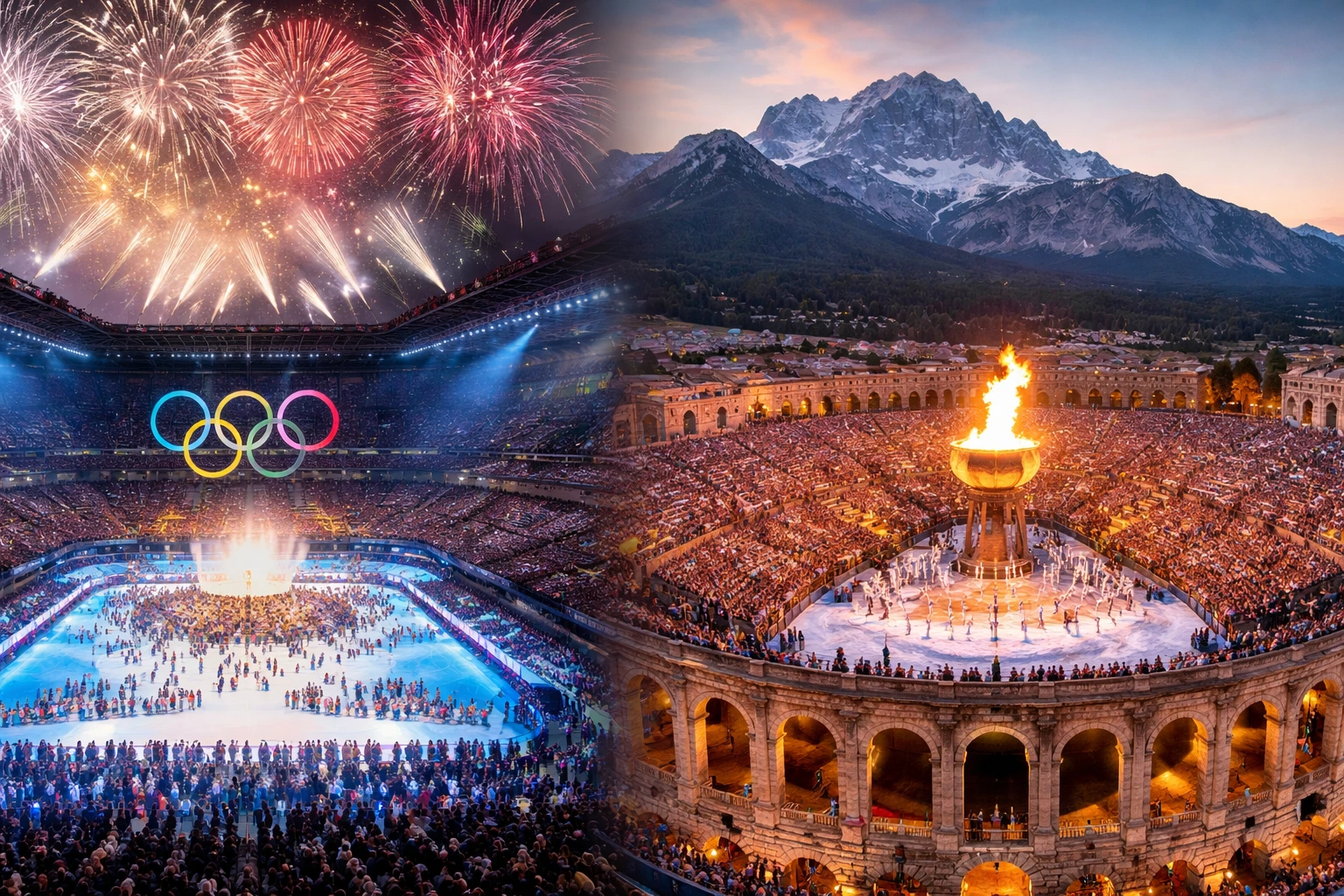
- The Opening Ceremony in Milan emphasizes the theme of harmony, with performances blending Italian arts and Olympic tradition.
- The Closing Ceremony in Verona will celebrate the Games’ achievements while formally handing over responsibilities to the next host city.
- Dual Olympic cauldrons in Milan and Cortina d’Ampezzo symbolize the multi location nature of the 2026 Winter Olympics.
MILAN/VERONA, Italy — The 2026 Winter Olympics officially open Feb. 6 at Milan’s San Siro Stadium, marking the start of more than two weeks of competition across northern Italy.
The Closing Ceremony will take place Feb. 22 at Verona’s historic Roman Arena, highlighting the country’s cultural heritage and geographic diversity. Officials say the ceremonies reflect Italy’s effort to balance tradition, innovation, and broad regional engagement.
The Milan Cortina 2026 Winter Olympics span Feb. 6 22 with athletes competing across multiple venues, from city arenas to alpine slopes.
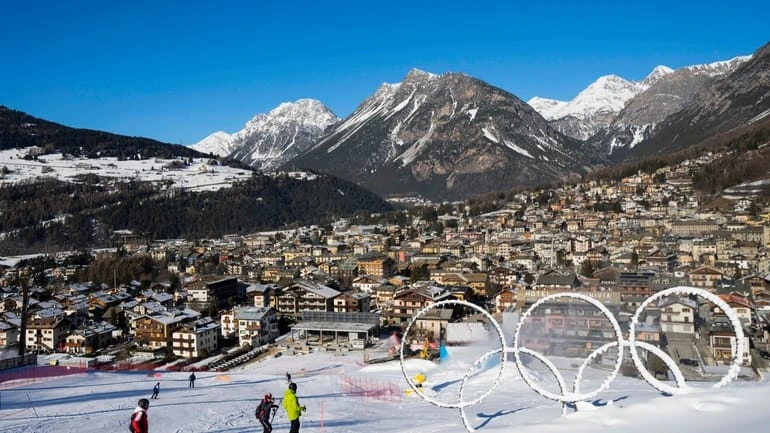
The ceremonies bookending the Games are designed not only as entertainment but also as cultural showcases, reflecting Italy’s history, arts, and geography to a global audience.
Italy last hosted the Winter Olympics in 2006 in Turin. The 2026 edition adopts a distributed hosting model, with events staged in Milan, Cortina d’Ampezzo, and surrounding regions. This approach aims to maximize economic impact and cultural exposure beyond a single city.
The Olympic flame, lit in Ancient Olympia in November 2025, traversed more than 12,000 kilometers through all Italian provinces before arriving in Milan. The journey underscores Italy’s commitment to regional inclusion and the Olympic values of unity and continuity.
The multi location model of the 2026 Games is considered an experiment in modern Olympic planning.
“Hosting parts of the Games in both urban and mountain settings allows Italy to showcase its geographic range while engaging more local economies,” said Dr. Alessandra Rossi, professor of sports management at the University of Milan.
Marco Balich, creative director for the Opening Ceremony, said the theme of harmony connects “mountains and cities, tradition and innovation, through shared experiences that reflect Italy’s cultural identity.”
“I’ve been organizing tours in Verona for years, but hosting the Closing Ceremony brings the city unprecedented international attention,” said Luca Bianchi, a local tourism operator.
In Milan, hotel manager Elena Marchetti reported an influx of visitors: “The Opening Ceremony has drawn guests from Europe, Asia, and the Americas. It’s a unique opportunity to showcase Milan to the world.”
Observers will study how the distributed model affects regional economies, logistics, and audience experience. Early assessments could influence planning for future Winter Games, including the 2030 edition in the French Alps.
The 2026 Winter Olympics ceremonies in Milan and Verona represent a strategic evolution in Olympic hosting. By combining athletic spectacle with cultural heritage and regional inclusion, Italy is setting a model for innovation while maintaining the enduring traditions of the Games.


