

KEY POINT
- Alysa Liu finished third in the short program, keeping the US in the running for a medal.
- Amber Glenn fell on a key jump, placing 13th but advancing to the free skate.
- Japan’s Ami Nakai and Kaori Sakamoto lead the leaderboard, highlighting strong competition from Asia.
MILAN — Alysa Liu delivered a standout performance in the women’s figure skating short program Tuesday at the 2026 Winter Olympics, positioning herself as the United States’ strongest medal contender, while teammate Amber Glenn faced a critical error that hampered her podium chances.
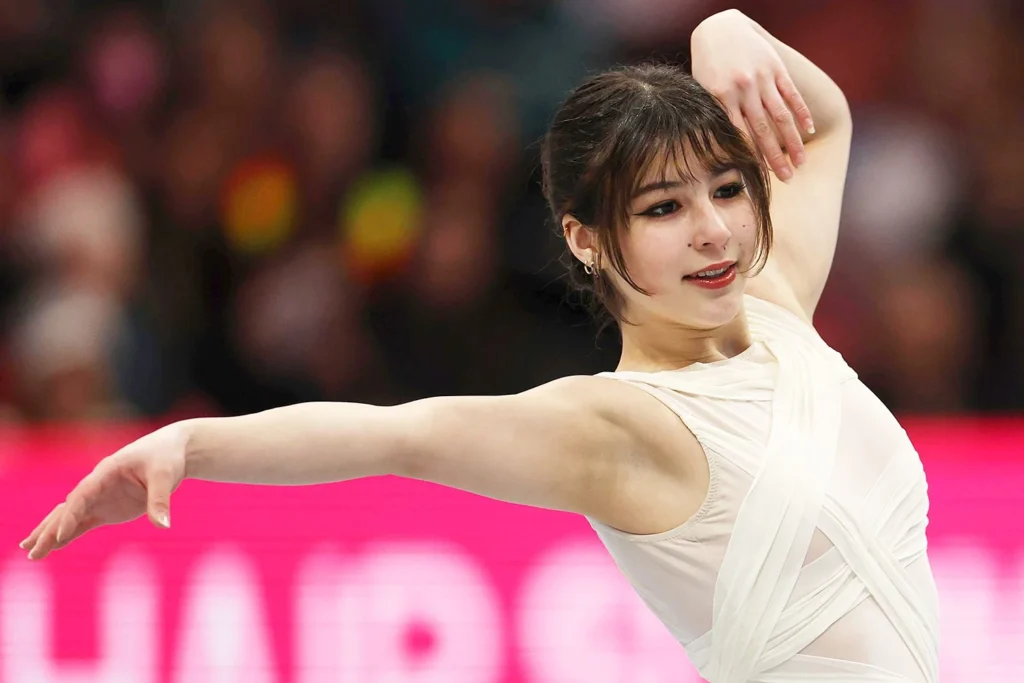
Liu, the reigning world champion, finished third in the short program, demonstrating both technical skill and composure.
Glenn, who began her routine strongly with a triple Axel, faltered on her final jump, earning zero points on that element. The mishap left her in 13th place, far from medal contention, though she advanced to Thursday’s free skate.
Japan’s 17 year old Ami Nakai took first place with 78.71 points, while fellow Japanese skater Kaori Sakamoto placed second at 77.23. Liu earned 76.59 points, receiving some of the loudest applause of the night for her difficult triple Lutz triple loop combination.
The US women’s figure skating team has not won an Olympic medal in singles since Sasha Cohen earned silver in 2006. This year, the country pinned its hopes on three skaters: Liu, Glenn, and Isabeau Levito.
After the short program, only Liu remains realistically in medal contention, reflecting both the narrow margins and the pressure of Olympic competition.
The women’s figure skating field in 2026 is highly competitive, with several athletes capable of executing technically demanding elements such as the triple.
Axel. Liu, at 18, combines athletic ability with previous international success, including her 2025 World Championship title. Glenn is also known for her triple Axel and expressive performances, which have helped her stand out nationally.
Japan’s Nakai and Sakamoto have been dominant in recent international competitions, with Nakai emerging as a rising star at only 17 years old. Their strong technical elements and consistent performances set a high bar for the Olympic event.
David Shoemaker, a former US national team coach, said Liu’s performance demonstrates a rare blend of difficulty and control. “When Liu lands her jumps cleanly and maintains composure, she becomes a serious medal contender,” Shoemaker said.
Sports psychologist Dr. Sara Brown, University of Michigan, noted the psychological strain athletes face at this level. “A single error, especially on a signature jump, can lead to an emotional reaction.
It does not define the athlete’s capabilities but highlights the intense pressure of Olympic competition,” she said.
Their perspectives underline the contrast between Liu’s steady execution and Glenn’s emotional response following her final jump.
Liu praised her performance and emphasized focus, telling reporters she was “grateful for my coaches and thrilled to execute my program cleanly.”
Glenn was visibly emotional after her performance. A US Figure Skating official noted that Glenn was “processing the disappointment but remains determined to give her best in the free skate.”
Thursday’s free skate will be decisive. Liu, with strong technical content and competitive poise, remains positioned to contend for a medal.
Glenn and Levito, while outside immediate medal contention, have opportunities to improve their final scores and demonstrate resilience under Olympic pressure.
The short program at the 2026 Olympics highlighted both the promise and challenges facing the US women’s team. Alysa Liu stands out as a key medal prospect, while Amber Glenn’s setback underscores the intense demands of Olympic competition.
As the free skate approaches, the performances will determine which skaters can capitalize on their technical skills and composure to achieve Olympic success.


