
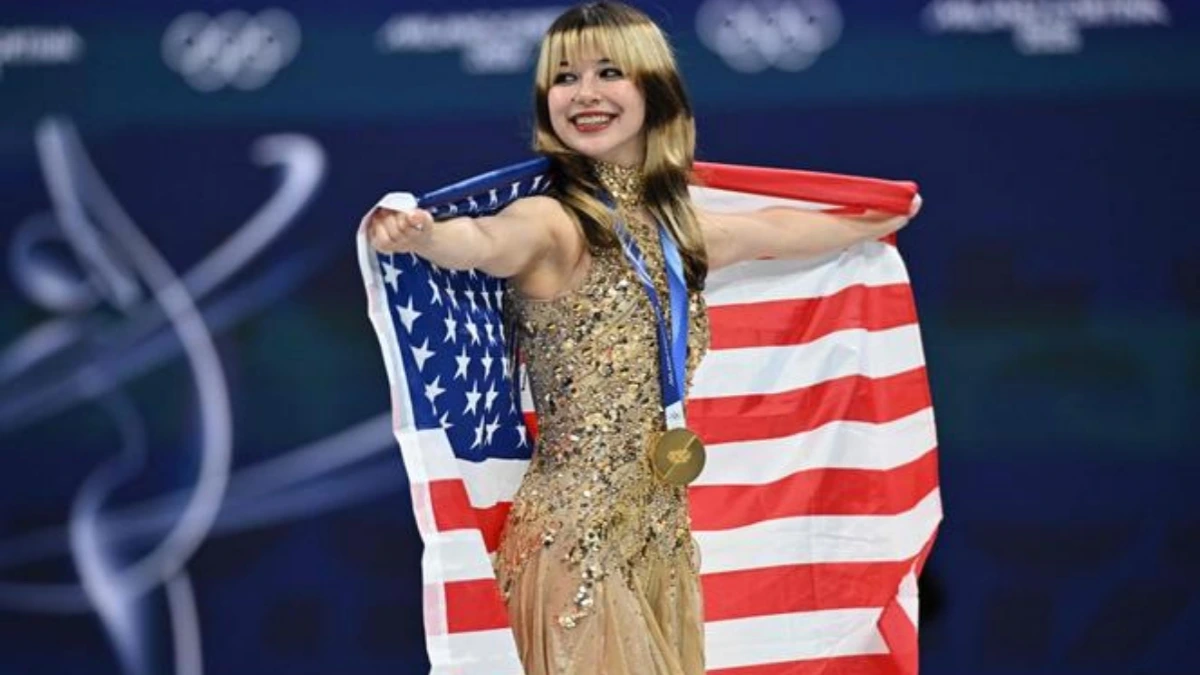
KEY POINT
Historic achievement: Liu is the first American woman to win an Olympic gold medal in individual figure skating since Sarah Hughes in 2002, ending a 24‑year drought.
Strong comeback: After stepping away from competition following the 2022 Olympics, Liu returned to elite skating and rebuilt her career with renewed focus.
Impact on sport: Her victory highlights a growing emphasis on athlete well‑being and may influence how skaters balance competitive intensity with personal growth.
MILAN — Alysa Liu of the United States captured the women’s figure skating individual gold medal Thursday at the 2026 Winter Olympics in Milan, Italy, delivering a polished performance that propelled her to the top of the podium and ended a long gap since an American woman last won the event.
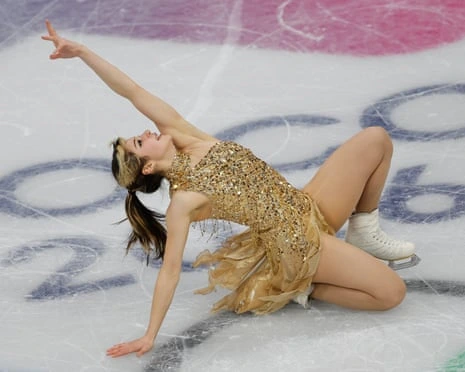
Liu skated a confident free program at the Milano Ice Skating Arena, moving up from third place to first in the final standings. Her combined technical precision and expressive presentation earned her the highest total score in a tightly contested field.
Liu’s Olympic success marked a major milestone for her personally and for US figure skating. Entering the free skate behind two competitors, she delivered a near flawless routine that combined high value jump elements with graceful choreography, resulting in a winning total score that placed her ahead of rivals from Japan and other leading skating nations.
Observers noted Liu’s composed demeanor throughout the competition, a contrast to the intense pressure that often affects athletes at this level.
Her ability to perform under the spotlight with a smile and palpable enjoyment became one of the defining images of the event.
Alysa Liu first gained international attention as a teen prodigy, setting records as one of the youngest skaters to achieve national titles in the United States.
After competing at the 2022 Winter Olympics in Beijing, where she finished in the top ten, she stepped away from elite competition, citing burnout and a desire to explore life beyond skating.
During her break, she pursued academic interests and personal experiences that provided distance from the sport’s demanding cycle.
In the following seasons, Liu returned to competitive skating with renewed commitment, capturing major titles on the world stage and establishing herself as a leading contender heading into the 2026 Games.
Her journey from early success to temporary retirement and back to elite performance illustrates a broader narrative about resilience and reinvention in elite sport.
Dr. Karen Bryant, a sports psychologist at UCLA, said Liu’s approach exemplifies a shift in athlete preparation: “Liu’s choice to take a step back and focus on her wellbeing appears to have strengthened her mental approach. That kind of clarity can be as valuable as physical training when it comes to performing under pressure.”
Elena Popov, former world championship coach and current technical advisor at a national skating federation, highlighted Liu’s blend of athleticism and artistry:
“What sets her apart is not just her jump content but her ability to maintain flow and expression throughout the program. Judges reward skaters who sustain that balance.”
The current figure skating scoring system places significant weight on both technical elements and presentation components, meaning skaters must excel in both areas to secure top placements.
Speaking after her performance, Liu described the experience as deeply fulfilling: “I tried to stay calm and enjoy my skating. I trained hard and wanted to express myself out there.” Her relaxed tone stood out in a sport often defined by anxiety and perfectionism.
Japan’s silver medalist, Kaori Sakamoto, praised Liu’s performance: “Her routine was strong today. She earned this moment with consistency and heart.” Such acknowledgment from competitors underscores the quality of the field at these Games.
Liu’s victory is likely to generate renewed interest in figure skating across the United States and beyond. National skating programs may increasingly emphasize athlete mental health, recognizing that long‑term success often depends on a combination of physical skill and psychological resilience.
Her story also highlights the evolving landscape of elite sport, where athletes increasingly prioritize balance, rest and personal development alongside competitive goals.
Alysa Liu’s gold medal performance at the 2026 Winter Olympics stands as a defining moment in her career and in US figure skating history.
Her journey marked by early success, a period of withdrawal and a triumphant return exemplifies the resilience and adaptability required of athletes in high performance environments.
Her achievement not only ends a long medal drought but also signals the increasing importance of holistic athlete development in the sport’s future.


