
KEY POINT
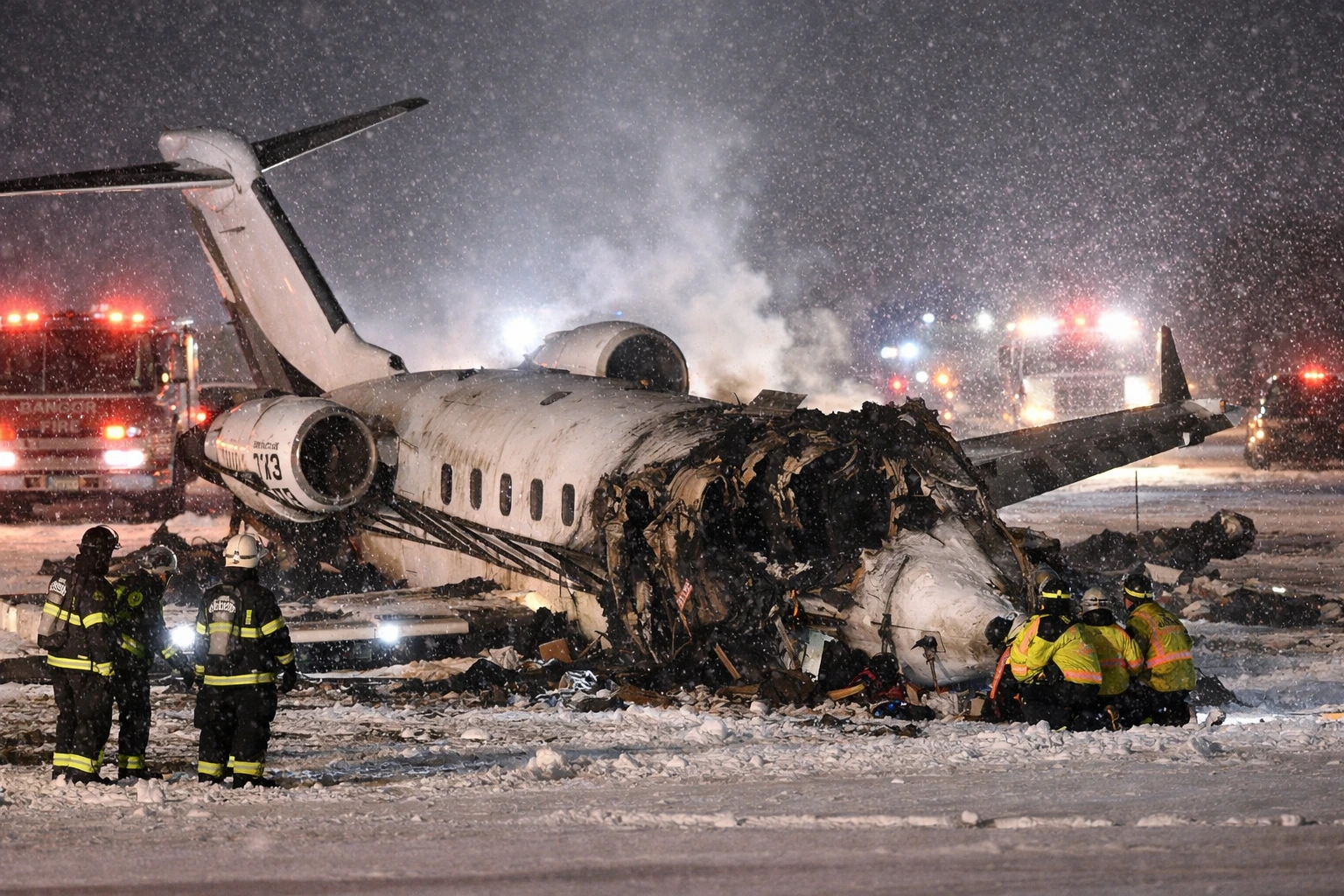
- Bombardier Challenger 650 business jet crashed on takeoff from Bangor International Airport with eight people on board
- The private jet crash at Maine airport occurred amid low visibility and freezing conditions during a regional snowstorm
- The FAA and National Transportation Safety Board will lead the investigation as the airport remained closed overnight
A private jet carrying eight people crashed during takeoff at Bangor International Airport in Maine on Sunday evening, prompting the closure of the airport and a federal investigation as a powerful winter storm reduced visibility across the Northeast, according to the Federal Aviation Administration.
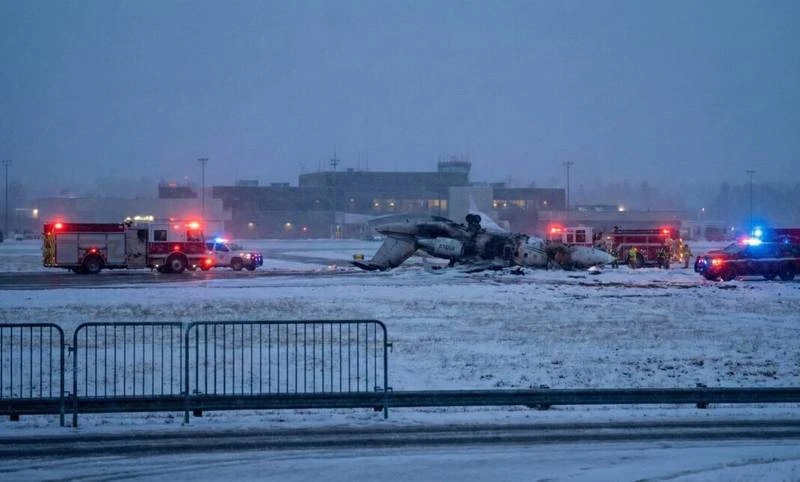
The private jet crash at Maine airport has raised renewed concerns about winter aviation safety as severe weather disrupts travel across the United States. Emergency crews worked for hours on the airfield.
Sunday night as federal authorities began the early stages of an investigation into the cause of the accident. Officials said the number and severity of injuries were not immediately known.
The FAA said the aircraft, a Bombardier Challenger 650 business jet, crashed shortly after beginning its takeoff roll from Runway 33 at Bangor International Airport at about 7:45 p.m. local time.
The jet was registered to a limited liability corporation based in Houston, according to federal aviation records.
In a joint statement, the City of Bangor and Bangor International Airport said first responders remained actively engaged at the scene late Sunday and that no cause had been determined.
The airport was closed overnight to allow emergency operations and initial investigative work to proceed.
Air traffic control audio from moments before the crash indicates heightened concern over weather conditions.
Controllers and pilots discussed low visibility and deicing procedures as light snow fell and temperatures remained well below freezing.
Nearly two minutes after a controller cleared the aircraft for takeoff, another controller urgently radioed that all traffic on the field had been stopped. Moments later, an aircraft was reported to be upside down.
Winter weather is a persistent risk factor in aviation incidents, particularly in northern regions, said John Cox, a former airline captain and chief executive officer of Safety Operating Systems, an aviation safety consulting firm.
Cox said reduced visibility, contaminated runways and aircraft icing can combine to create “very narrow safety margins” during takeoff.
“The takeoff phase is already one of the most critical parts of flight,” Cox said. “When you add snow, ice and limited visual cues, pilots and controllers must rely heavily on procedures and aircraft performance data.”
Robert Sumwalt, former chairman of the National Transportation Safety Board and now a transportation safety analyst, said early reports underscore the importance of not drawing conclusions before investigators examine flight data, cockpit voice recordings and runway conditions.
“The investigation will focus on human factors, mechanical performance and environmental conditions together,” Sumwalt said.
The FAA confirmed that the NTSB will lead the investigation, with FAA support. An FAA spokesperson said investigators will document the wreckage, interview witnesses and review communications between pilots and air traffic control.
Bangor Airport Director Rebecca Hupp said in a statement that the airport is cooperating fully with federal authorities and that safety remains the top priority. She declined to comment on injuries, citing the ongoing response.
Maine Gov. Janet Mills said she was briefed on the incident and thanked first responders for working under “extremely challenging weather conditions.”
Federal investigators are expected to remain in Bangor for several days. The NTSB will issue a preliminary report once initial findings are compiled, though a final determination of the cause could take months.
Airport officials said normal operations will resume only after investigators release the airfield.
The private jet crash at Maine airport highlights the operational challenges faced by aviation crews during severe winter weather.
As investigators work to determine what led to the accident, the incident underscores the importance of weather preparedness, coordination and adherence to safety protocols during one of the most demanding phases of flight.


