
KEY POINT
- The Canadian school shooter killed eight victims in Tumbler Ridge, British Columbia before dying by suicide, police said.
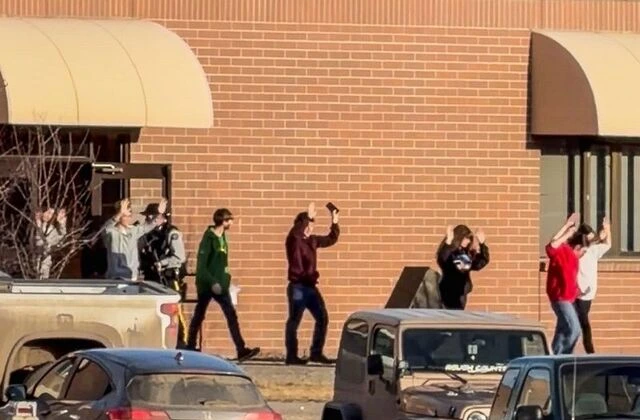
- Victims included family members at a private residence and a teacher and students at Tumbler Ridge Secondary School.
- Authorities confirmed a history of police attendance at the family home related to mental health concerns.
TUMBLER RIDGE, British Columbia — Canadian authorities have identified the suspect in one of the country’s deadliest school shootings as eighteen year old Jesse Van Rootselaar, who police say killed eight people before dying by suicide in the remote northeastern British Columbia community of Tumbler Ridge.
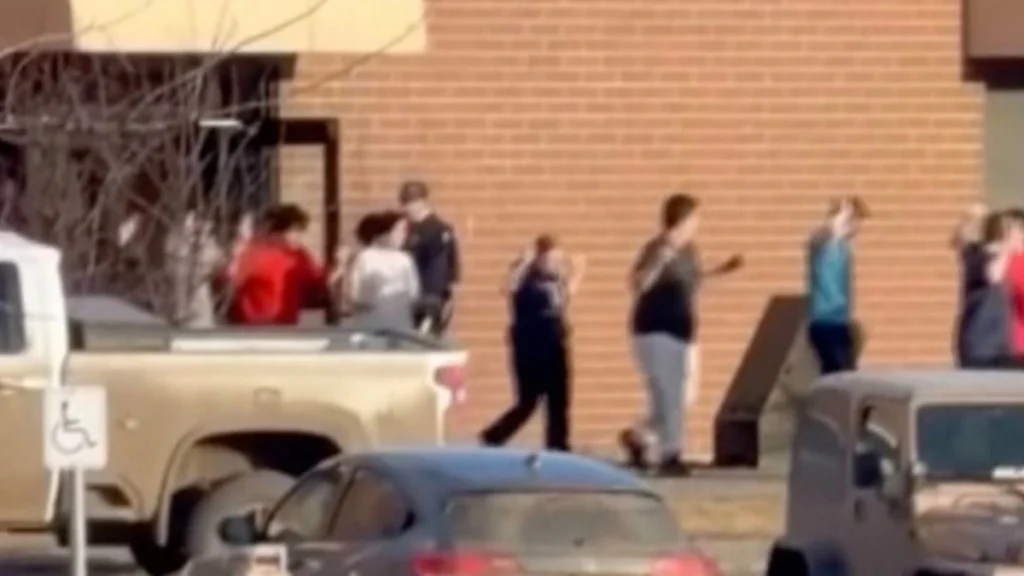
Deputy Commissioner Dwayne McDonald, commander of the Royal Canadian Mounted Police in British Columbia, said Wednesday that Van Rootselaar fatally shot her mother and eleven year old stepbrother at their family residence before going to Tumbler Ridge Secondary School, where she killed a teacher and five students. Police revised the death toll to nine, including the suspect, down from an initial report of ten.
Authorities said Van Rootselaar was not a current student at the school and had dropped out approximately four years ago. Investigators believe the suspect acted alone and said it was too early to determine a motive.
The killings have shaken Canada, a country with comparatively strict firearm regulations and relatively low rates of gun violence. Prime Minister Mark Carney described the attack as “terrible” and ordered flags on federal buildings lowered to half staff for seven days, postponing an official trip to Europe.
The massacre ranks among the deadliest school shootings in Canadian history and has renewed scrutiny of gun licensing, mental health interventions and firearm seizure laws.
McDonald said police had previously attended the family residence in connection with mental health related calls. During earlier visits, officers seized legally owned firearms but later returned them after the owner successfully petitioned for their reinstatement, in accordance with Canadian firearms law.
Two firearms were recovered at the school scene: a long gun and a modified handgun, police said.
Under Canadian law, individuals must obtain a Possession and Acquisition License following background checks, safety training and screening.
Authorities can revoke licenses and seize weapons if there are public safety concerns. Court challenges may result in firearms being returned if legal thresholds are not met.
Tumbler Ridge, a community of roughly two thousand residents near the Alberta border, is geographically isolated, with limited access to mental health and social services compared with larger urban centers.
The attack follows other high profile mass killings in Canada, including the April 2020 Nova Scotia rampage in which twenty two people were killed over thirteen hours.
That event prompted a federal ban on certain assault-style firearms and a national conversation about gun control enforcement.
Public safety and legal scholars say the Canadian school shooting highlights persistent gaps between legal safeguards and real-time risk assessment.
“This case appears to raise serious questions about how mental health calls intersect with firearms access,” said Wendy Cukier, president of the Coalition for Gun Control and a professor at Toronto Metropolitan University.
“Canada’s licensing system is robust on paper, but its effectiveness depends on consistent monitoring and information sharing.”
Cukier said so called “red flag” provisions, which allow courts to temporarily remove firearms from individuals deemed a risk to themselves or others, rely heavily on family members or authorities initiating action.
Kent Roach, a professor of law at the University of Toronto who has studied public safety legislation, said prior police contact does not automatically justify permanent revocation of firearms.
“The legal threshold for denying or revoking a firearms license must meet standards of fairness and evidence,” Roach said.
“If weapons were returned after review, that suggests a judicial or administrative determination that the statutory criteria for prohibition were not met at the time.”
He added that policymakers may examine whether existing review mechanisms adequately account for evolving mental health concerns.
Carolyn Rice, mayor of Tumbler Ridge, called the tragedy “a devastating loss for a small, close knit community.
“Our focus right now is on supporting families, students and school staff,” Rice said in a statement. “We are coordinating with provincial authorities to ensure counseling and crisis services are available.”
The British Columbia Ministry of Education said trauma response teams were dispatched to the district and neighboring communities.
Dr. Alexander McLean, a clinical psychologist based in Vancouver who specializes in youth crisis intervention, said rural isolation can complicate early intervention.
“In smaller communities, access to specialized mental health services can be limited,” McLean said. “Timely intervention often depends on available resources and the willingness of families to engage with ongoing care.”
The Royal Canadian Mounted Police said the investigation remains active and will examine the timeline of events, firearm access and prior police interactions.
Federal officials have not announced new legislative proposals, but public safety advocates expect parliamentary committees to review whether current firearm seizure and review processes function as intended.
Prime Minister Carney said Canadians would “learn from this,” though he did not specify potential policy steps.
The identification of the Canadian school shooter as Jesse Van Rootselaar has intensified national mourning and renewed debate over mental health oversight and firearm regulation.
As investigators continue to piece together the sequence of events in Tumbler Ridge, officials have emphasized support for victims’ families and the broader community while assessing whether existing safeguards were sufficient to prevent one of the deadliest school shootings in recent Canadian history.


