
KEY POINT
- Coco Gauff’s Australian Open quarterfinal ended in a 6-1, 6-2 defeat to Elina Svitolina.
- The match lasted under an hour, marking Gauff’s shortest loss at a Grand Slam since two thousand twenty two.
- The incident highlighted the pressure facing topranked players during major tournaments, including the Australian Open quarterfinal stage.
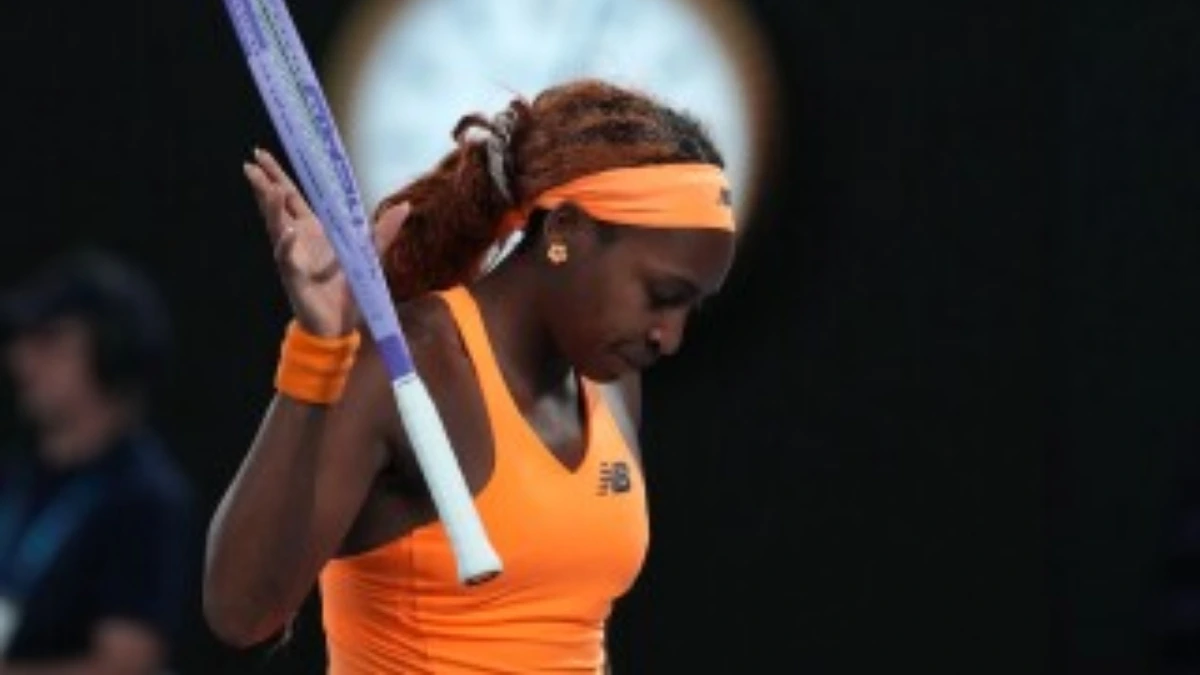
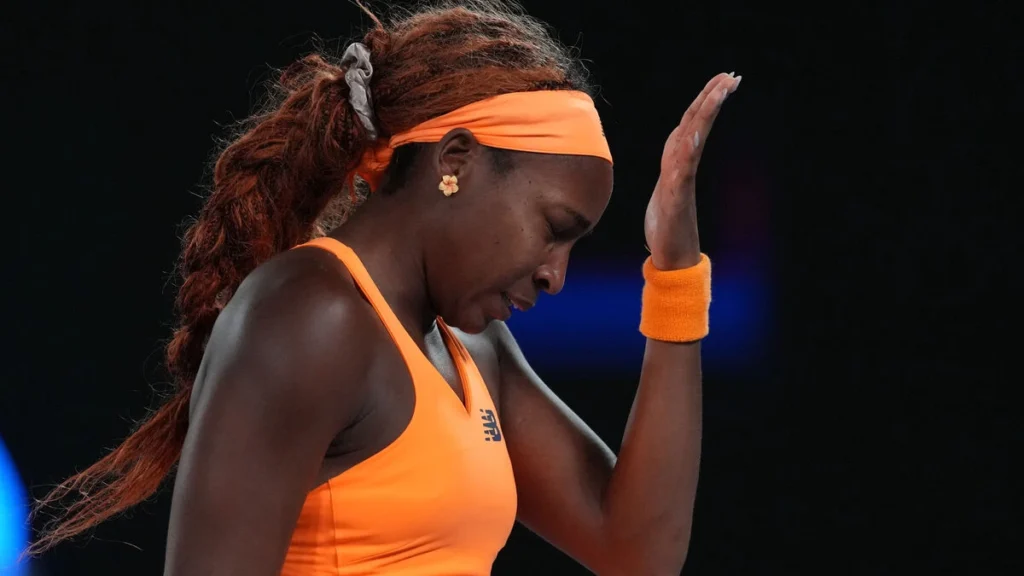
Coco Gauff’s Australian Open title bid ended abruptly in Melbourne on Tuesday when the American was defeated in straight sets by Ukraine’s Elina Svitolina, a loss that lasted just fifty nine minutes and culminated in a visible moment of frustration as Gauff smashed her racket while leaving Rod Laver Arena.
The defeat brought an abrupt halt to what had been a strong run for Gauff at the season’s first Grand Slam. Entering the Australian Open quarterfinal as one of the tournament favorites, the world No. 3 struggled in extreme heat against a composed and aggressive Svitolina, who advanced to the semifinals with one of the most decisive wins of her comeback season.
Gauff, the reigning US Open champion, arrived in Melbourne seeking her first Australian Open title and a third Grand Slam overall. Since breaking through as a teenager, she has been viewed as a central figure in the sport’s next generation.
Her performance during the opening rounds reinforced expectations, with efficient wins that showcased improved serving and baseline control.
Svitolina, a former world No. 3, returned to top form following maternity leave and has steadily rebuilt her ranking through consistent results on hard courts.
The quarterfinal matchup marked their first meeting at the Australian Open, with Svitolina using depth and precision to disrupt Gauff’s rhythm early.
Five double faults in the opening set proved costly for Gauff, who was broken in four service games.
According to Pam Shriver, a former Grand Slam champion and current tennis analyst, early service struggles can quickly tilt momentum at the elite level.
“Against a player like Svitolina, falling behind immediately limits tactical options,” Shriver said during broadcast analysis for Australian television.
Sports psychologist Dr. Alan Goldberg, who has worked with professional tennis players on tour, noted that emotional responses in high pressure matches are common.
“Moments of visible frustration often reflect accumulated stress rather than a single point or game,” Goldberg said. “The key is how athletes reset after those moments.”
| Metric | Gauff | Svitolina |
|---|---|---|
| Match time | 59 minutes | 59 minutes |
| Double faults | Five | One |
| Unforced errors | Twelve | Six |
| Break points converted | One of six | Five of seven |
Speaking after the match, Gauff acknowledged her struggles and credited her opponent. “All the things I normally do well weren’t working today,” she said. “She forced me into that.”
Australian Open tournament director Craig Tiley said the event continues to review player areas and camera coverage. “We aim to balance transparency for fans with respect for athlete privacy,” Tiley said in a statement to reporters.
Former player and Tennis Channel analyst Chanda Rubin added that short matches can be misleading.
“A one hour loss does not define a player’s level,” Rubin said. “It often highlights how fine the margins are at the Australian Open quarterfinal stage.”
Svitolina will face world No. 1 Aryna Sabalenka in the semifinals as she continues her resurgence on tour.
Gauff is expected to return to competition during the Middle East swing before the North American hard-court season. Her team has indicated no injury concerns following the loss.
The Australian Open quarterfinal defeat underscored both the volatility of Grand Slam tennis and the intensity faced by top ranked players.
While Gauff’s tournament ended sooner than expected, her season remains in its early stages, with upcoming events offering opportunities to regroup and refocus after a challenging day in Melbourne.


