
KEY POINT
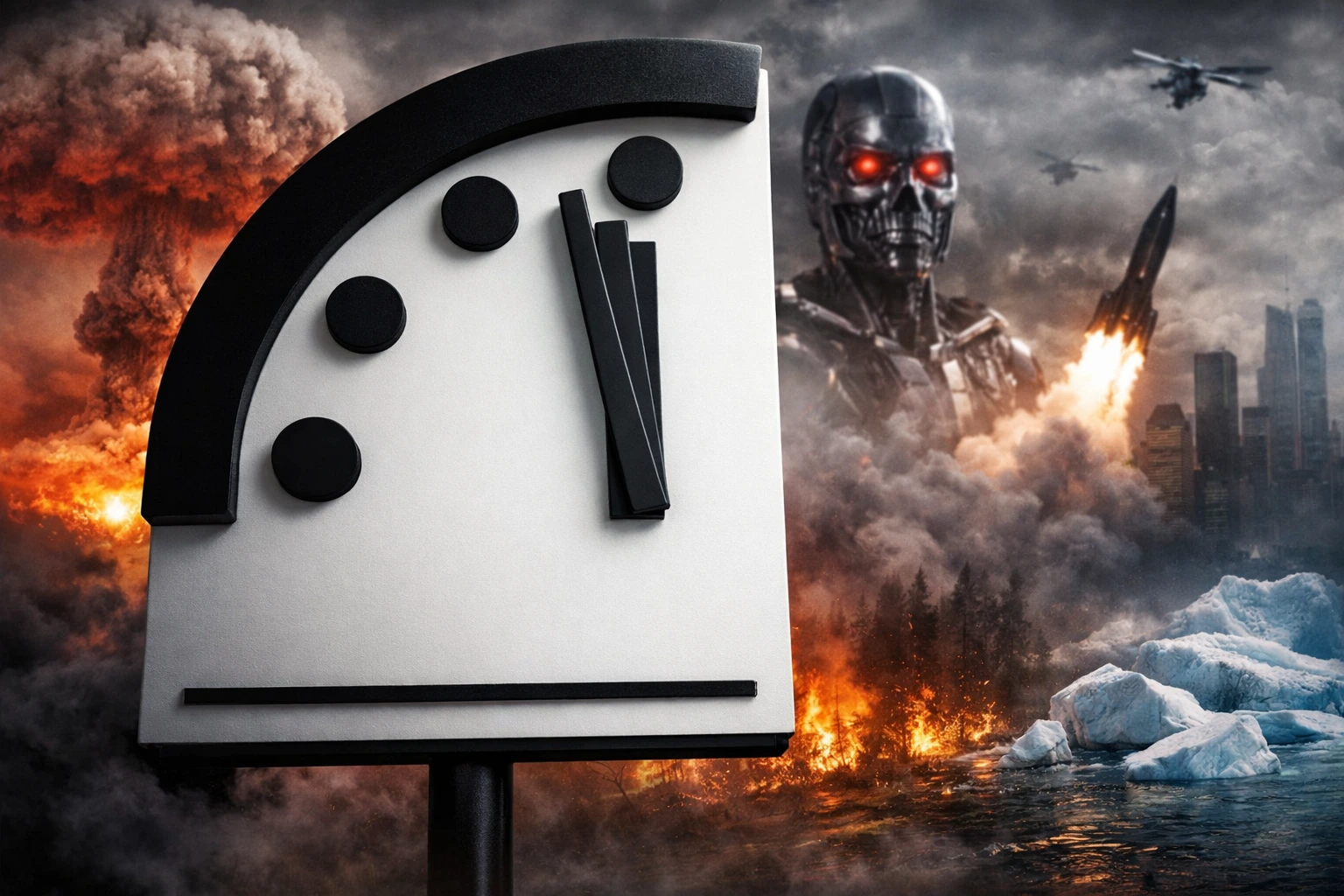
- The Doomsday Clock now stands at 85 seconds to midnight, the closest in its 79-year history.
- Escalating nuclear tensions, unregulated artificial intelligence, and climate change were cited as primary drivers.
- The symbolic clock aims to alert policymakers and the public to urgent existential threats.
WASHINGTON The human race is at its nearest point in history to self-destruction, according to the 2026 update of the symbolic Doomsday Clock.
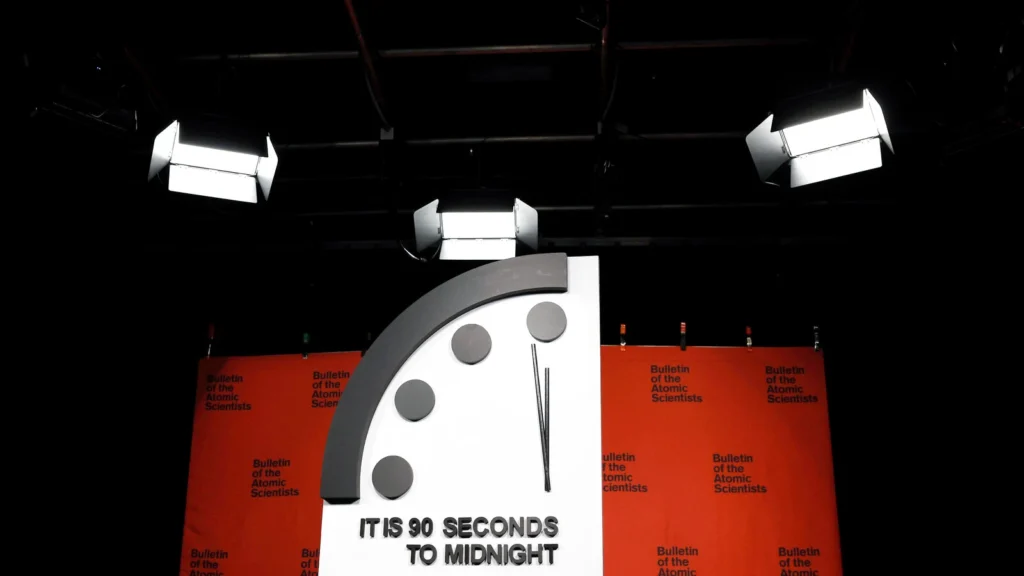
The Bulletin of the Atomic Scientists moved the clock to 85 seconds to midnight, four seconds closer than last year, signaling heightened global risks across nuclear, technological, and environmental fronts.
The reset highlights escalating international security challenges, technological risks, and insufficient climate action.
“The Doomsday Clock is not a prediction, but a reflection of how close humanity is to catastrophic threats,” said Rachel Bronson, president and CEO of the Bulletin of the Atomic Scientists.
Created in 1947 by scientists who worked on the Manhattan Project, the Doomsday Clock serves as a visual warning of existential risk.
Initially set at seven minutes to midnight, the clock has fluctuated based on global events. The previous record close was 89 seconds to midnight in 2025, reflecting rising nuclear tensions and environmental concerns.
Experts warn the 2026 adjustment underscores multiple intersecting crises.
Dr. Sharon Squassoni, director of the Proliferation Prevention Program at the Center for Strategic and International Studies, said, “Geopolitical conflicts and nuclear modernization programs have significantly increased the risk landscape.”
Dr. Michael Shellenberger, environmental policy analyst and author, noted, “Climate inaction continues to push the world closer to systemic instability.”
“Seeing the clock at 85 seconds makes it clear that urgent global coordination is critical,” said Ambassador Lise Johnson, senior fellow at the Columbia Center on Sustainable Investment.
Dr. Brian Toon, atmospheric physicist at the University of Colorado, added, “We are witnessing converging threats that could amplify human vulnerability if ignored.”
While the clock remains symbolic, it serves as a call to action for governments, corporations, and civil society to mitigate existential risks.
Policymakers are encouraged to prioritize arms control, AI governance, and climate adaptation to slow humanity’s approach to midnight.
The 2026 Doomsday Clock underscores the persistent fragility of global security and environmental stability, reinforcing the need for sustained, evidence-based interventions.
- What is the Doomsday Clock 2026?
It is a symbolic clock showing humanity’s risk of global catastrophe, now at 85 seconds to midnight. - Who sets the Doomsday Clock?
The Bulletin of the Atomic Scientists’ Science and Security Board decides annually. - Why is the clock so close to midnight?
Due to nuclear tensions, AI risks, climate change, and global leadership failures.


