KEY POINT
- Gold and silver prices suffered their steepest single day losses in decades following the Fed chair nomination.
- The dollar surged as markets interpreted the pick as supportive of central bank credibility and policy continuity.
- Heavy leverage and margin calls amplified selling pressure, particularly in silver futures.
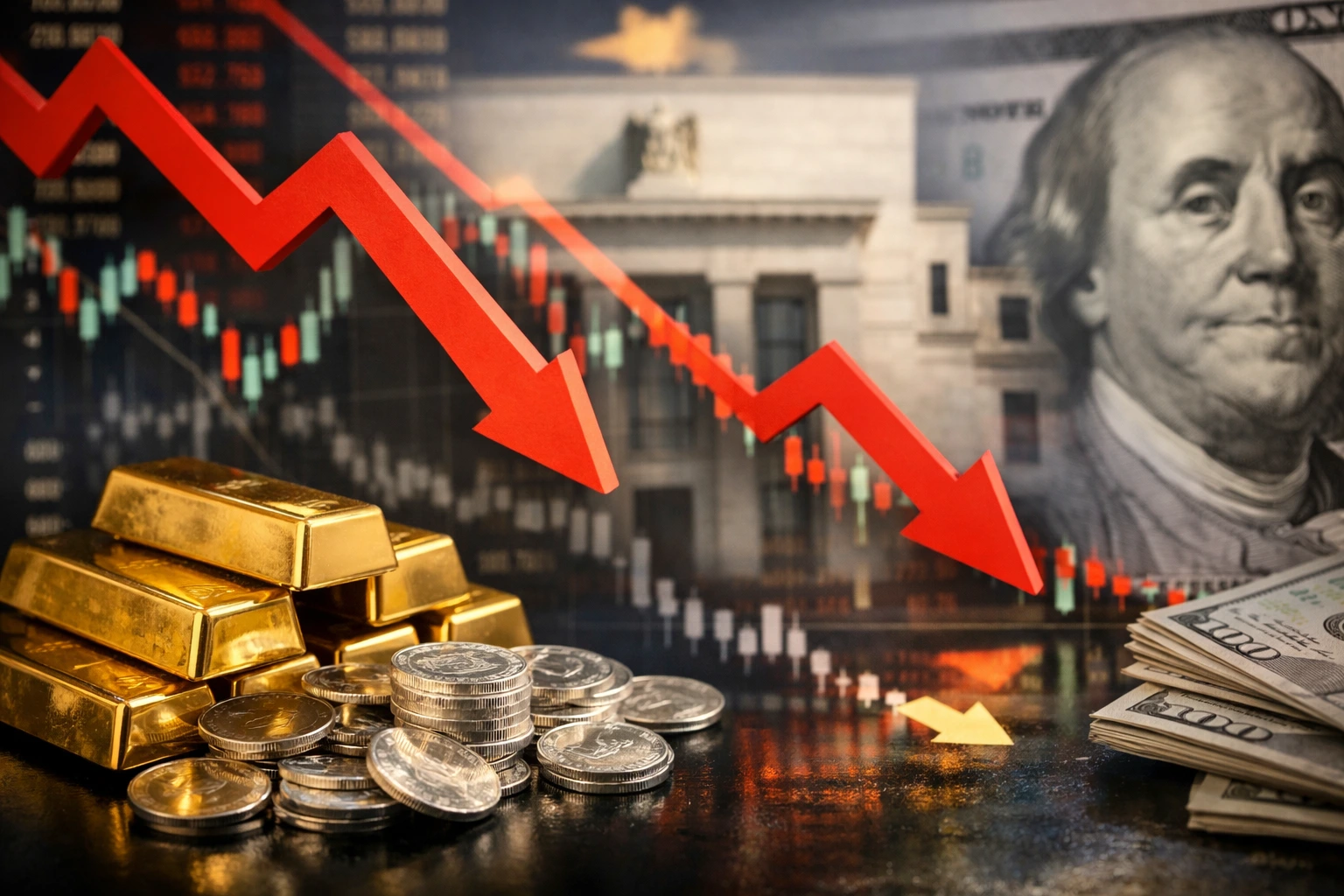
Gold and silver prices plunged sharply in US trading Friday after President Donald Trump nominated former Federal Reserve governor Kevin Warsh as his pick for the next chair of the central bank, a move that reassured investors about the Fed’s independence, strengthened the dollar and triggered widespread profit taking across precious metals markets.
The sudden collapse in gold and silver prices underscored how sensitive global commodities markets remain to shifts in US monetary policy expectations and political signals from Washington.
Precious metals, which had surged in recent months on fears of policy uncertainty and currency debasement, reversed course as investors reassessed the outlook for interest rates, the dollar and the Federal Reserve’s institutional independence.
Spot silver fell as much as twenty-eight percent to $83.45 an ounce, hovering near its intraday lows, while silver futures dropped more than thirty one percent to settle at $78.53 an ounce.
According to CME Group data, it was silver’s worst one day decline since March 1980, a period marked by extreme volatility driven by speculative trading.
Gold prices also moved sharply lower, though less dramatically than silver, as investors exited positions built during months of strong inflows into exchange traded funds and futures contracts.
The selling accelerated after reports confirmed that Trump intended to nominate Warsh, a former Fed governor who has publicly supported the central bank’s independence and a rules based approach to monetary policy.
The US dollar index rose about 0.8 percent in afternoon trading, increasing the cost of dollar denominated commodities for foreign buyers and eroding one of the central arguments behind the recent metals rally: that gold and silver could serve as alternatives to the dollar as a global reserve asset.
“This move was about expectations snapping back to reality,” said Matt Maley, equity strategist at Miller Tabak. “Silver had become the hottest asset for short term traders, and leverage had built up quickly. Once prices broke lower, margin calls forced additional selling.”
Kevin Warsh, a former Morgan Stanley banker who served on the Federal Reserve Board from 2006 to 2011, has been viewed by many market participants as a stabilizing choice compared with candidates perceived as more politically aligned. His nomination reduced fears that the Fed might come under direct pressure to loosen policy aggressively.
“Markets are reacting less to Warsh himself and more to what his nomination represents,” said Sarah House, senior economist at Wells Fargo. “The perception is that monetary policy will remain anchored, which supports the dollar and weighs on non yielding assets like gold and silver.”
Higher interest rate expectations also played a role. When rates are expected to remain elevated, the opportunity cost of holding precious metals increases, making them less attractive relative to interest bearing assets.
| Indicator | Latest Reading | Previous Week |
|---|---|---|
| Spot silver price | $83.45 per ounce | $115.90 per ounce |
| Silver futures settlement | $78.53 per ounce | $114.40 per ounce |
| Dollar index (DXY) | Up 0.8 percent | Flat |
| Largest silver daily drop | March 1980 | — |
“This was not a fundamental collapse in industrial demand for silver,” said Bart Melek, head of commodity strategy at TD Securities. “It was a positioning event.
When too many investors are on one side of the trade, price adjustments can be violent.”
Federal Reserve watchers also emphasized the broader policy implications.
“A credible Fed chair nomination matters globally,” said Eswar Prasad, professor of trade policy at Cornell University. “It affects capital flows, exchange rates and asset prices well beyond US borders.”
In London, metals traders reported unusually high volumes during US hours. “We saw clients rushing to lock in profits or reduce exposure,” said James Steel, chief


