
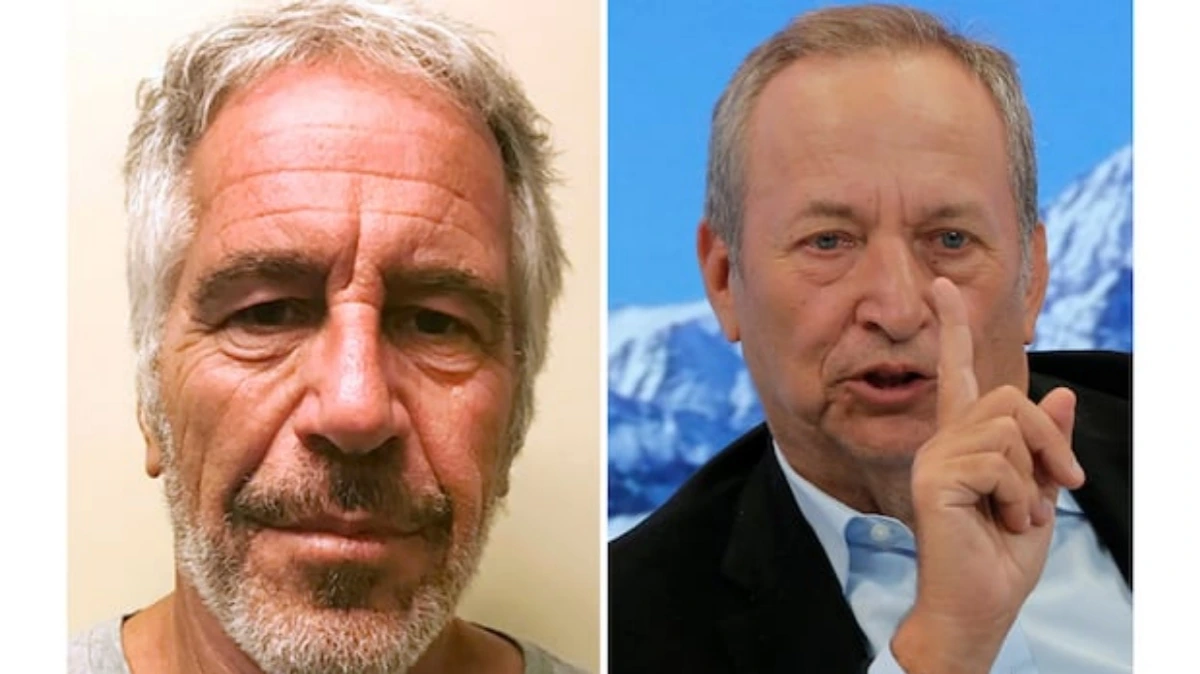
KEY POINT
- Summers resigns from all teaching and administrative posts at Harvard, ending his formal university duties.
- Documents reveal extensive correspondence with Jeffrey Epstein, intensifying public and institutional scrutiny.
- University emphasizes commitment to transparency, noting the resignation is part of broader reviews prompted by the Epstein archives.
Cambridge, Massachusetts — Larry Summers, former US Treasury secretary and ex-president of Harvard University, announced his resignation from teaching and other academic roles at Harvard University on Wednesday, following scrutiny over his association with the late financier Jeffrey Epstein.
The move concludes Summers’ decades long formal involvement with the Ivy League institution.Harvard confirmed that Summers will step down as co director of the Mossavar Rahmani Center for Business and Government and will no longer hold other faculty appointments.
The decision follows the release of documents linking Summers to Epstein, including emails exchanged shortly before Epstein’s 2019 arrest on charges of sex trafficking of minors.
Summers, 71, confirmed that he will retire at the end of the 2025–26 academic year. Harvard officials said the resignation is effective immediately for administrative purposes.
The former economist had been on leave since November 2025 while the university reviewed his interactions with Epstein, whose records have emerged from federal investigations into alleged sex trafficking networks.
The announcement highlights the reputational and ethical challenges elite institutions face when reviewing historical ties with controversial figures, particularly in cases involving criminal allegations.
Lawrence H. Summers has been a prominent figure in US economic and academic circles. He served as Treasury secretary under President Bill Clinton from 1999 to 2001 and led Harvard as its president from 2001 to 2006.
Following his presidency, he returned to teaching at Harvard and held leadership roles at the Kennedy School, including co directing the Mossavar Rahmani Center for Business and Government.
Last year, Summers publicly expressed “regret” over past associations with Epstein, acknowledging the concern raised by their interactions. Newly released emails revealed correspondence continuing up to the day before Epstein’s arrest in 2019, drawing attention to the extent of their communication.
Experts say Summers’ resignation reflects the complex balance universities must strike between individual faculty reputations and institutional accountability.
“Harvard is demonstrating that historical associations, even without direct wrongdoing, can have serious implications for public trust,” said Dr. Sarah Waldman, associate professor of higher education policy at the University of Michigan. “Institutions must act decisively to preserve credibility and uphold ethical standards.”
Dr. Michael Engel, director of Georgetown University’s Center for Ethical Leadership, added, “While Summers faces no criminal charges, the depth and timing of his engagement with Epstein raised questions about judgment and governance at elite universities.”
Summers addressed the decision in a statement to The Harvard Crimson, calling it “difficult” while expressing gratitude toward students and colleagues.
“Free of formal responsibility, as President Emeritus and a retired professor, I look forward in time to engaging in research, analysis, and commentary on a range of global economic issues,” he said.
Harvard Kennedy School Dean Jeremy Weinstein affirmed the university’s commitment to a careful review of faculty conduct, emphasizing the importance of transparency in the wake of the Epstein documents.
Summers’ resignation may prompt further examination of faculty interactions with donors and external figures, especially those later implicated in criminal activity.
Universities are expected to review policies regarding oversight, transparency, and historical record disclosure to prevent reputational risks.
Observers also note that the case could influence governance practices across higher education institutions and encourage more structured accountability mechanisms when faculty engage with controversial or high profile individuals.
Summers’ departure ends a significant chapter in Harvard’s history and marks a notable moment in the ongoing evaluation of institutional relationships with Epstein.
While he remains a respected economist, the resignation underscores how historical associations can affect personal and institutional legacies.


