
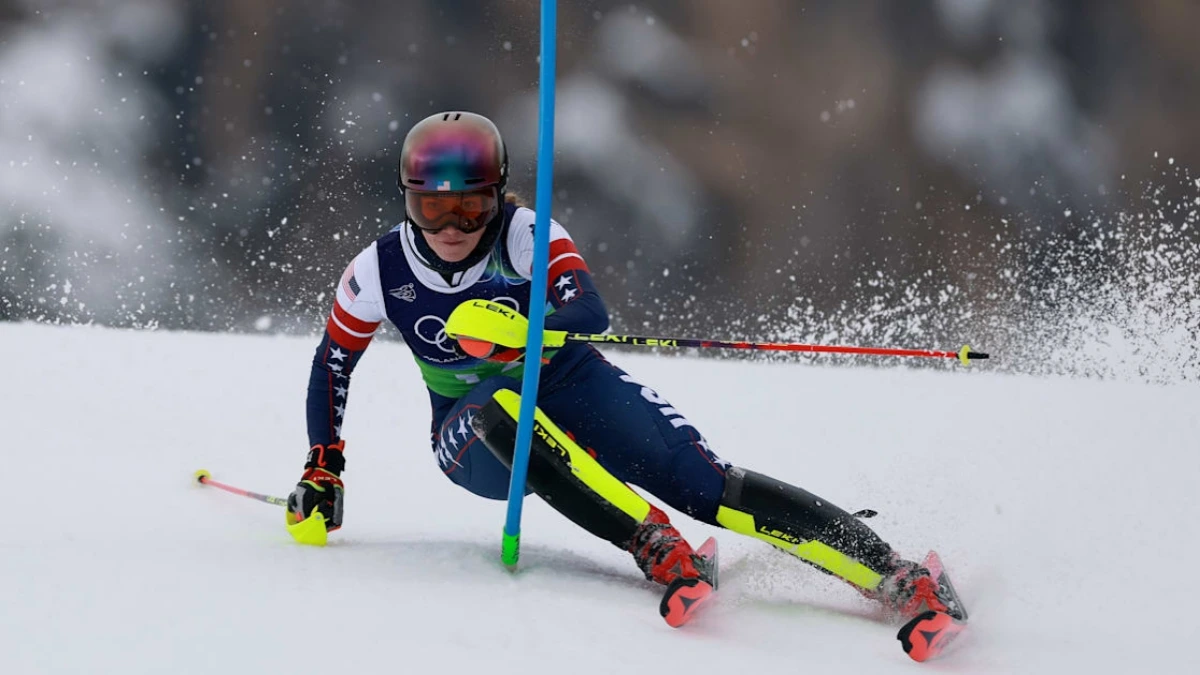
KEY POINT
- Shiffrin secured her first Olympic medal since 2018, ending a streak of eight events without a podium finish.
- Her 2026 slalom gold is her third Olympic gold medal and fourth overall.
- The US women’s alpine team won three medals at these Games, matching their second highest medal total in a single Winter Olympics.
CORTINA D’AMPEZZO, Italy — Mikaela Shiffrin captured the gold medal in the women’s slalom Wednesday at the 2026 Milano Cortina Winter Olympics, ending an eight year Olympic medal drought and adding to her record as one of the most successful alpine skiers in US history.
Shiffrin finished with a combined time of 1:39.10, beating Switzerland’s Camille Rast by 1.5 seconds for silver and Sweden’s Anna Swenn Larsson by 1.71 seconds for bronze.
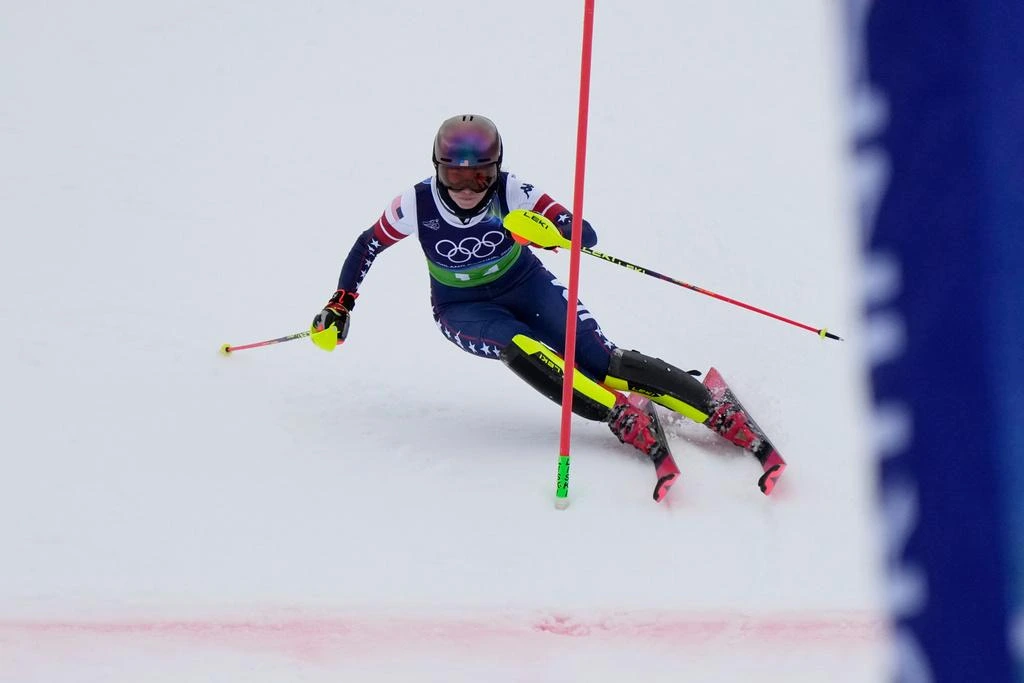
The victory marked Shiffrin’s third Olympic gold and her fourth Olympic medal overall, tying her with Julia Mancuso for the most by a US woman in alpine skiing.
Shiffrin’s triumph highlighted a career comeback after struggles at the 2022 Beijing Winter Olympics, where she failed to medal in any individual event.
Her win in Cortina d’Ampezzo confirmed that she remains one of the most technically proficient and mentally resilient skiers in the world.
Born in Edwards, Colorado, Shiffrin made history as the youngest slalom gold medalist at the 2014 Sochi Winter Olympics. She continued her success with a gold in giant slalom and a silver in combined at the 2018 PyeongChang Games.
Despite these achievements, her Beijing performance was uncharacteristically disappointing, with multiple did not finish results in technical events.
Beyond the Olympics, Shiffrin has dominated the FIS Alpine Ski World Cup, holding records for the most victories across all six disciplines: downhill, super‑G, giant slalom, slalom, combined, and parallel. Her consistency and skill make her one of the most decorated alpine skiers in history.
“Shiffrin’s technique is nearly flawless, and her mental focus today was exceptional,” said David Wise, alpine skiing analyst at the International Ski Federation. “Her performance shows the difference between a top skier and someone who can handle Olympic pressure.”
Dr. Isabelle Tremblay, a sports psychologist at the University of Montreal, added, “Returning to the top after setbacks requires immense mental strength. Shiffrin’s preparation and resilience were clearly visible on the slopes today.”
Reflecting on her gold medal run, Shiffrin said, “There were moments when I doubted myself, but I stayed committed to my training and my strategy.
Today it all came together.” Her mother and coach, Eileen Shiffrin, called the victory “a testament to Mikaela’s perseverance and focus.”
Rast, the silver medalist, praised Shiffrin’s performance: “She skied an incredible race. Competing with someone at her level motivates everyone on the course to perform better.”
Shiffrin may also compete in giant slalom later in these Games, and her current form positions her as a contender for World Cup events and the next Olympic cycle. Her career trajectory continues to inspire young athletes and strengthen US alpine skiing’s global presence.
Mikaela Shiffrin’s victory in the women’s slalom at the 2026 Winter Olympics ends a significant medal drought and reinforces her legacy as one of the premier alpine skiers of her generation. The win underscores her combination of technical skill, experience, and resilience under pressure.


