
KEY POINT
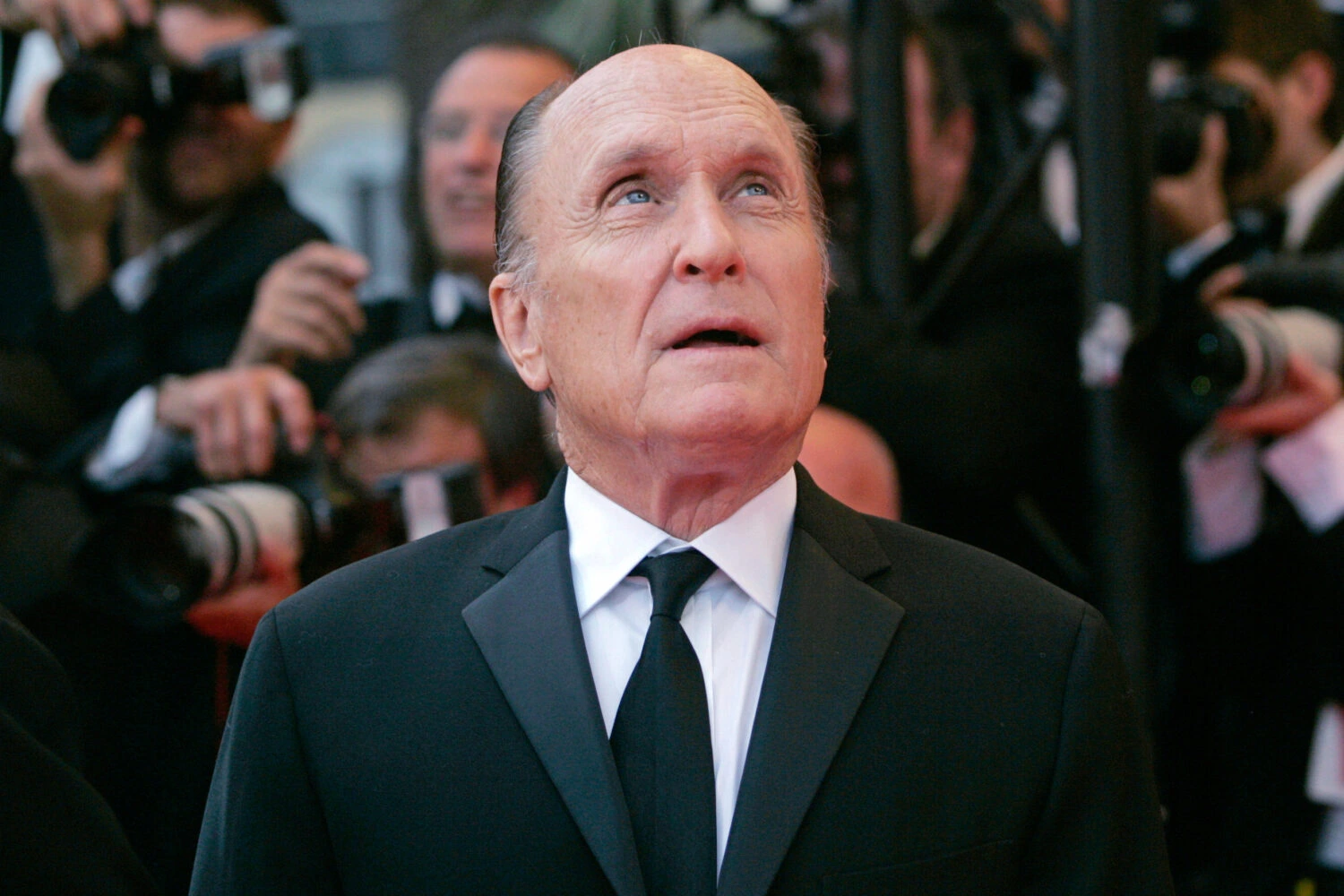
- Robert Duvall died Sunday at age 95, according to his wife Luciana Duvall.
- The Academy Award winner shaped modern American film with understated roles in The Godfather, Apocalypse Now and Tender Mercies.
- His career spanned more than six decades, influencing generations of actors through a minimalist, character driven approach.
Robert Duvall, the Oscar winning actor whose restrained performances in films including The Godfather, Apocalypse Now and Tender Mercies defined a generation of American cinema, has died at age 95. His wife, Luciana Duvall, said in a Facebook post Monday that he died Sunday at home, surrounded by family.
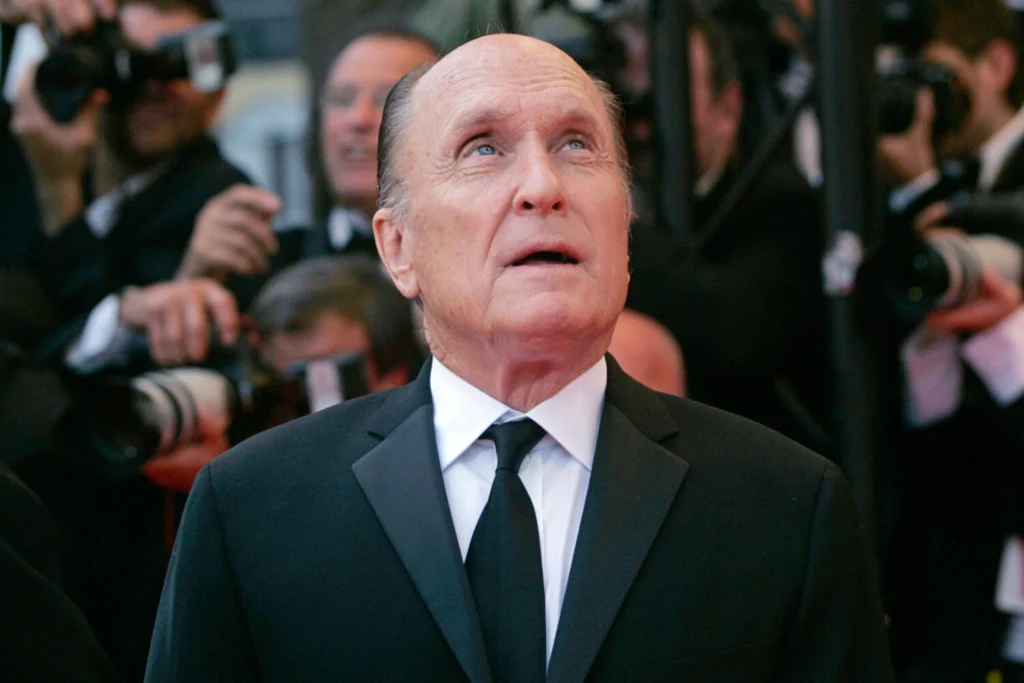
The death of Robert Duvall marks the passing of one of the last major figures from the New Hollywood era of the 1970s. Over a career that began in the early 1960s, Duvall built a reputation for emotional restraint and psychological precision, often serving as the moral or emotional anchor in films defined by larger than life characters.
His performances earned him an Academy Award, four Oscar nominations and widespread industry respect.
Luciana Duvall wrote that her husband “passed away peacefully at home, surrounded by love and comfort.” No cause of death was disclosed.
Robert Duvall made his film debut in 1962 as Boo Radley in To Kill a Mockingbird, appearing in a role with no dialogue that nonetheless left a lasting impression.
The film, adapted from Harper Lee’s novel, introduced Duvall’s hallmark ability to convey vulnerability through silence and physical presence.
He went on to appear in films such as Bullitt, True Grit and M*A*S*H, where he originated the role of Major Frank Burns before the character became widely known through television.
Duvall’s portrayal of Tom Hagen in The Godfather brought him international recognition. Directed by Francis Ford Coppola, the film redefined the gangster genre and became one of the highest-grossing and most influential movies in Hollywood history.
As the adopted son and consigliere of the Corleone family, Duvall’s calm, measured performance contrasted sharply with the volatility of characters played by Al Pacino* and Marlon Brando*.
In 1979, he earned Academy Award nominations for The Great Santini and Apocalypse Now. In the latter, he played Lt. Col. Bill Kilgore, delivering the line about “the smell of napalm in the morning,” which became embedded in popular culture.
He won the Academy Award for best actor for his role in Tender Mercies, portraying a recovering alcoholic country singer. Duvall performed his own vocals in the film, underscoring his commitment to authenticity.
Film historians say Robert Duvall’s career reflects a broader shift in American acting toward naturalism and psychological realism.
“Duvall was a bridge between classical studio era acting and the more internal, method based performances of the 1970s,” said Thomas Doherty, professor of American studies at Brandeis University.
“He could command a scene without raising his voice. That restraint gave his characters moral gravity.”
Sharon Waxman, founder and editor of The Wrap and a longtime Hollywood journalist, said Duvall’s influence extended beyond his awards.
“Robert Duvall helped normalize the idea that leading men did not need to dominate the screen through spectacle. His power came from listening and reacting, which changed how ensemble dramas were constructed.”
Duvall often described his approach as simple. In a 2015 appearance on “Oprah’s Masterclass,” he said acting was about “talk and listen, and keep it simple.”
His career also demonstrated the durability of supporting roles. Even when not at the narrative center, Duvall’s characters often shaped the ethical landscape of a film.
“He was the actor other actors studied,” said Leonard Maltin, film critic and historian. “Not because he was flashy, but because he was precise. Every gesture meant something.”
Actor Robert De Niro, who appeared in The Godfather Part II, previously described Duvall in interviews as “a master of understatement,” noting that younger performers often observed his rehearsal process to understand character construction.
Industry executives also credited Duvall with expanding opportunities for character driven films. “Studios recognized that audiences would respond to emotionally complex male protagonists,” said Anne Thompson, editor-at-large at IndieWire. “That shift helped sustain adult oriented dramas through the 1980s.”
Duvall’s death comes as Hollywood continues to reassess the legacy of the New Hollywood era. Film schools and streaming platforms have revived interest in 1970s cinema, introducing younger audiences to performances that shaped contemporary storytelling.
The Academy of Motion Picture Arts and Sciences is expected to honor Robert Duvall during its annual In Memoriam tribute. Retrospectives of his work are likely at major film institutions in Los Angeles and New York.
Robert Duvall’s six decade career placed him at the center of some of the most influential films in American cinema. From a silent debut in To Kill a Mockingbird to an Oscar winning turn in Tender Mercies, he built a body of work defined by restraint, authenticity and emotional depth. His performances continue to serve as a reference point for actors and filmmakers worldwide.


