
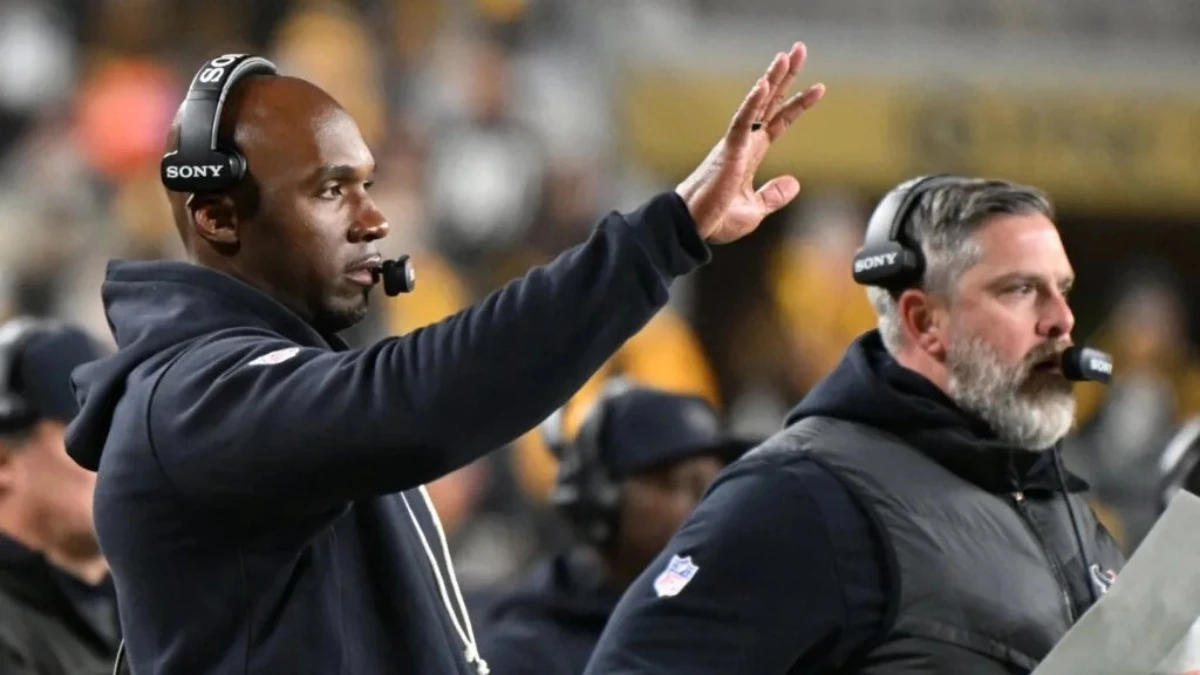
HOUSTON The Houston Texans enter their postseason meeting with the New England Patriots carrying one of the NFL’s least publicized ten-game winning streaks, setting up a playoff matchup defined by coaching, preparation and the challenge of containing rookie quarterback Drake Maye. The game brings together two teams shaped by disciplined leadership and a shared emphasis on player development, with Texans coach DeMeco Ryans facing one of the league’s most rapidly ascending young passers.
KEY POINT
- The Texans-Patriots playoff discussion highlights a contrast between Houston’s defense-first identity and New England’s quarterback-centered resurgence.
- DeMeco Ryans’ scheme relies on depth, speed and assignment discipline rather than heavy blitz volume.
- Drake Maye’s ability to elevate surrounding talent has reshaped how opponents approach New England’s offense.
The Texans-Patriots playoff discussion reflects more than a single elimination game. It underscores how Houston’s steady rise under Ryans has occurred largely outside the national spotlight, while New England’s late-season surge has been driven by the rapid maturation of Maye.
The matchup places emphasis on preparation rather than spectacle, with both organizations leaning on process and structure as postseason margins narrow.
Houston’s winning streak has been built on defensive consistency and controlled offensive execution. Since Ryans’ arrival, the Texans have prioritized limiting explosive plays, winning situational downs and rotating personnel to maintain speed late in games. That approach has allowed Houston to stack victories without dramatic scorelines, contributing to the perception of a quiet run.
New England’s path has been more visible. The Patriots transitioned into a new era at quarterback, and Maye’s command of protections and progressions has accelerated the offense’s development.
According to team officials, the coaching staff adjusted route concepts and tempo as the season progressed, allowing Maye greater autonomy at the line of scrimmage.
League analysts note that the Texans-Patriots playoff discussion centers on whether Ryans’ defense can disrupt Maye’s timing without overcommitting resources.
Former NFL defensive coordinator Wade Phillips said defenses facing young quarterbacks often struggle when pressure does not alter decision-making. “If the quarterback is comfortable identifying leverage and coverage rotations, pressure alone does not solve the problem,” Phillips said.
Ryans’ defense has emphasized pre-snap disguise while maintaining post-snap clarity for its own players. According to Pro Football Focus data, Houston ranks among the league leaders in limiting yards after the catch, an area critical against quarterbacks who rely on quick rhythm throws.
The data illustrates why the Texans-Patriots playoff discussion has focused on efficiency rather than volume. Houston limits opportunities, while New England has increased scoring consistency as Maye’s responsibilities have expanded.
Texans safety Jalen Pitre said preparation has centered on discipline. “He sees the field really well, so it’s about everyone doing their job,” Pitre said. Patriots offensive coordinator Alex Van Pelt credited Maye’s study habits.
“He understands why we’re calling things, not just what we’re calling,” Van Pelt said. NFL Network analyst Daniel Jeremiah noted that Maye’s growth has changed defensive planning. “You can’t treat him like a first-year player anymore,” Jeremiah said.
The Texans-Patriots playoff discussion is likely to influence how both franchises approach the offseason.
Houston’s defensive blueprint under Ryans may further validate investment in versatile defenders, while New England’s experience with Maye could accelerate roster decisions aimed at sustaining offensive balance.
League executives said postseason performance often shapes how young quarterbacks are evaluated heading into year two.
As the Texans and Patriots meet in the postseason, the focus remains on execution, adaptability and coaching detail.
The Texans-Patriots playoff discussion reflects broader themes across the league, where defensive structure meets quarterback development.
Regardless of the outcome, the matchup offers insight into how modern NFL teams build competitive identity through preparation rather than prominence.


