
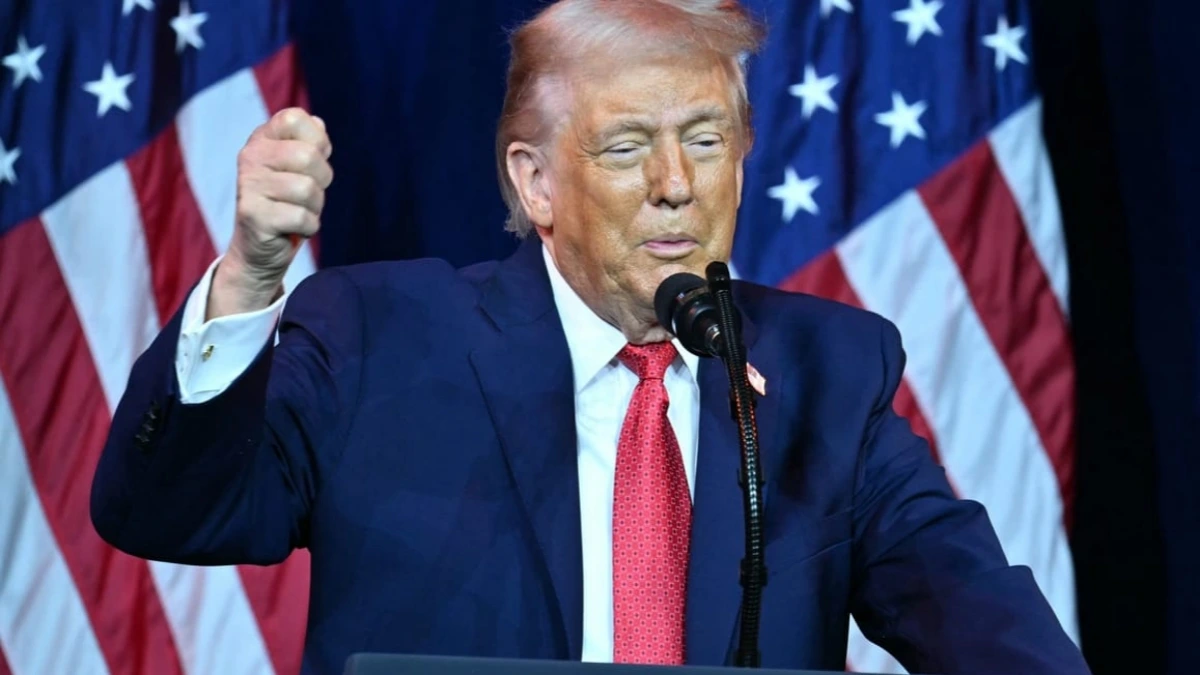
DAVOS, Switzerland President Donald Trump on Wednesday announced that the United States has reached a preliminary framework with NATO concerning Greenland and Arctic cooperation, describing the outcome as “a great deal for everybody.” The announcement came during the World Economic Forum in Davos, following meetings with NATO officials and allied leaders. Trump said the framework would temporarily halt planned US, tariffs on European allies while discussions continue.
KEY POINT
- The Trump administration announced a preliminary Arctic framework with NATO that impacts Greenland, aiming to prevent the imposition of tariffs on European allies.
- Details of the agreement remain vague, with no formal treaty or binding commitments yet in place.
- The announcement reduces immediate diplomatic tensions but leaves broader strategic and economic questions unresolved in the Arctic region.
Trump’s declaration signals a diplomatic pivot after weeks of heightened tension with European nations over US, interest in Greenland, a semi-autonomous territory of Denmark.
The president framed the initiative as a collaborative effort to strengthen Arctic security, resource management, and economic cooperation, while simultaneously easing trade pressures on NATO members.
Greenland’s strategic location in the Arctic has gained importance due to increasing competition between global powers and the opening of Arctic shipping lanes.
Trump’s renewed focus on Greenland prompted concern among European allies, who view the territory as under Danish sovereignty.
Earlier in January, Trump’s comments on potential U.S. acquisition of Greenland and the threat of tariffs strained diplomatic relations, delaying EU trade negotiations with the United States.
Greenlandic officials and Denmark have consistently rejected any U.S. purchase proposals.
The current framework represents an effort to shift the focus toward multilateral cooperation without infringing on sovereignty.
Experts caution that the framework is largely symbolic unless formalized.
Elizabeth Ransom, senior fellow at the International Security Institute, said: “Without clear legal commitments, this framework primarily functions as political signaling rather than a binding agreement.”
Tomas Delgado, transatlantic trade specialist, noted: “The temporary suspension of tariffs preserves trade channels and NATO cooperation, but it does not resolve fundamental disagreements on Arctic security or Greenland’s role in U.S. strategy.”
Observers highlight that NATO’s collective defense mandate does not extend to territorial negotiations, making it unclear how Greenland-specific cooperation will be implemented under alliance structures.

“In Denmark, sovereignty over Greenland remains non-negotiable,” said Marie Andersen, foreign policy commentator based in Copenhagen. “Greenlanders have a strong voice, and Denmark has repeatedly emphasized that territorial decisions rest with its citizens.”
A NATO diplomat, speaking anonymously, said the framework “eases immediate diplomatic pressures but leaves open questions about Arctic security obligations and U.S.-Europe coordination.”
Officials from the US, NATO, and Denmark are expected to continue consultations to clarify the framework’s scope, including joint initiatives in Arctic defense, research, and infrastructure development.
European institutions may revisit suspended trade agreements depending on progress and clarity regarding the Arctic arrangements.
Analysts note that the framework could provide a diplomatic pause to manage tensions but may require formal agreements or treaties to translate into actionable policies.
The Trump administration’s Greenland framework announcement signals a cautious de-escalation in US. European tensions while highlighting the strategic importance of the Arctic.
Although it temporarily pauses tariff threats and softens military rhetoric, the initiative leaves unresolved questions about Greenland’s sovereignty, NATO’s role, and future Arctic cooperation.
The outcome will depend on continued negotiations and multilateral alignment among US, European, and Greenlandic stakeholders.


