
KEY POINT
- UnitedHealth Group (UNH) projects lower revenue for 2026, raising concerns among investors about its growth trajectory.
- Northrop Grumman (NOC) reported a 17 percent increase in fourth-quarter income and recorded its largest backlog of orders amid heightened global defense spending.
- RTX exceeded profit forecasts for the quarter, signaling strong momentum ahead of potential increases in U.S. military procurement.
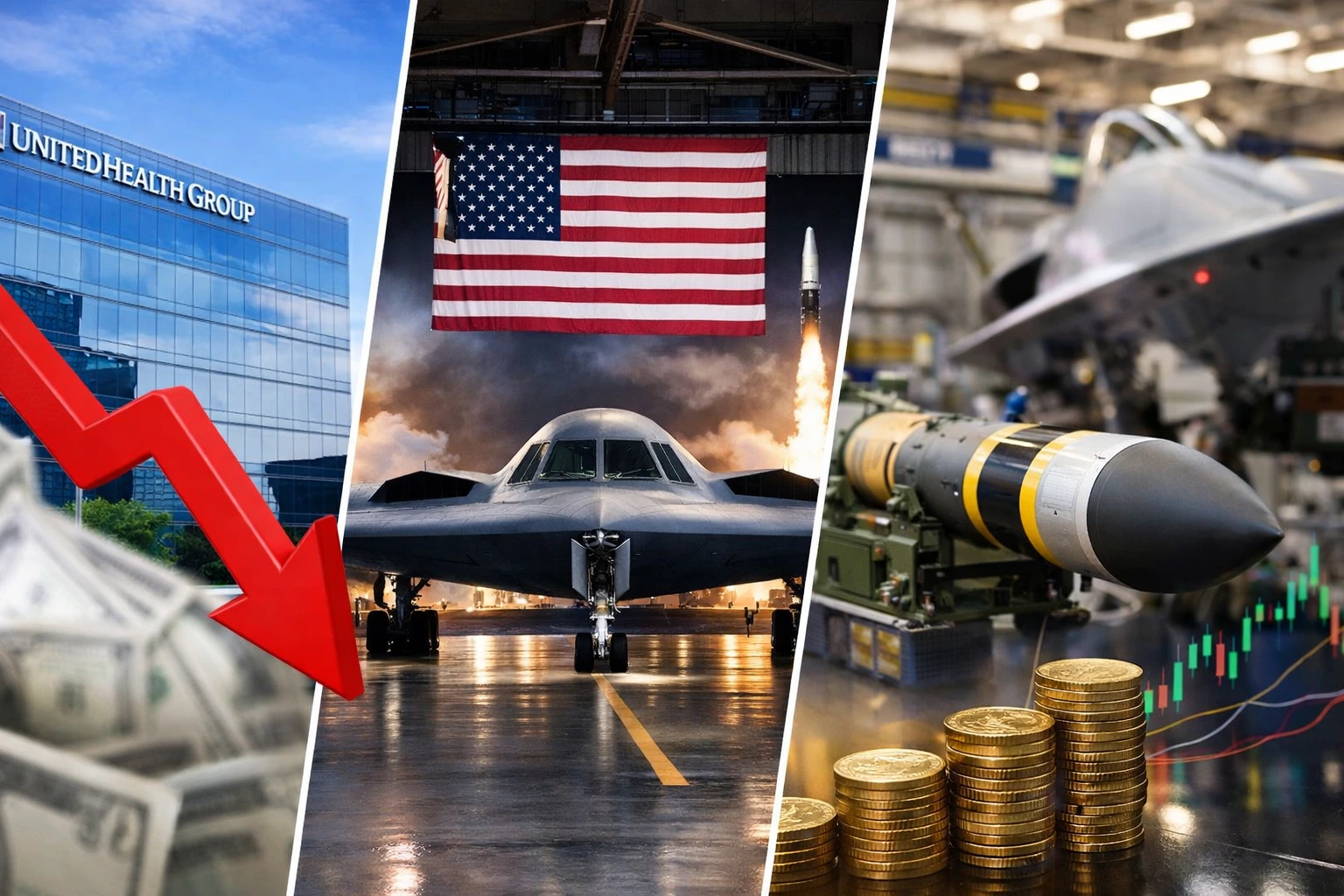
New York UnitedHealth Group shares dropped sharply Tuesday after the health insurer forecast a decline in full-year 2026 revenue, marking its first expected annual contraction in more than 30 years.
Meanwhile, Northrop Grumman and RTX saw their shares rise following better than expected quarterly earnings, reflecting robust demand in defense and aerospace markets.
The contrasting stock movements highlight the differing pressures on US industries. Health insurers like UnitedHealth face policy and market challenges that could affect long-term growth, while defense contractors are benefiting from elevated global military budgets.

UnitedHealth, based in Minnetonka, Minnesota, has consistently posted revenue growth for decades. The company’s 2026 guidance signals a slowdown, largely driven by pressures in its Medicare Advantage segment and rising health care costs.
Analysts note that the contraction is unusual for a company of its scale.
Northrop Grumman, headquartered in Falls Church, Virginia, benefited from increased defense and space spending.
The firm’s fourth-quarter results exceeded expectations, and it reported a record backlog of orders, reflecting governments’ ongoing modernization of military capabilities.
RTX, a major aerospace and defense firm formed from Raytheon Technologies, also surpassed Wall Street projections in the final quarter of 2025. Revenue gains across multiple segments and higher than expected profits contributed to the stock rally.
Dr. Katherine Allen, senior health care analyst at Latham Financial, said, “Reduced reimbursement growth in Medicare Advantage plans directly impacts revenue forecasts. UnitedHealth must navigate both policy pressures and rising operational costs to regain investor confidence.”
John Carter, defense sector strategist at Meridian Research Group, explained, “Defense contractors like Northrop and RTX benefit from strong order visibility.
Geopolitical tensions in Europe and Asia continue to drive demand for advanced systems, which supports revenue stability.”
| Company | Q4 Revenue | Q4 EPS | 2026 Guidance | Key Notes |
|---|---|---|---|---|
| UnitedHealth | $113.2B | $2.11 adjusted | Revenue expected to decline (~$440B) | First annual contraction in over 30 years |
| Northrop Grumman | $11.7B | $7.23 adjusted | Moderate growth forecast ($43.5B–$44B) | Record backlog ($95.7B) amid global defense demand |
| RTX | $24.2B | $1.55 adjusted | Revenue $92B–$93B | Profit and revenue exceeded estimates; record $268B backlog |
Flat Medicare reimbursements and increasing medical costs are clearly affecting UnitedHealth’s outlook,” said Linda Gomez, portfolio manager at Crestview Asset Management.
At Northrop Grumman’s earnings call, David Thompson, executive vice president of mission systems, noted, “The ongoing commitment of allied nations to modernize their defense capabilities continues to drive our order backlog.”
UnitedHealth will need to focus on restoring revenue growth and managing costs to reassure investors. The performance of its Medicare Advantage plans will be a critical factor in 2026.
Northrop Grumman and RTX are likely to benefit from continued global defense spending, though execution of existing orders and supply chain management will be key to maintaining earnings momentum.
Tuesday’s market activity illustrated the divergence between sectors under regulatory and cost pressures and those benefiting from strategic demand.
Health insurers face growth headwinds, while defense firms continue to capitalize on rising military budgets and geopolitical uncertainty.


