
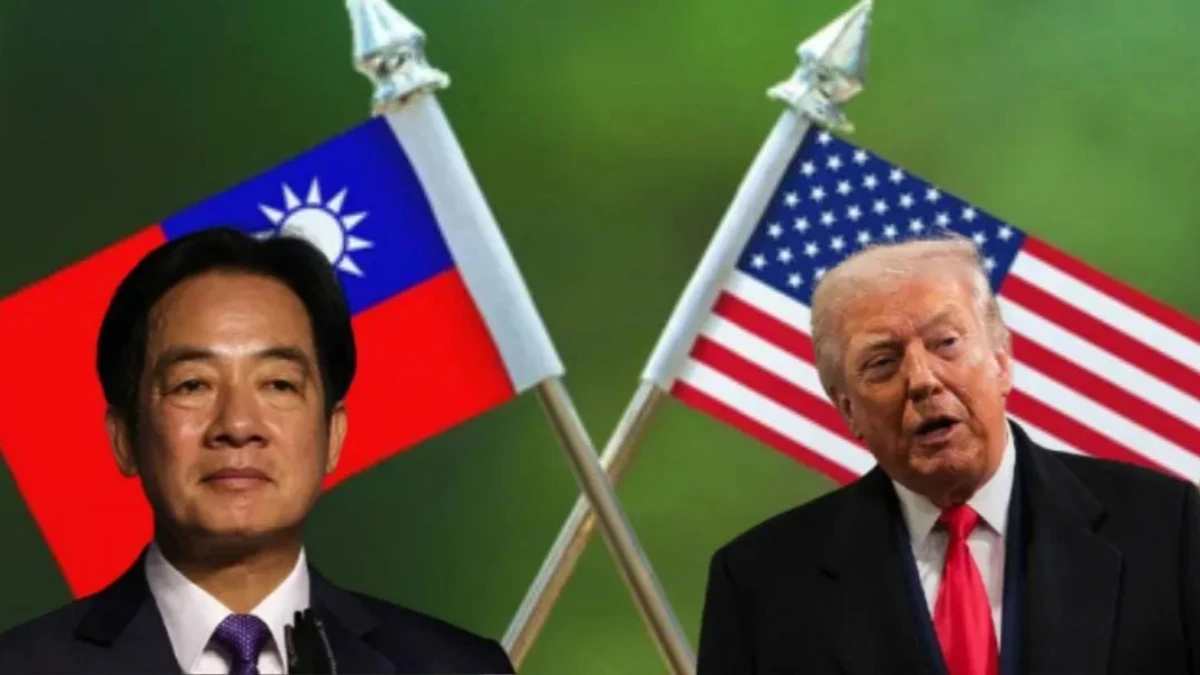
The United States and Taiwan have finalized a landmark trade agreement that caps tariffs on Taiwanese goods entering the U.S. at 15% and includes a commitment of at least $250 billion in Taiwanese investment in U.S. semiconductor and high-tech facilities, officials said Friday. The deal is expected to reshape global technology supply chains, bolster domestic manufacturing in the U.S., and strengthen bilateral economic ties amid ongoing geopolitical tensions.
KEY POINT
- Taiwanese exports to the U.S. will face a 15% maximum tariff, aligning them with other major trade partners.
- Taiwanese firms commit $250 billion in U.S. investment for semiconductor, AI, and advanced tech production.
- The agreement could redirect global supply chains, moving critical manufacturing closer to North America.
The U.S.–Taiwan trade deal represents a strategic shift in both countries’ economic relationship. By stabilizing tariffs on high-tech exports and incentivizing Taiwanese investment in U.S.
manufacturing, officials aim to enhance supply chain resilience and secure the flow of semiconductors and other critical components vital to global technology markets.
“This agreement provides predictability for companies and strengthens strategic cooperation,” said Michael Green, U.S. Trade Representative spokesperson.
The REALID Act equivalent for trade, the Taiwan deal builds on decades of Taiwan’s central role in global technology supply chains. Taiwan accounts for roughly 90% of the world’s advanced semiconductor capacity, making its production critical to industries from smartphones to AI systems.
Previously, tariffs on Taiwanese goods entering the U.S. were as high as 20%, creating uncertainty for manufacturers. The 15% cap levels the playing field with Japan, South Korea, and the European Union while securing investment commitments for U.S. manufacturing.
Economists see the agreement as both economic and strategic.
“Beyond tariffs, this deal incentivizes U.S.-based production of critical technologies,” said Dr. Jennifer Harris, trade policy expert at the Center for Strategic Economic Studies. “It’s about moving supply chains closer to the U.S. while maintaining Taiwan’s technological leadership.”
Taiwanese officials hailed the agreement as the most favorable tariff treatment they have received. Economic Affairs Minister Kung Ming‑hsin noted that the deal provides clarity for firms exporting to the U.S. and allows them to plan long-term investments without the threat of punitive tariffs.
Investment and Supply Chain Impact
The deal includes commitments from Taiwan’s leading semiconductor manufacturers to build and expand chip fabrication facilities in U.S. states such as Arizona and Texas, with additional investments in AI and high-tech infrastructure.
Companies participating in the program may receive preferential tariff treatment for inputs used in U.S. facilities, incentivizing the relocation of critical parts of the supply chain.
| Feature | Details |
|---|---|
| Tariff on Taiwanese exports | Up to 20% |
| Capped at | 15% |
| U.S. investment from Taiwanese firms | Limited ($250 billion pledged) |
| Supply chain focus | Offshoring & trade deficit management |
| Production Strategy | Domestic production & resilience |
| Preferential treatment | None (Incentives tied to U.S. production) |
Taiwanese executives welcomed the predictability the deal provides. “Stable tariffs allow us to plan exports and invest confidently in U.S. projects,” said Wu Cheng‑hao, director at a semiconductor supplier in Hsinchu.
U.S. industry groups emphasized the potential for job creation and high-tech manufacturing growth, while analysts cautioned that ongoing geopolitical tensions with China could influence implementation.
The deal still requires ratification by Taiwan’s legislature and close coordination with U.S. agencies.
Analysts anticipate that the investment incentives will accelerate semiconductor and AI production in the U.S., while firms continue to diversify supply chains to mitigate geopolitical risks.
The agreement is likely to reshape global supply chains, moving more critical production to North America while maintaining Taiwan’s role as a key technology hub.
The U.S.–Taiwan trade deal, with its 15% tariff cap and $250 billion investment commitments, represents a major milestone in bilateral economic cooperation.
By balancing tariff relief with targeted investment incentives, the agreement is poised to strengthen supply chain resilience, promote domestic high-tech manufacturing in the U.S., and secure Taiwan’s strategic position in global technology markets.


