
KEY POINT
- A deadly tornado in southern Michigan killed four people and injured twelve as US tornado season begins.
- Two additional fatalities were reported in Oklahoma following an apparent tornado, according to the Storm Prediction Center.
- Long range forecasters expect between 1,050 and 1,250 tornadoes in 2026, raising concerns about severe weather risks across the United States.
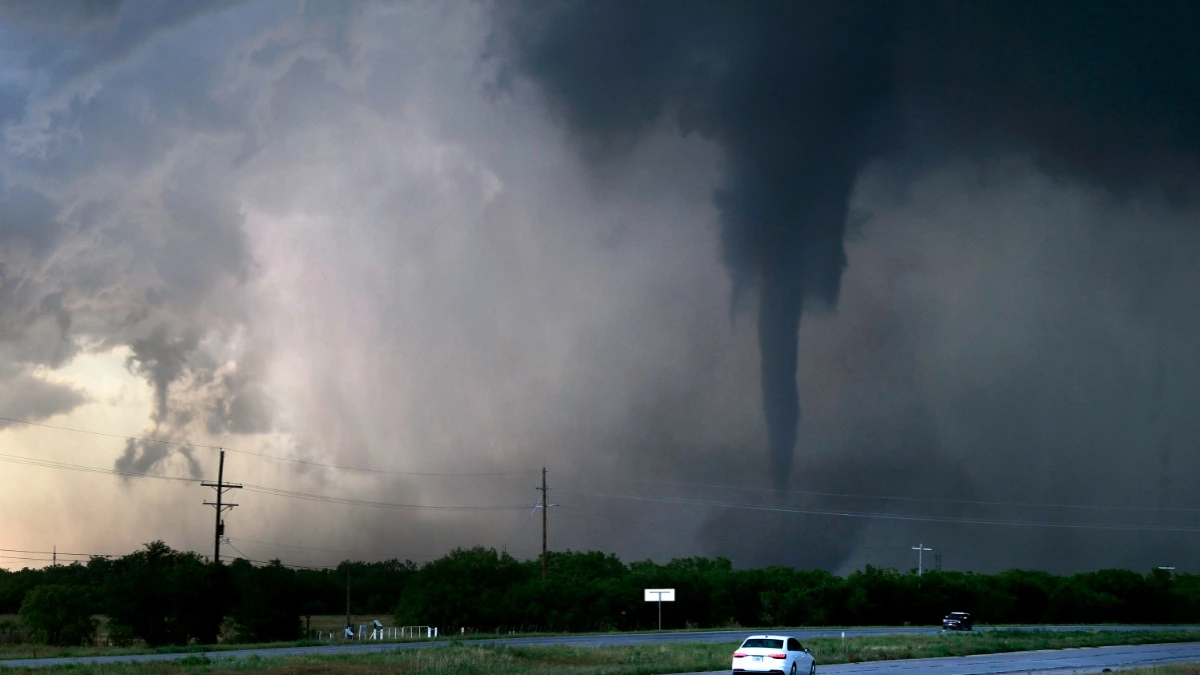
A deadly start to the US tornado season has already claimed lives after a surprise tornado struck southern Michigan this week, killing at least four people and injuring twelve others, while two additional deaths were reported in Oklahoma, according to the National Weather Service and the Storm Prediction Center.
The early arrival of violent storms has marked a grim beginning to the US tornado season, which typically runs from March through June across much of the country.
Meteorologists warn that the first storms of the year highlight the unpredictable nature of tornado outbreaks and the growing challenges forecasters face as weather patterns become more volatile.
Emergency crews in southern Michigan spent hours searching damaged neighborhoods after the tornado touched down unexpectedly, leveling structures and leaving debris scattered across several communities. Local authorities confirmed four deaths and multiple injuries as rescue teams continued to assess damage.
At the same time, severe storms swept through parts of Oklahoma, where two people were killed in what meteorologists believe was another tornado event.
Officials said the incidents underscore the deadly potential of severe weather systems that can develop with little warning.
The US tornado season historically peaks between April and June, particularly across the region known as “Tornado Alley,” which includes states such as Oklahoma, Kansas and Texas. However, destructive tornadoes can occur in many parts of the country, including the Midwest and Southeast.
According to the National Oceanic and Atmospheric Administration, the United States experiences more tornadoes annually than any other country, largely because of unique geographic conditions that allow cold, dry air from the Rocky Mountains to collide with warm, humid air from the Gulf of Mexico.
Last year, tornadoes killed sixty eight people across the United States, federal data show. Severe storms also caused billions of dollars in property damage and infrastructure disruption.
In 2025 alone, forecasters recorded roughly 1,500 tornadoes nationwide, one of the more active years in recent records.
Meteorologists expect slightly fewer events in 2026, though the overall risk remains high due to favorable atmospheric conditions.
Scientists say tornado formation depends on several interacting atmospheric factors, including wind shear, moisture and temperature differences between air layers.
“The ingredients that give rise to tornadoes include warm moist air at ground level, cool dry air above and strong wind shear,” said Harold Brooks, senior research scientist at the NOAA National Severe Storms Laboratory. “Each of those ingredients could potentially be influenced by long-term climate trends.”
Some researchers are examining whether climate change and severe storms may alter where and when tornadoes occur.
Victor Gensini, professor of meteorology at Northern Illinois University, said shifts in atmospheric instability may be changing tornado patterns.
“We are seeing signs that tornado activity is spreading eastward and occurring earlier in the year,” Gensini said. “Understanding those changes is critical for improving forecasting and preparedness.”
Because tornadoes can form within minutes, long range predictions remain extremely difficult.
Local officials in Michigan described the aftermath as chaotic as emergency teams worked to rescue residents trapped in damaged homes.
“This was a fast moving storm that struck with very little warning,” said Angela Miller, emergency management director for a county affected by the tornado.
“Our priority right now is locating survivors and ensuring families have shelter.”
Meteorologists emphasized that early warnings remain the most effective defense against tornado disasters.
“Having multiple ways to receive alerts can save lives,” said Rick Smith, warning coordination meteorologist at the National Weather Service office in Norman, Oklahoma. “People should treat every tornado warning seriously.”
Researchers are exploring how artificial intelligence may improve tornado forecasting technology. AI based weather models developed by companies such as Google and Nvidia aim to analyze atmospheric data faster than traditional physics-based forecasting systems.
Meteorologists say such tools could provide earlier detection of storm conditions favorable for tornado formation, potentially giving communities additional minutes of warning.
Despite these advances, experts caution that tornado prediction will likely remain challenging because of the storms’ rapid development and short lifespan.
The deadly storms in Michigan and Oklahoma mark a sobering start to the US tornado season, highlighting both the destructive power of these weather events and the difficulty of predicting them.
As forecasters monitor conditions for additional outbreaks in the coming months, officials are urging residents across tornado-prone regions to remain vigilant and prepared for rapidly changing weather conditions.


