
KEY POINTS
Naomi Osaka has reached the quarterfinals without dropping a set in Toronto.
Elena Rybakina has needed three sets twice but remains the No. 2 seed.
A statistical model gives Rybakina a 5.9% betting edge on the moneyline.
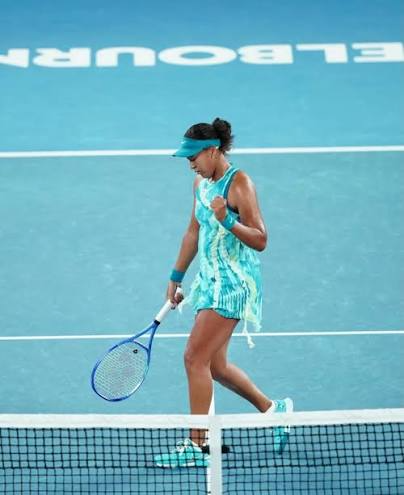
Naomi Osaka’s strong run at the National Bank Open will face its toughest examination yet when she takes on second-seeded Elena Rybakina in the quarterfinals. The matchup will be their first meeting at tour level, adding an unfamiliar element to a contest between two of the tournament’s remaining contenders.
Osaka has been particularly efficient in Toronto. The 11th seed opened with a 6-2, 6-4 victory over Panna Udvardy before producing an even more dominant performance against Elise Mertens, winning 6-1, 6-2. She then defeated Canadian Leylah Fernandez 6-4, 6-4 to book her place in the last eight.
Rybakina’s route has been considerably more demanding. The No. 2 seed began with a three-set victory over Daria Kasatkina, winning 6-3, 5-7, 6-4, before beating Ann Li 6-2, 7-5. Against Liudmila Samsonova, Rybakina again went the distance, eventually prevailing 6-4, 4-6, 6-4 after breaking her opponent’s serve seven times.
The contrasting paths have also shaped the physical picture entering the quarterfinal.
Osaka completed her previous match in straight sets, while Rybakina had to spend considerably longer on court against Samsonova. That gives Osaka the fresher recent workload, although it does not erase Rybakina’s status as the higher-ranked player.
Osaka has also built significant momentum since the grass-court season. She unexpectedly reached the Bad Homburg Open final after four consecutive victories and later produced a career best Wimbledon run by advancing to the quarterfinals. Her Wimbledon campaign included a 6-2, 7-6 victory over Aryna Sabalenka.
The Japanese player’s momentum continued on hard courts at the Citi Open, where she reached the semifinals before arriving in Toronto. Her current run therefore represents another step in a broader stretch of strong results across different tournaments and stages of the season.
Rybakina, meanwhile, enters Toronto after a less consistent period.
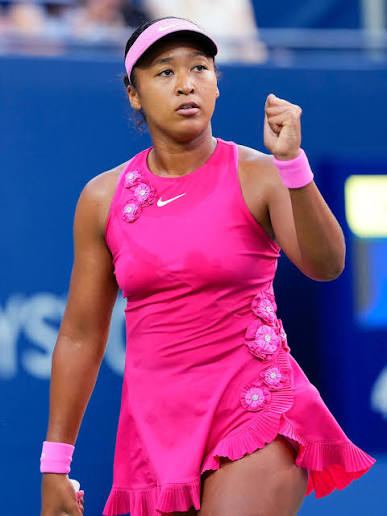
Her last tournament before the National Bank Open was Wimbledon, where she exited in the third round. Her grass-court results were described as disappointing, despite hard courts being regarded as her preferred surface.
Her most significant recent title came at the Stuttgart Open in April. Rybakina won that tournament after defeating opponents including Mirra Andreeva and Karolina Muchova, demonstrating the level she can reach when her game is clicking.
Osaka acknowledged the challenge ahead during her post-match interview, describing Rybakina as an “incredible player” and highlighting her power. She also noted that Rybakina won the Australian Open earlier this year and said she was excited to face her for the first time.
The matchup is particularly intriguing because Osaka has arrived in Toronto with greater consistency from match to match, while Rybakina has already shown that she can survive difficult contests. Their contrasting tournament paths make the quarterfinal difficult to assess purely from recent scorelines.
A separate statistical model gives Rybakina the advantage despite Osaka’s unbeaten run in Toronto. The model identifies a 5.9% edge on Rybakina’s moneyline, which was listed at -110 at FanDuel when the analysis was written, receiving a B+ grade.
The system combines three independent signals rather than relying on a single statistic. It uses walk-forward Elo ratings, a point-by-point Monte Carlo simulation based on serve and return statistics, and a devigged market consensus price.
The Elo component evaluates both overall ability and surface-specific performance, while the simulation is adjusted toward the Elo assessment when the two signals disagree. The market price is then incorporated as a final reference point, producing one estimated win probability for each player.
That same probability is used to evaluate the moneyline, spread and total-games markets. The reported edge represents the difference between the model’s estimated probability and the price available in the market.
The quarterfinal brings together two players arriving from notably different trajectories. Osaka has not surrendered a set in Toronto and has recently produced deep runs at Bad Homburg, Wimbledon and the Citi Open, while Rybakina brings the higher seed and a record of surviving tight matches despite a less convincing recent stretch.
With top seed Aryna Sabalenka already eliminated, the tournament has opened up for the remaining contenders, including Osaka, Rybakina, Coco Gauff and Iga Swiatek. The Osaka-Rybakina winner will therefore move one step closer to a title that is increasingly available to the players still in contention.
Osaka and Rybakina will meet in the National Bank Open quarterfinals in Toronto. Because they have not previously played one another at tour level, the result will establish the initial head-to-head advantage between the two players.


