
KEY POINT
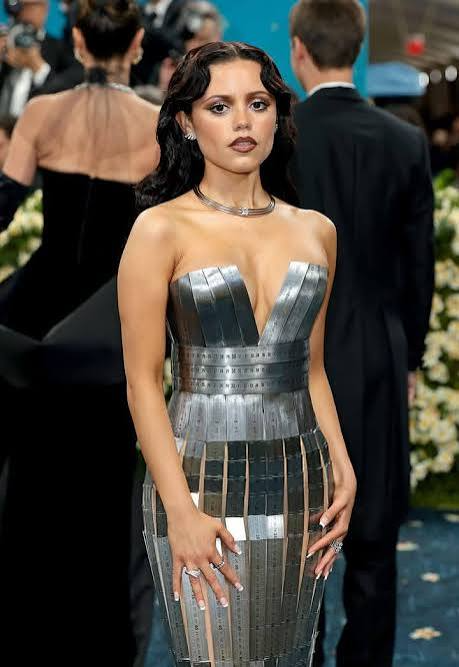
- Jenna Ortega wore a steel-based gown designed by Elias Matso at the New York premiere of Klara and the Sun.
- The dress used hand-cut steel components and spiral boning to create its structured bodice and fringe skirt.
- The design reflects a wider fashion trend that combines futuristic aesthetics with traditional, hands on craftsmanship.
Jenna Ortega’s latest red carpet appearance offered a distinctive take on the relationship between fashion, technology and human creativity. Rather than relying on conventional fabrics, her sculptural gown used steel components to create a striking silhouette that complemented the futuristic themes of her latest film.
Designed by Elias Matso, the dress featured a fitted bodice, a W shaped bustier and a fringe skirt. Its construction relied almost entirely on hand-cut flat steel and spiral boning, materials more commonly associated with the internal structure of corsets and hoop skirts than with the visible exterior of an evening gown.
Ortega wore the creation at the New York premiere of Klara and the Sun, a film adaptation of Kazuo Ishiguro’s 2021 novel. She portrays Klara, a solar-powered robot known as an Artificial Friend, whose character provides a natural connection to the dress’s unconventional materials.
Speaking to People magazine, Ortega praised the designer’s work and explained why the outfit suited the occasion. She said Matso had been holding the dress for her and described it as a perfect fit for the film.
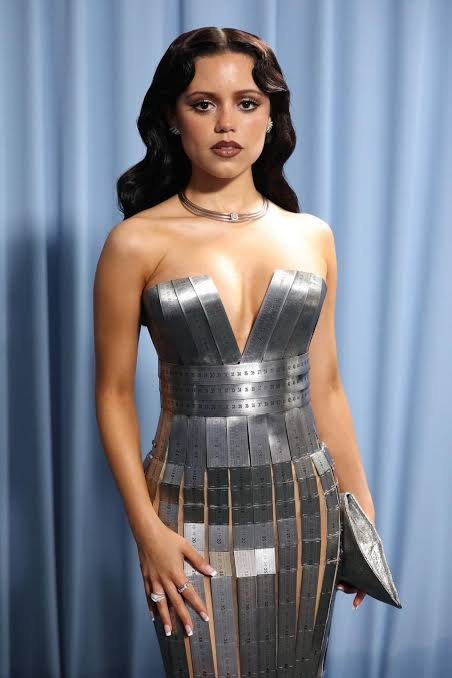
The look also demonstrated how designers can use material choices to connect a character’s fictional world with real world fashion.
Ortega’s steel gown belongs to a broader tradition of designers drawing inspiration from machines, robotics and industrial materials.In 1995, Thierry Mugler created the Machinemensch suit, a design inspired by the sculpted robot costume worn by Brigitte Helm in Fritz Lang’s 1927 film Metropolis. Zendaya later brought Mugler’s creation back into public view, illustrating how futuristic designs can remain relevant across generations.
Alexander McQueen explored a different approach during his spring 1999 show. Robotic arms, borrowed from a car-painting factory, sprayed paint onto model Shalom Harlow’s white dress during the presentation, turning the manufacturing process into part of the fashion performance.
Schiaparelli’s spring 2024 couture collection also incorporated discarded technological materials, including circuit boards and Nokia mobile phones. Creative director Daniel Roseberry compared the salvaged electronics to vintage fabrics, challenging conventional ideas about what materials belong in luxury clothing.
These examples show that technology-inspired fashion does not necessarily depend on newly developed technology. Designers can create futuristic effects by reimagining existing materials and industrial processes.
Contemporary fashion continues to explore the intersection of technology and clothing. Meta, for example, has collaborated with Kylie Jenner and Ray-Ban on the styling of AI glasses, while Unitree Robotics’ humanoid robots have appeared in fashion presentations.
At Shanghai Fashion Week, Unitree robots modeled wedding dresses for Chinese brand The Atelier, extending the use of robotics beyond experimental runway performances.
Yet Ortega’s outfit emphasizes a different aspect of this relationship: the people responsible for making the final product.
Despite its mechanical appearance, the gown depended on manual construction, repeated adjustments and considerable effort. Matso acknowledged the blisters, rebuilding and failed trials involved in the process, as well as the assistance of others.
Ortega summarized the distinction by describing the garment as handmade and human made.
Her statement captures the central idea behind the design: futuristic fashion can borrow the appearance of machinery without losing the human skill required to bring an ambitious concept to life.
Ortega’s steel gown demonstrates how material innovation can connect red-carpet styling with film storytelling and fashion history. Its industrial appearance may suggest a machine, but its construction tells a more human story about experimentation, collaboration and craftsmanship


